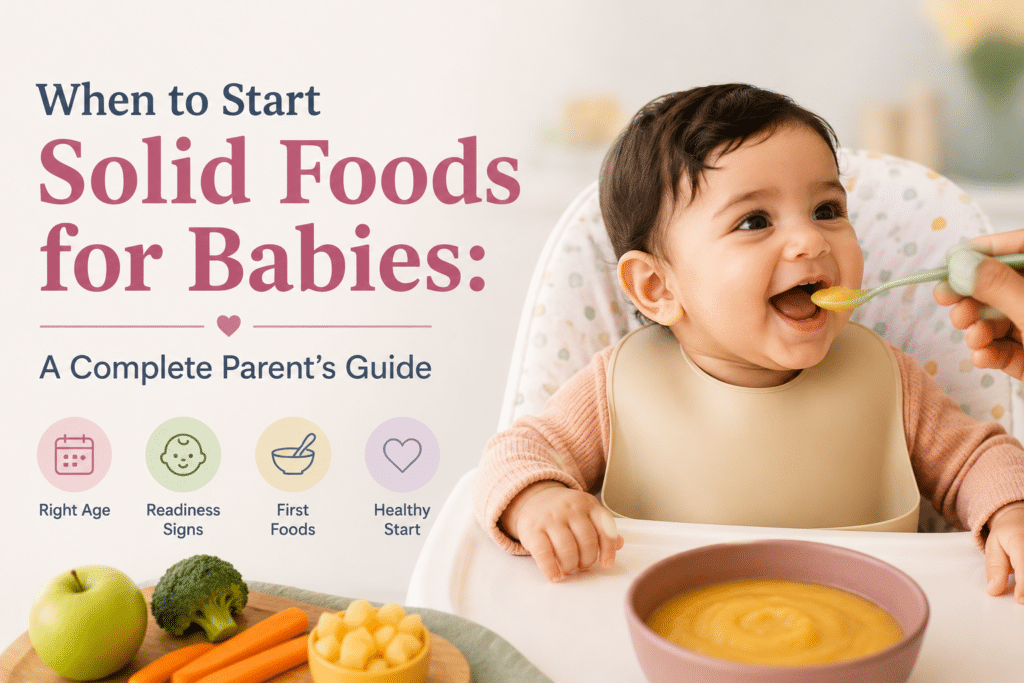
One day, your baby is happily drinking milk.
The next, they’re staring at your plate like they haven’t eaten in weeks.
It’s one of the biggest milestones in a baby’s first year:
Starting solid foods.
But with advice coming from grandparents, friends, social media, and parenting forums, many parents find themselves asking the same question:
When is the right time to start solids?
The short answer: not too early, not too late.
Let’s break it down.
Why Timing Matters
For the first six months, breast milk or formula provides nearly everything your baby needs for healthy growth and development.
As babies grow, however, their nutritional needs increase. They begin requiring additional nutrients—especially iron, zinc, and calories—that milk alone may not fully provide.
This is where complementary foods come in.
The goal isn’t to replace milk overnight.
The goal is to gradually introduce your baby to new tastes, textures, and nutrients while continuing breast milk or formula feeding.
So, When Should Babies Start Solid Foods?
Most pediatricians recommend introducing solid foods around six months of age.
However, every baby develops at their own pace.
Instead of focusing only on age, look for developmental signs that show your baby is ready.
Signs Your Baby Is Ready for Solids
Your baby may be ready if they:
- Can sit with little or no support
- Have good head and neck control
- Show interest in food when others are eating
- Open their mouth when food is offered
- Can move food from the front of the mouth to the back for swallowing
- Have lost the tongue-thrust reflex that automatically pushes food out
If you notice most of these signs, it may be time to discuss starting solids with your pediatrician.
Why Starting Too Early Isn’t Ideal
Many parents assume that introducing solids early will help babies sleep longer or gain weight faster.
In reality, starting before four to six months may increase the risk of:
- Choking
- Digestive discomfort
- Reduced milk intake
- Food allergies in some cases
- Poor nutrient balance
A baby’s digestive system needs time to mature.
Waiting until they’re developmentally ready makes the transition much smoother.
Best First Foods for Babies
When introducing solids, simple is best.
Start with soft, easy-to-swallow foods such as:
- Iron-fortified infant cereal
- Mashed banana
- Pureed sweet potato
- Mashed avocado
- Pureed apple or pear
- Well-cooked and mashed vegetables
Introduce one new food at a time.
This makes it easier to identify any allergic reactions or food sensitivities.
How Much Should Your Baby Eat?
Here’s something that surprises many parents:
At first, your baby may only eat one or two spoonfuls.
That’s perfectly normal.
During the early weeks, solids are more about learning than nutrition.
Think of it as practice.
Your baby is learning how to:
- Sit while eating
- Use their tongue differently
- Swallow new textures
- Explore flavors
Breast milk or formula should remain the primary source of nutrition throughout the first year.
Common Mistakes Parents Should Avoid
1. Forcing Your Baby to Eat
Babies are surprisingly good at regulating their hunger.
If they turn away or close their mouth, respect those cues.
2. Adding Salt or Sugar
Babies don’t need added salt, sugar, honey, or seasoning.
Natural flavors are enough.
3. Introducing Too Many Foods at Once
Take it slow.
One new food every few days helps identify allergies and digestive issues.
4. Comparing Your Baby to Others
Some babies love solids immediately.
Others take weeks to warm up.
Both are normal.
Foods to Avoid During the First Year
Certain foods should be avoided because they can pose health or choking risks.
These include:
- Honey
- Whole nuts
- Popcorn
- Hard candies
- Large chunks of raw vegetables
- Whole grapes
- Excessively salty or sugary foods
Always ensure food is prepared in a baby-safe texture.
What If My Baby Refuses Solids?
Don’t panic.
Many babies reject new foods several times before accepting them.
Research shows that some babies may need multiple exposures to a food before they start liking it.
Keep offering without pressure.
Patience often works better than persuasion.
Final Thoughts
Starting solid foods is an exciting step in your baby’s growth journey.
But it’s not a race.
Watch your baby, not the calendar.
Look for readiness signs, introduce foods gradually, and allow your little one to explore at their own pace.
Some meals will end up in their mouth.
Others may end up on the floor.
That’s all part of the process.
At CLIO Mother and Child Institute, our pediatric specialists guide parents through every stage of infant nutrition and development. If you’re unsure when or how to start solid foods for your baby, our team is here to provide expert advice and personalized support for a healthy beginning.


Proudly powered by CLIO Mother and Child Institute