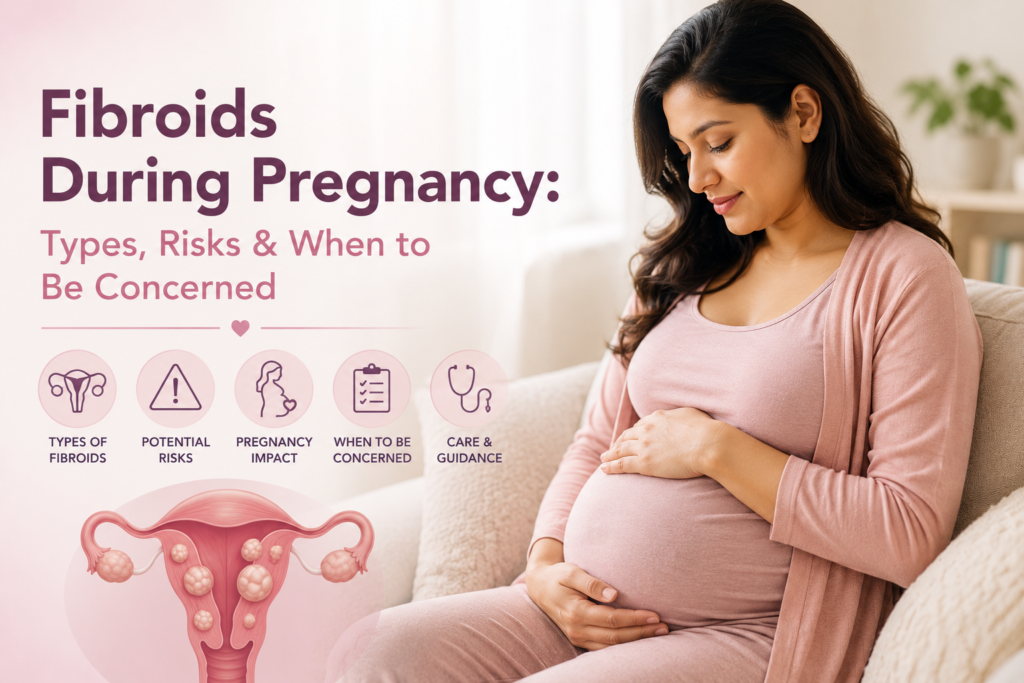
Hearing the words “You have fibroids” during pregnancy can be unsettling.
Your mind immediately jumps to questions:
Will my baby be okay?
Will this affect my pregnancy?
Do I need treatment right away?
The good news is that many women with fibroids go on to have healthy pregnancies and healthy babies.
But understanding what fibroids are—and when they may become a concern—can help you feel more informed and confident throughout your pregnancy journey.
Let’s start with the basics.
What Are Fibroids?
Fibroids are non-cancerous growths that develop in or around the uterus.
They can vary greatly in size. Some are as small as a seed, while others can grow large enough to change the shape of the uterus.
Many women don’t even know they have fibroids until an ultrasound reveals them.
During pregnancy, hormonal changes can sometimes cause fibroids to grow, particularly during the first trimester.
Types of Fibroids
Not all fibroids are the same.
Their location inside the uterus often determines whether they may affect pregnancy.
1. Intramural Fibroids
These develop within the muscular wall of the uterus.
They are the most common type and may or may not cause pregnancy-related issues depending on their size.
2. Subserosal Fibroids
These grow on the outer surface of the uterus.
Because they grow outward, they usually have less impact on the baby’s development inside the womb.
3. Submucosal Fibroids
These grow just beneath the inner lining of the uterus.
Although less common, they are more likely to interfere with pregnancy because they can affect the space where the baby grows.
4. Pedunculated Fibroids
These fibroids are attached to the uterus by a thin stalk.
In some cases, they can cause discomfort if the stalk twists during pregnancy.
How Common Are Fibroids During Pregnancy?
Fibroids are relatively common among women of reproductive age.
Many pregnancies with fibroids progress normally without major complications.
In fact, many women only discover their fibroids during routine prenatal scans and never experience significant problems.
Possible Risks of Fibroids During Pregnancy
While most fibroids don’t cause serious issues, some can increase certain pregnancy risks.
The likelihood often depends on the fibroid’s size, location, and number.
Pain and Discomfort
This is the most common issue.
As fibroids grow or undergo changes during pregnancy, they may cause:
- Abdominal pain
- Pelvic pressure
- Back pain
- Cramping
Pain can sometimes occur when a fibroid outgrows its blood supply, causing a process known as degeneration.
Increased Risk of Bleeding
Some women with fibroids may experience vaginal bleeding during pregnancy, particularly in the early stages.
Any bleeding during pregnancy should be evaluated by a healthcare provider.
Baby’s Position May Be Affected
Large fibroids can sometimes reduce available space inside the uterus.
This may increase the chances of the baby settling into a breech or unusual position later in pregnancy.
Preterm Labor
In certain cases, fibroids may slightly increase the risk of premature contractions or preterm birth.
However, many women with fibroids still carry their pregnancies to full term.
Delivery Challenges
Depending on their location, some fibroids may obstruct the birth canal or affect the baby’s position, increasing the likelihood of a cesarean delivery.
When Should You Be Concerned?
Most fibroids simply require monitoring rather than treatment during pregnancy.
However, contact your doctor if you experience:
- Severe or persistent abdominal pain
- Heavy vaginal bleeding
- Strong contractions before term
- Fever along with pelvic pain
- Sudden worsening pelvic pressure
Prompt medical evaluation helps ensure both mother and baby remain safe.
How Are Fibroids Managed During Pregnancy?
The primary approach is careful observation.
Your obstetrician may recommend:
- Regular ultrasound scans
- Monitoring fibroid growth
- Managing pain safely
- Tracking the baby’s growth and position
Surgery to remove fibroids is rarely performed during pregnancy because of potential risks.
Instead, treatment decisions are usually postponed until after delivery unless exceptional circumstances arise.
Can You Have a Healthy Pregnancy With Fibroids?
Absolutely.
Many women with fibroids experience uncomplicated pregnancies and deliver healthy babies.
The key is early diagnosis, regular prenatal care, and close communication with your healthcare team.
Every pregnancy is unique.
What matters most is having a care plan tailored to your individual needs.
Final Thoughts
Finding out you have fibroids during pregnancy can feel overwhelming at first.
But in most cases, fibroids are manageable and do not prevent a healthy pregnancy outcome.
Regular check-ups, timely ultrasounds, and expert medical guidance can help identify potential concerns early and provide peace of mind throughout your journey.
At CLIO Mother and Child Institute, our experienced obstetric specialists closely monitor pregnancies affected by fibroids, ensuring both mother and baby receive the highest level of care every step of the way.


Proudly powered by CLIO Mother and Child Institute