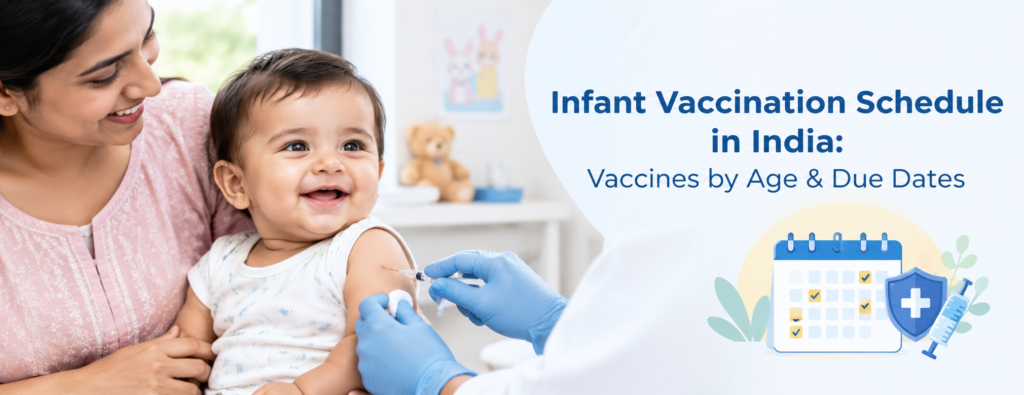
Your baby’s first year is filled with important milestones, and vaccination is one of the most valuable steps you can take to protect their health. Following the recommended infant vaccination schedule helps build immunity against serious infectious diseases before your child is exposed to them.
In India, the Universal Immunization Programme (UIP) provides essential vaccines to eligible children. Knowing which vaccines are due at each age helps parents plan appointments, maintain accurate records, and avoid missed doses. Here is a practical guide to the routine infant vaccination schedule in India and what parents should know before each visit.
Why Is Infant Vaccination Important?
Vaccines help a baby’s immune system recognise and fight specific infections. Timely immunisation reduces the risk of severe illness, complications, hospitalisation, and preventable deaths.
Routine infant vaccines protect against diseases such as tuberculosis, polio, hepatitis B, diphtheria, pertussis, tetanus, rotavirus infection, pneumococcal disease, and measles.
Infant Vaccination Schedule in India
The following outlines the main vaccines provided under India’s national immunisation programme. Individual recommendations may vary according to eligibility, location, medical history, and updated government guidance.
1. At Birth
Vaccines generally recommended at birth include:
- BCG: Protects against severe forms of childhood tuberculosis.
- OPV-0: The birth dose of oral polio vaccine.
- Hepatitis B birth dose: Helps protect against hepatitis B infection and should ideally be given within 24 hours of birth.
2. At 6 Weeks
The first primary immunisation visit generally includes:
- OPV-1
- Pentavalent-1
- Rotavirus vaccine-1
- Fractional inactivated polio vaccine (fIPV-1)
- Pneumococcal conjugate vaccine (PCV-1)
The pentavalent vaccine protects against five diseases: diphtheria, pertussis, tetanus, hepatitis B, and Haemophilus influenzae type b (Hib).
3. At 10 Weeks
The second round of infant vaccination generally includes:
- OPV-2
- Pentavalent-2
- Rotavirus vaccine-2
These doses continue building protection established during the first vaccination visit.
4. At 14 Weeks
The third primary vaccination visit generally includes:
- OPV-3
- Pentavalent-3
- Fractional IPV-2
- Rotavirus vaccine-3
- PCV-2
Completing these doses on schedule helps strengthen your baby’s protection against several potentially serious infections.
5. At 9–12 Months
As your baby approaches their first birthday, additional vaccines become due under the national programme:
- First measles-rubella (MR) vaccine dose.
- PCV booster.
- Japanese encephalitis (JE) vaccine in eligible endemic areas.
The current national schedule should be checked for the exact timing of additional doses, including any applicable updates.
What About Vaccines Beyond the Government Schedule?
A paediatrician may also recommend additional vaccines under the Indian Academy of Pediatrics (IAP) schedule, depending on your child’s age, health, and individual risk.
These may include vaccines against influenza, hepatitis A, chickenpox (varicella), and other preventable infections. Some vaccines may also be recommended at different ages or intervals from those in the UIP.
Discuss the differences with your paediatrician rather than assuming that the government schedule and private vaccination schedule are identical.
Tips for Parents Before and After Vaccination
To make your baby’s vaccination visits easier:
- Keep the child’s immunisation card updated.
- Book appointments according to the recommended dates.
- Tell the doctor about previous vaccine reactions, allergies, or current illness.
- Comfort your baby through feeding, cuddling, and gentle reassurance.
- Ask the healthcare professional which side effects to expect and how to manage them safely.
Mild fever, tenderness, or temporary irritability can occur after some vaccines. Seek urgent medical care for breathing difficulty, facial swelling, collapse, or other signs of a severe allergic reaction.
Frequently Asked Questions About Infant Vaccination
1. When should a baby receive the first vaccine in India?
The first routine vaccines are generally given at birth: BCG, OPV-0, and the hepatitis B birth dose.
2. Which vaccines are given at 6 weeks?
The national schedule generally includes OPV-1, pentavalent-1, rotavirus vaccine-1, fIPV-1, and PCV-1.
3. What if my baby misses a vaccination?
Contact your paediatrician or vaccination clinic to arrange catch-up immunisation. Most missed doses do not mean the entire series must be restarted.
4. Can a baby receive multiple vaccines during one visit?
Yes. Several vaccines are routinely administered during the same visit when recommended. Your healthcare professional will confirm which doses are appropriate.
5. Are government vaccines enough for my baby?
The UIP provides essential protection against several important diseases. Your paediatrician can explain whether additional vaccines under the IAP schedule are appropriate for your child.
Protect Your Baby with Timely Vaccination
Following the infant vaccination schedule in India is an important part of giving your baby a healthy start. Keeping track of due dates, completing recommended doses, and discussing additional vaccines with a qualified paediatrician can help protect your child throughout infancy.
Do not wait until your baby becomes unwell to review their immunisation status. Arrange a vaccination consultation, bring your child’s immunisation card, and ask your paediatrician about upcoming doses or any missed appointments.
CLIO Mother and Child Institute Hospital encourages parents to prioritise routine infant vaccination, maintain accurate immunisation records, and seek professional paediatric guidance to support their child’s healthy growth and development.


Proudly powered by CLIO Mother and Child Institute