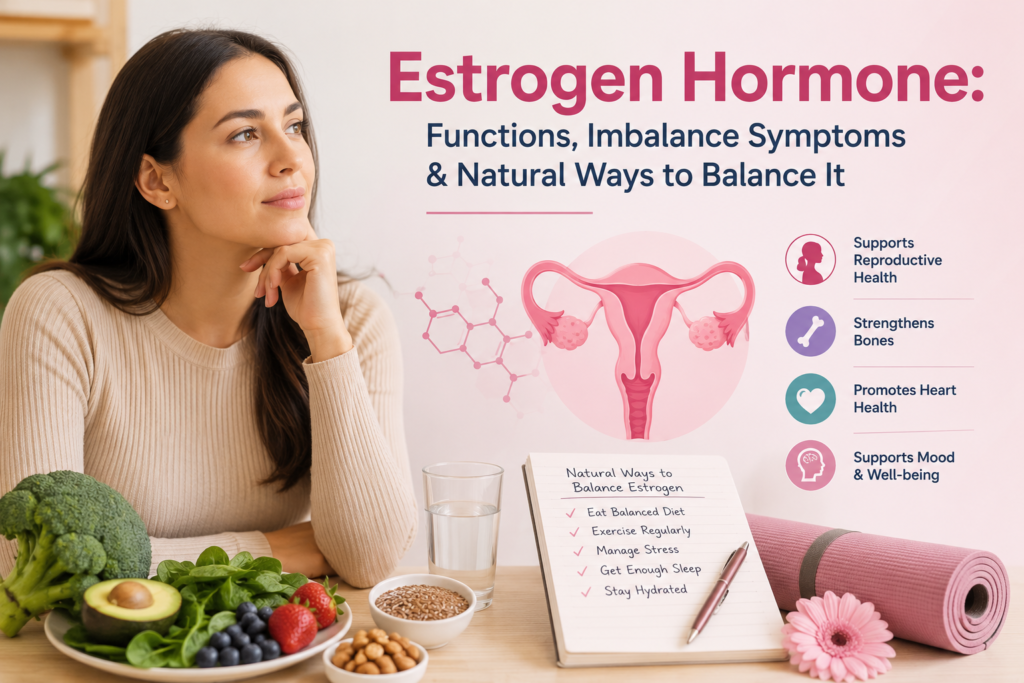
Hormones play a major role in how the body functions, and the estrogen hormone is one of the most important for women’s reproductive and overall health. Although estrogen is often associated with periods and pregnancy, its influence extends to bones, the heart, brain, skin, and many other body systems.
When estrogen levels become too high or too low, different symptoms may appear. Understanding these changes can help women recognize when they may need professional guidance and make healthier lifestyle choices.
What Is the Estrogen Hormone?
Estrogen is a group of hormones produced mainly by the ovaries. Smaller amounts are also produced by the adrenal glands and fat tissue. The three primary forms are estradiol, estrone, and estriol.
Estrogen levels naturally change throughout life, particularly during puberty, the menstrual cycle, pregnancy, and menopause.
Key Functions of Estrogen
The estrogen hormone supports several important processes, including:
- Regulating the menstrual cycle
- Supporting ovulation and fertility
- Preparing the uterus for pregnancy
- Supporting breast and reproductive tissue development
- Maintaining bone strength
- Supporting cardiovascular health
- Contributing to healthy skin and vaginal tissues
- Influencing mood and cognitive function
Because estrogen affects multiple systems, hormonal changes can sometimes cause symptoms beyond reproductive health.
What Causes Estrogen Imbalance?
Estrogen imbalance can occur for different reasons, and symptoms vary from person to person.
Common factors include:
- Pregnancy and breastfeeding
- Perimenopause and menopause
- Polycystic ovary syndrome (PCOS)
- Significant weight changes
- Excessive exercise
- Certain medications
- Ovarian problems
- Thyroid or other endocrine conditions
- Chronic stress
An estrogen-related symptom does not necessarily mean estrogen is the underlying cause. A healthcare professional may need to evaluate other hormones and health conditions before making a diagnosis.
Symptoms of Low Estrogen
Low estrogen is particularly common during perimenopause and menopause, although it can occur at other stages of life.
Possible symptoms include:
- Irregular or missed periods
- Hot flashes and night sweats
- Vaginal dryness
- Reduced sexual desire
- Mood changes
- Sleep difficulties
- Fatigue
- Changes in skin and hair
- Difficulty maintaining bone strength
Persistent or troublesome symptoms should be discussed with a qualified healthcare provider.
Symptoms of High Estrogen
Higher-than-expected estrogen levels may also cause noticeable changes.
Possible signs include:
- Heavy or irregular menstrual bleeding
- Breast tenderness
- Bloating
- Mood changes
- Headaches
- Weight changes
- Increased menstrual discomfort
These symptoms can have many possible causes, so they should not be used to diagnose an estrogen imbalance on their own.
Natural Ways to Support Healthy Estrogen Balance
There is no single food or home remedy that can reliably “balance” estrogen. However, healthy habits can support overall hormonal and metabolic health.
1. Eat a Balanced Diet
Choose a variety of nutrient-rich foods, including vegetables, fruits, whole grains, legumes, nuts, seeds, and lean protein. Adequate fiber can also support healthy digestion and metabolism.
2. Maintain a Healthy Weight
Both very low and excessive body weight can influence reproductive hormones. A sustainable eating pattern and regular physical activity can help support healthy hormonal function.
3. Exercise Regularly
Moderate physical activity supports cardiovascular health, bone strength, sleep, and overall well-being. Aim for consistent movement rather than extreme exercise routines.
4. Prioritize Sleep and Stress Management
Poor sleep and ongoing stress can affect several hormonal pathways. Maintaining a regular sleep schedule and practicing relaxation techniques such as walking, breathing exercises, or meditation may help support overall health.
5. Avoid Self-Prescribing Hormone Supplements
Hormone-related supplements and “estrogen-balancing” products are not appropriate for everyone. Talk to a healthcare professional before taking supplements or hormone-based treatments.
When Should You See a Doctor?
Consider speaking with a gynecologist if you experience persistent changes in your menstrual cycle, unusually heavy bleeding, fertility difficulties, severe menopausal symptoms, or other unexplained hormonal symptoms.
A doctor may review your medical history, symptoms, menstrual pattern, medications, and other factors. Depending on the situation, additional testing may be recommended.
Frequently Asked Questions
1. What does estrogen do in the female body?
Estrogen helps regulate the menstrual cycle and fertility while also supporting bones, reproductive tissues, cardiovascular health, skin, and other body functions.
2. What are the common signs of low estrogen?
Irregular periods, hot flashes, vaginal dryness, mood changes, sleep problems, and reduced bone strength can occur with low estrogen.
3. Can diet naturally increase estrogen?
Certain foods contain phytoestrogens, but diet does not reliably raise estrogen to a specific level. A balanced diet is better viewed as supporting overall health rather than treating hormonal disorders.
4. Can stress affect estrogen levels?
Chronic stress can influence the body’s broader hormonal system and may contribute to menstrual or reproductive changes. Persistent symptoms should be evaluated by a healthcare professional.
5. When should I get my hormones checked?
If you have persistent irregular periods, fertility concerns, unusual bleeding, or significant symptoms associated with hormonal changes, speak with a gynecologist about whether testing is appropriate.
Conclusion
The estrogen hormone is essential for much more than reproductive health. It supports the menstrual cycle, fertility, bones, cardiovascular system, and several other functions. Because estrogen levels naturally change throughout different stages of life, occasional symptoms do not always indicate a hormonal disorder.
A nutritious diet, regular exercise, healthy sleep, stress management, and appropriate medical care can support overall hormonal health. If you notice persistent or unusual symptoms, professional evaluation is the safest way to understand what is happening rather than relying on self-diagnosis or unproven hormone-balancing remedies.
Take the Next Step With CLIO Mother and Child Institute
If you are experiencing menstrual changes, fertility concerns, or symptoms that may be related to hormonal changes, consult a qualified gynecologist. CLIO Mother and Child Institute provides women-focused care and can help you understand your symptoms and choose appropriate next steps. Schedule a consultation to discuss your concerns and receive personalized medical guidance.


Proudly powered by CLIO Mother and Child Institute