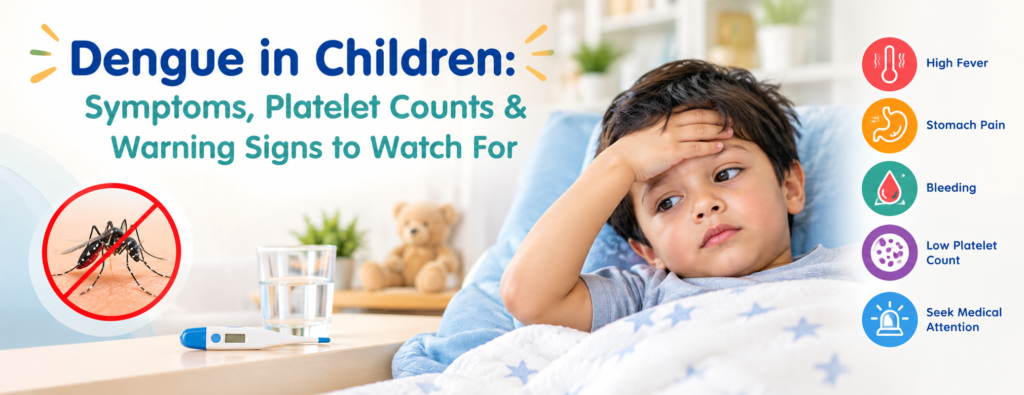
When a child develops a sudden high fever, parents naturally want to know whether it is a routine viral infection or something that needs closer attention. Dengue in children deserves particular care because symptoms can change as the illness progresses. Knowing what to watch for, understanding platelet reports, and recognizing emergency warning signs can help parents seek medical attention at the right time.
What Is Dengue in Children?
Dengue is a viral infection spread by the bite of an infected Aedes mosquito. Children may experience fever along with body pain, weakness, nausea, vomiting or a skin rash. In many cases, children recover with proper supportive care and monitoring. However, some may develop complications that require hospital observation or treatment.
Importantly, the severity of dengue cannot be judged by fever or one blood-test result alone. A pediatrician considers the child’s symptoms, hydration, examination findings and blood-test trends together.
Common Symptoms of Dengue in Children
The symptoms may appear a few days after an infected mosquito bite and can differ in intensity from one child to another.
Common symptoms include:
- Sudden high-grade fever
- Headache or pain around the eyes
- Muscle and joint discomfort
- Unusual tiredness or weakness
- Nausea or vomiting
- Reduced appetite
- Skin rash
- Abdominal discomfort
- Increased irritability in younger children
Some children may not be able to describe exactly what they are experiencing. Parents should therefore pay attention to changes in eating, drinking, activity level, urination and overall behaviour.
Dengue and Platelet Counts: What Parents Should Know
Platelets are blood cells involved in clotting, and their number may decrease during dengue. This is why doctors often monitor platelet counts during the illness.
However, a low platelet count does not automatically mean that a child has severe dengue.
The medical team may also monitor other factors, including:
- Changes in platelet levels over time
- Hematocrit and other blood-test results
- Fluid intake and hydration
- Urine output
- Blood pressure and circulation
- Bleeding symptoms
- The child’s overall behaviour and alertness
Rather than focusing on one platelet number, parents should follow the pediatrician’s advice about repeat blood tests and observation.
Does a Falling Fever Mean the Child Is Better?
Not necessarily.
One of the most important things parents should understand about dengue is that complications can sometimes appear around the time the fever starts coming down. A child who appears better because the temperature has decreased should still be observed carefully.
This is particularly important during the period following the fever.
Warning Signs of Dengue That Parents Should Never Ignore
Parents should seek urgent medical attention if a child with suspected or diagnosed dengue develops concerning symptoms such as:
- Severe or persistent stomach pain
- Frequent or repeated vomiting
- Bleeding from the nose or gums
- Blood in vomit or stool
- Unusual drowsiness, confusion or extreme restlessness
- Difficulty breathing or unusually rapid breathing
- Very little urine
- Difficulty drinking or keeping fluids down
- Cold or pale hands and feet
- Sudden worsening of weakness
These signs may indicate that the illness is becoming more serious and should not be managed at home without medical assessment.
How Is Dengue Managed in Children?
There is no routine medicine that directly eliminates the dengue virus. Treatment is mainly supportive and depends on the child’s condition.
A pediatrician may recommend adequate fluids, rest, monitoring and appropriate fever management. Paracetamol may be used when advised by the doctor, while medicines such as aspirin and ibuprofen should generally be avoided when dengue is suspected because they can increase bleeding risk.
Parents should also avoid giving medicines or supplements based solely on advice from friends, social media or unverified sources.
How Can Parents Help Prevent Dengue?
Prevention starts with reducing mosquito exposure. Parents can help protect children by:
- Using age-appropriate mosquito repellents as directed
- Dressing children in clothing that covers the arms and legs when practical
- Using window screens or mosquito nets where appropriate
- Removing stagnant water around the home
- Keeping water-storage containers properly covered
- Checking plant pots, coolers and other areas where water may collect
Frequently Asked Questions About Dengue in Children
1. What are the most common symptoms of dengue in children?
High fever, headache, body aches, weakness, nausea, vomiting and rash are commonly reported. Symptoms can vary considerably between children.
2. Is a low platelet count dangerous for every child with dengue?
Not necessarily. Platelet levels are important, but doctors assess them alongside the child’s symptoms, examination findings and other blood-test changes.
3. Can dengue become serious after the fever decreases?
Yes. Parents should continue monitoring the child even after the fever improves because warning signs can develop around this stage.
4. When should parents take a child with dengue to the hospital?
Urgent medical evaluation is needed if the child develops persistent abdominal pain, repeated vomiting, bleeding, breathing problems, extreme drowsiness, reduced urination or sudden deterioration.
5. Should parents monitor only the platelet count?
No. A platelet report is only one part of dengue monitoring. Hydration, urine output, bleeding, alertness, blood pressure and other clinical and laboratory findings are also important.
Take Dengue Symptoms Seriously
Most children with dengue can recover with appropriate supportive care and medical monitoring, but the condition should never be judged by fever or platelet count alone. Parents who notice persistent fever, worsening symptoms or any warning sign should contact a pediatrician promptly rather than waiting for the condition to improve on its own.
For professional pediatric evaluation, timely diagnosis and appropriate monitoring of dengue in children, families can consult the experienced pediatric care team at CLIO Mother and Child Institute Hospital.


Proudly powered by CLIO Mother and Child Institute