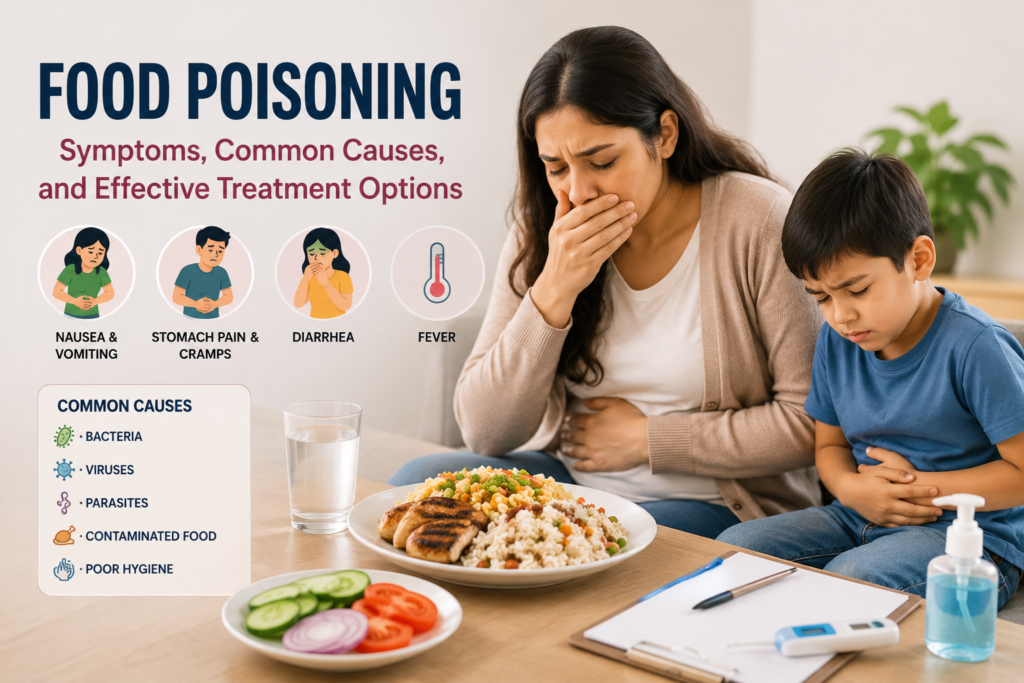
Food poisoning can happen unexpectedly after eating contaminated food or drinking unsafe water. What may begin as mild stomach discomfort can sometimes progress to vomiting, diarrhea, dehydration, and other complications. Children, pregnant women, older adults, and people with weakened immunity may be particularly vulnerable to severe illness.
Understanding the symptoms, causes, and appropriate treatment for Food Poisoning can help you respond quickly and know when professional medical care is needed.
What Is Food Poisoning?
Food Poisoning is an illness caused by consuming food or beverages contaminated with harmful bacteria, viruses, parasites, or toxins. Contamination can occur during food production, preparation, storage, or handling.
Common causes include infections from organisms such as Salmonella, E. coli, Campylobacter, norovirus, and certain foodborne toxins.
Symptoms can appear within a few hours or may take several days, depending on the cause.
Common Symptoms of Food Poisoning
The symptoms can range from mild to severe. Common signs include:
- Nausea and vomiting
- Watery or frequent diarrhea
- Abdominal cramps
- Stomach pain
- Fever
- Weakness and tiredness
- Headache
- Loss of appetite
- Dehydration
Signs of Dehydration to Watch For
Diarrhea and repeated vomiting can cause significant fluid and electrolyte loss. Watch for:
- Excessive thirst
- Dry mouth or lips
- Reduced urination
- Dark-colored urine
- Dizziness or unusual weakness
- Sunken eyes in young children
- Unusual sleepiness or irritability in children
Prompt fluid replacement is particularly important for babies and young children.
What Causes Food Poisoning?
Several factors can lead to contaminated food or water.
1. Bacterial Contamination
Bacteria can multiply in improperly stored or undercooked foods. Raw meat, eggs, seafood, unpasteurized products, and contaminated produce can sometimes carry harmful bacteria.
2. Viral Infections
Viruses such as norovirus can spread easily through contaminated food, water, surfaces, or infected food handlers.
3. Parasites
Certain parasites can enter the body through contaminated food or untreated water and may cause prolonged digestive symptoms.
4. Poor Food Hygiene
Food poisoning may also occur when food is prepared or stored incorrectly. Cross-contamination between raw and cooked foods is an important risk factor.
Effective Treatment for Food Poisoning
Most mild cases improve with supportive care. The main goal is to prevent dehydration while the body recovers.
Stay Hydrated
Drink plenty of fluids in small, frequent amounts. Oral rehydration solutions (ORS) can help replace water and important electrolytes lost through vomiting and diarrhea.
For children, continue breastfeeding or their usual age-appropriate feeds unless a healthcare professional advises otherwise.
Eat Light, Nutritious Foods
Once vomiting settles and you can tolerate food, gradually return to normal meals. Choose foods that are easy to digest and avoid heavy, greasy meals if they worsen symptoms.
Get Adequate Rest
Rest gives your body time to recover from infection and fluid loss.
Avoid Self-Medicating
Do not start antibiotics without medical advice. Antibiotics are not useful for every type of food poisoning, particularly infections caused by viruses, and certain cases can actually require careful medical assessment before treatment.
Anti-diarrheal medicines may also be unsuitable in some situations, especially for young children or people with fever or bloody diarrhea.
When Should You See a Doctor?
Medical attention is important when symptoms are severe, persistent, or accompanied by warning signs.
Contact a healthcare professional if you experience:
- Bloody or black stools
- Persistent vomiting
- Severe abdominal pain
- High or persistent fever
- Signs of significant dehydration
- Diarrhea lasting several days
- Confusion, fainting, or extreme weakness
- Symptoms in a very young child or infant
Pregnant women, older adults, young children, and people with certain underlying health conditions should seek medical advice sooner if significant symptoms develop.
How Can Food Poisoning Be Prevented?
Good food hygiene can substantially reduce the risk of foodborne illness.
Follow these simple precautions:
- Wash hands thoroughly before preparing or eating food.
- Keep raw and cooked foods separate.
- Cook meat, poultry, eggs, and seafood properly.
- Refrigerate perishable foods promptly.
- Wash fruits and vegetables before eating.
- Use safe drinking water.
- Avoid unpasteurized foods when advised.
- Clean kitchen surfaces and utensils regularly.
- Avoid eating food that looks or smells spoiled.
Frequently Asked Questions
1. How long does Food Poisoning usually last?
The duration depends on the specific cause. Many mild cases improve within a few days, while some infections can last longer and require medical evaluation.
2. What should I drink during Food Poisoning?
Water and oral rehydration solutions are useful for replacing lost fluids and electrolytes. Take small, frequent sips if vomiting is present.
3. Is Food Poisoning contagious?
Some causes, particularly certain viral infections, can spread from person to person. Good handwashing and proper hygiene can reduce transmission.
4. When is Food Poisoning dangerous?
Severe dehydration, bloody diarrhea, persistent vomiting, severe abdominal pain, high fever, confusion, or symptoms in vulnerable individuals can indicate the need for urgent medical assessment.
5. Should I take antibiotics for Food Poisoning?
Not necessarily. Many cases do not require antibiotics. The appropriate treatment depends on the underlying cause and severity, so antibiotics should only be taken when prescribed by a healthcare professional.
Conclusion
Food Poisoning is common, but it should not always be treated as a minor stomach problem. Recognizing symptoms early, maintaining adequate hydration, practicing good food hygiene, and seeking medical care when warning signs appear can help prevent serious complications.
At CLIO Mother and Child Institute, timely evaluation is especially important for children and other vulnerable patients experiencing persistent vomiting, diarrhea, fever, or dehydration.
Need Medical Advice?
If you or your child is experiencing severe or persistent symptoms of Food Poisoning, don’t wait for the condition to worsen. Consult a qualified healthcare professional at CLIO Mother and Child Institute for appropriate evaluation, treatment, and guidance. Early medical attention can help manage dehydration and identify complications before they become serious.


Proudly powered by CLIO Mother and Child Institute