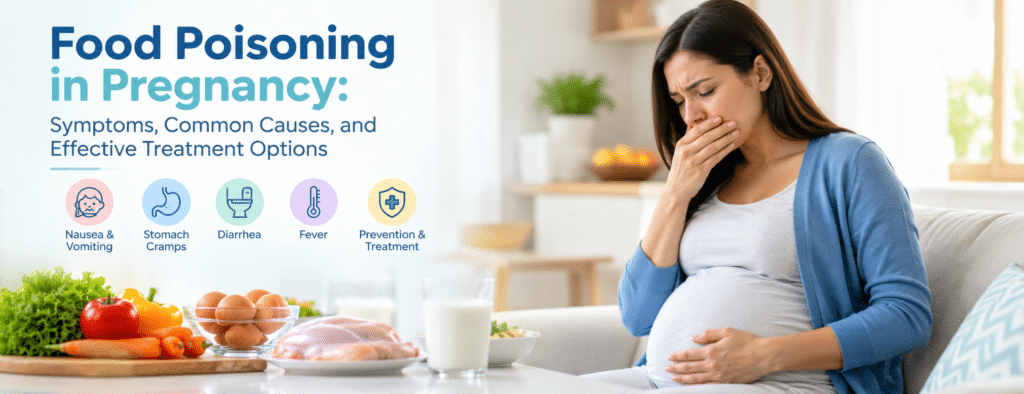
Pregnancy is a special time when extra care is needed with food, hygiene, and overall health. Food Poisoning in Pregnancy can be particularly concerning because dehydration, high fever, or certain infections may affect both the mother and developing baby. Food poisoning usually occurs after consuming food or water contaminated with harmful bacteria, viruses, or parasites.
Knowing the common symptoms, causes, prevention measures, and treatment options can help pregnant women seek timely medical care and avoid complications.
What Is Food Poisoning in Pregnancy?
Food poisoning in pregnancy refers to an infection or illness caused by eating contaminated food or drinking contaminated water. Common foodborne infections include those caused by Salmonella, Listeria, Campylobacter, E. coli, and certain viruses.
During pregnancy, changes in the immune system can make women more vulnerable to some foodborne illnesses. While many cases are mild and resolve with supportive care, some infections can become serious and require medical attention.
Common Symptoms of Food Poisoning During Pregnancy
Symptoms can appear within hours or several days after eating contaminated food, depending on the type of infection.
Signs to Watch For
Common symptoms of food poisoning may include:
- Nausea and vomiting
- Stomach cramps or abdominal pain
- Diarrhea
- Fever or chills
- Weakness and tiredness
- Headache or body aches
- Loss of appetite
- Signs of dehydration, such as dry mouth, dizziness, or reduced urination
Pregnant women should not ignore persistent vomiting, severe diarrhea, high fever, or symptoms of dehydration.
Common Causes of Food Poisoning in Pregnancy
Food can become contaminated at any stage, including during preparation, cooking, storage, or handling.
Foods and Situations That May Increase Risk
Common sources include:
- Undercooked meat, poultry, eggs, or seafood
- Unpasteurized milk and dairy products
- Unwashed fruits and vegetables
- Raw or undercooked sprouts
- Ready-to-eat foods stored incorrectly
- Contaminated drinking water
- Cross-contamination between raw and cooked foods
- Poor hand or kitchen hygiene
Certain infections, particularly Listeria infection during pregnancy, deserve special attention because they can potentially cause pregnancy complications even when the mother has relatively mild symptoms.
How Is Food Poisoning Treated During Pregnancy?
Treatment depends on the cause and severity of the illness. In many mild cases, the main goal is to prevent dehydration and allow the body to recover.
Stay Hydrated
Replacing lost fluids is one of the most important steps. Take frequent small sips of water or suitable oral rehydration fluids. If vomiting prevents you from keeping fluids down, medical assessment may be necessary.
Eat Light, Easily Digestible Foods
Once vomiting improves, gradually return to food. Small portions of simple, easily tolerated foods may be easier to manage.
Medicines Should Be Used Carefully
Pregnant women should not self-medicate for diarrhea, vomiting, fever, or suspected infection. Some medicines may not be suitable during pregnancy. A doctor can recommend treatment based on the symptoms, pregnancy stage, and suspected cause.
Antibiotics may be needed for selected bacterial infections but should only be taken when prescribed by a healthcare professional.
When Should You See a Doctor?
Contact your doctor promptly if food poisoning symptoms are severe, persistent, or worsening.
Seek medical attention if you experience:
- Persistent vomiting or inability to drink fluids
- Severe or bloody diarrhea
- High or persistent fever
- Severe abdominal pain
- Dizziness, fainting, or very little urination
- Signs of significant dehydration
- Reduced fetal movement later in pregnancy
- Symptoms following consumption of a food associated with Listeria risk
Early evaluation can help identify the cause and reduce the risk of complications.
How Can Food Poisoning Be Prevented During Pregnancy?
Prevention is especially important during pregnancy. Follow basic food-safety practices every day:
- Wash hands before preparing or eating food.
- Wash fruits and vegetables thoroughly.
- Cook meat, poultry, eggs, and seafood properly.
- Avoid unpasteurized milk and dairy products.
- Keep raw and cooked foods separate.
- Refrigerate perishable foods promptly.
- Avoid food that looks or smells spoiled.
- Use clean utensils, chopping boards, and kitchen surfaces.
- Drink safe, clean water.
Frequently Asked Questions About Food Poisoning in Pregnancy
1. Is food poisoning dangerous during pregnancy?
Many cases are mild, but certain infections can cause dehydration, maternal illness, or pregnancy complications. Prompt medical advice is important when symptoms are severe or persistent.
2. Can food poisoning cause miscarriage?
Some foodborne infections can increase pregnancy risks, particularly specific infections such as Listeria. However, having diarrhea or vomiting does not automatically mean that pregnancy loss will occur. Consult a healthcare professional if you are concerned.
3. What should I drink after food poisoning during pregnancy?
Water and appropriate oral rehydration fluids can help replace fluids and electrolytes. Take small, frequent sips if nausea is present.
4. Can I take medicine for food poisoning while pregnant?
Do not take anti-diarrheal, anti-vomiting, antibiotic, or other medicines without professional advice. Your healthcare provider can recommend pregnancy-appropriate treatment.
5. When is food poisoning an emergency during pregnancy?
Severe dehydration, persistent vomiting, bloody diarrhea, high fever, severe abdominal pain, fainting, or reduced fetal movement requires prompt medical assessment.
Conclusion
Food Poisoning in Pregnancy can be uncomfortable and worrying, but timely care and proper hydration can help prevent complications. Pregnant women should pay attention to food safety, avoid high-risk foods, and seek professional advice when symptoms are severe, persistent, or unusual.
If you are experiencing vomiting, diarrhea, fever, abdominal pain, or other symptoms during pregnancy, speak with your healthcare provider rather than self-treating. Appropriate evaluation can help protect both maternal health and pregnancy.
For trusted pregnancy care and expert guidance, consult CLIO Mother and Child Institute Hospital, where comprehensive maternity and women’s healthcare is provided with a focus on the well-being of both mother and baby.


Proudly powered by CLIO Mother and Child Institute