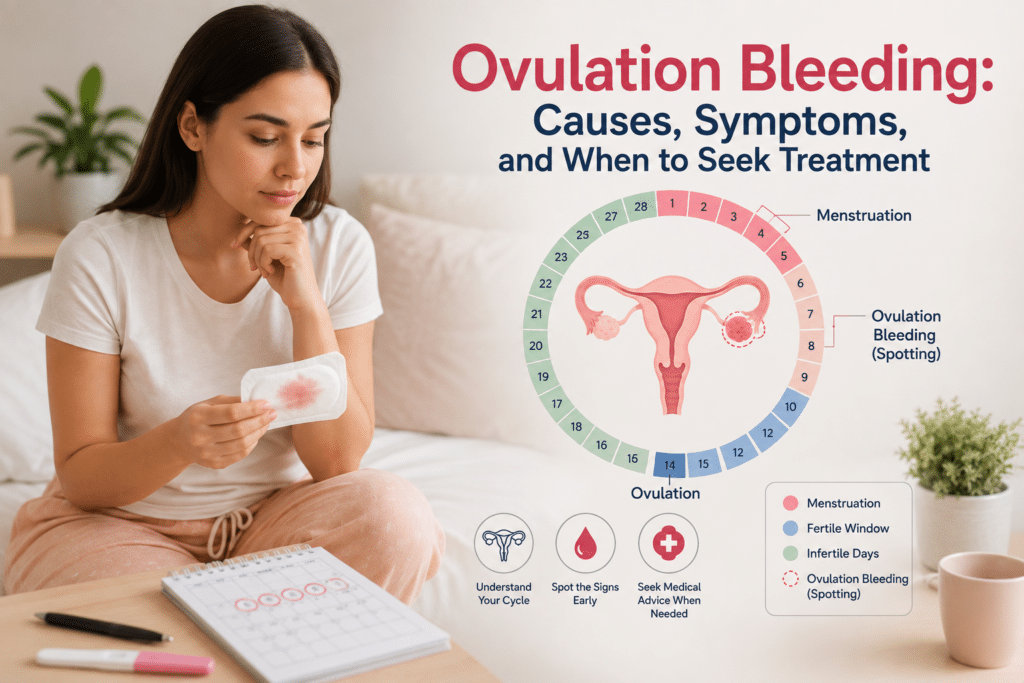
Noticing a few spots of blood between periods can be worrying, especially when your next period is still days away. However, ovulation bleeding is one possible explanation. Some women experience light spotting around the middle of their menstrual cycle when hormonal changes occur around ovulation. It is usually brief and harmless, but bleeding between periods can have several other causes too.
Understanding what ovulation spotting looks like, why it happens, and when to consult a gynecologist can help you manage unexpected changes in your menstrual cycle with greater confidence.
What Is Ovulation Bleeding?
Ovulation bleeding refers to light vaginal spotting that occurs around the time an ovary releases an egg. It commonly happens near the middle of the menstrual cycle.
A temporary change in estrogen levels after ovulation may cause a small amount of the uterine lining to shed, resulting in light spotting. Not every woman experiences this, and having or not having ovulation spotting does not determine fertility.
When Does Ovulation Spotting Happen?
Ovulation timing varies between women and from cycle to cycle. In a typical 28-day cycle, ovulation often occurs around the middle, but it should not be assumed to happen on exactly the same day every month.
Tracking your menstrual cycle, cervical mucus, and other ovulation symptoms may help you recognize your fertile window.
What Does Ovulation Bleeding Look Like?
Unlike a regular menstrual period, ovulation spotting is generally very light.
You may notice:
- Pink or light-red spotting
- Brown discharge
- A few spots when wiping
- Small stains on underwear
- Bleeding that lasts a day or two
It is generally much lighter than menstrual bleeding and may occur with other ovulation signs, such as mild pelvic discomfort or clear, stretchy cervical mucus.
What Causes Ovulation Bleeding?
The exact reason some women experience mid-cycle spotting is not always clear. Hormonal fluctuations associated with ovulation are considered a common explanation.
Hormonal Changes
Estrogen rises before ovulation and changes afterward. For some women, this hormonal shift may trigger a small amount of uterine lining shedding, resulting in spotting.
Ovulation Itself
When an ovarian follicle releases an egg, some women experience mild pelvic pain, known as mittelschmerz, and may notice light bleeding at the same time.
Is Ovulation Bleeding Normal?
Occasional, very light spotting around ovulation can be normal. However, not every type of bleeding between periods is ovulation bleeding.
Other possible causes include:
- Hormonal birth control
- Sexually transmitted infections or other infections
- Cervical irritation
- Uterine fibroids or polyps
- Thyroid disorders
- Hormonal imbalances
- Pregnancy-related bleeding
- Anovulation or irregular ovulation
Because these causes can look similar, recurring or unexplained bleeding should be evaluated by a healthcare professional.
Ovulation Bleeding vs. Implantation Bleeding
These two types of spotting can easily be confused.
Ovulation bleeding generally occurs around the middle of the menstrual cycle, close to ovulation. Implantation bleeding, when it occurs, happens later—typically around 10 to 14 days after ovulation when a fertilized egg implants in the uterine lining.
If pregnancy is possible and you experience unexpected bleeding, consider taking a pregnancy test at the appropriate time and speaking with your healthcare provider if you have concerns.
When Should You See a Gynecologist?
Occasional light spotting may not require treatment, but medical evaluation is advisable when bleeding is new, recurrent, unexplained, or different from your usual pattern.
Seek medical advice if you experience:
- Heavy bleeding
- Repeated spotting between periods
- Severe pelvic or abdominal pain
- Fever or unusual vaginal discharge
- Dizziness, weakness, or shortness of breath
- Bleeding after sexual intercourse
- A missed period with unusual bleeding
- Bleeding that continues or becomes progressively heavier
Heavy bleeding or bleeding accompanied by significant pain requires prompt medical attention.
How Is Ovulation Bleeding Treated?
Ovulation bleeding itself usually does not require treatment when it is light, short-lived, and determined to be related to normal ovulation.
If another condition is responsible for bleeding, treatment depends on the underlying cause. Your gynecologist may review your menstrual history, medications, pregnancy possibility, and symptoms and may recommend an examination or additional tests when appropriate.
Keeping a record of your cycle and spotting can also help your doctor identify patterns.
Frequently Asked Questions
1. Is ovulation bleeding a sign of pregnancy?
Not usually. Ovulation bleeding occurs around ovulation, while implantation bleeding, when it occurs, happens later after fertilization and implantation.
2. How long does ovulation bleeding last?
It is typically very light and may last for about one to two days. Persistent or heavier bleeding should be evaluated.
3. Can ovulation bleeding affect fertility?
No. Ovulation spotting itself does not reduce fertility. In some women, mid-cycle spotting may simply coincide with the time they are ovulating.
4. Can ovulation bleeding happen every month?
Yes, some women may notice spotting around ovulation regularly, while others may experience it occasionally or never.
5. When is ovulation bleeding a concern?
Contact a gynecologist if the bleeding is heavy, painful, recurrent, unexplained, or accompanied by fever, dizziness, unusual discharge, or other concerning symptoms.
Conclusion
Ovulation bleeding can be a normal response to hormonal changes around the middle of the menstrual cycle. When it is very light and short-lived, it is usually not a cause for concern. Still, bleeding between periods can have many possible causes, so recurring or unusual spotting should not automatically be attributed to ovulation.
Understanding your menstrual pattern and tracking changes can be helpful, but professional evaluation is the best way to identify the cause of persistent abnormal bleeding.
Consult CLIO Mother and Child Institute
If you are experiencing unusual spotting, irregular periods, pelvic pain, or other menstrual concerns, consult a qualified gynecologist rather than relying on self-diagnosis. CLIO Mother and Child Institute provides comprehensive women’s healthcare and personalized gynecological guidance to help identify the cause and recommend appropriate care.
Your menstrual health deserves attention. If something feels different from your normal cycle, schedule a consultation and get the right guidance at the right time.


Proudly powered by CLIO Mother and Child Institute