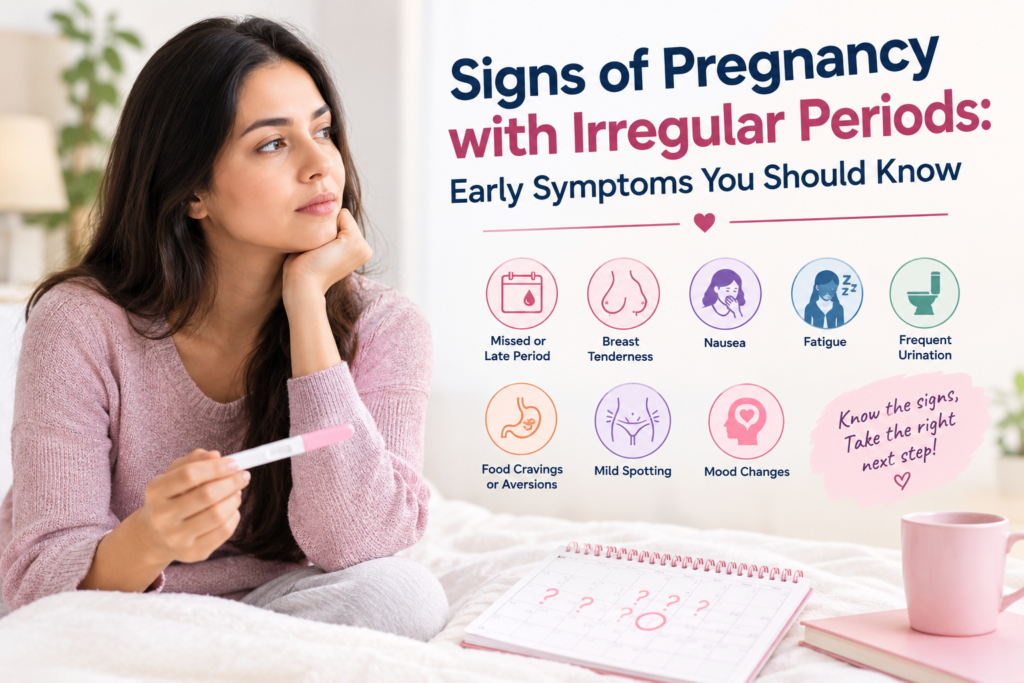
If your periods do not arrive on a predictable schedule, knowing whether you are pregnant can feel confusing. A late period is one of the most recognized pregnancy signs, but with an irregular menstrual cycle, it can be difficult to know when a period is actually “late.” Fortunately, your body may show other early clues.
Understanding the Signs of Pregnancy with Irregular Periods can help you recognize possible pregnancy earlier and know when it is time to take a pregnancy test or consult a healthcare professional.
Can You Get Pregnant with Irregular Periods?
Yes. Having irregular periods does not mean pregnancy is impossible. However, irregular cycles can make ovulation difficult to predict, which may make it harder to identify your fertile window.
Irregular periods can have several causes, including hormonal changes, stress, weight changes, excessive exercise, thyroid problems, and conditions such as PCOS. Pregnancy itself can also cause a missed period.
Signs of Pregnancy with Irregular Periods
When your cycle is unpredictable, look beyond a missed period. Common early pregnancy symptoms may include:
1. Unusual Tiredness
Feeling unusually exhausted can be an early pregnancy symptom. Hormonal changes during early pregnancy may make you feel more tired than usual, even after adequate rest.
2. Tender or Swollen Breasts
Breast tenderness, fullness, or sensitivity can occur during early pregnancy. However, similar changes can also happen before menstruation, so this symptom alone cannot confirm pregnancy.
3. Nausea or Morning Sickness
Nausea, with or without vomiting, is another well-known pregnancy symptom. Despite the name “morning sickness,” it can occur at any time of the day or night.
4. Frequent Urination
You may notice that you need to urinate more frequently than usual. Increased urination can occur during early pregnancy, although other conditions can cause the same symptom.
5. Changes in Food Preferences
Some women experience new food cravings, dislike foods they previously enjoyed, or become more sensitive to certain smells. These changes can occur during early pregnancy.
6. Mild Spotting or Light Bleeding
Some women experience very light spotting around early pregnancy. It should not automatically be assumed to be a normal period, particularly when pregnancy is possible.
Heavy bleeding, severe pain, or unusual bleeding during a possible pregnancy requires medical attention.
7. Mood Changes
Hormonal fluctuations may contribute to emotional changes, irritability, or increased sensitivity during early pregnancy.
Why Irregular Periods Make Pregnancy Symptoms Confusing
With regular cycles, a missed period can be a useful early clue. With irregular periods, however, your next period may naturally arrive later than expected.
That is why Signs of Pregnancy with Irregular Periods should be considered together rather than relying on one symptom.
For example, if you experience several of the following symptoms after unprotected sex, pregnancy testing may be appropriate:
- Unusual fatigue
- Breast tenderness
- Nausea or vomiting
- Increased urination
- Food or smell sensitivity
- Mild spotting
- A noticeably different menstrual pattern
When Should You Take a Pregnancy Test?
A pregnancy test is the most practical way to check whether pregnancy may be responsible for your symptoms.
If you have irregular periods and do not know when your next period is due, the NHS recommends taking a pregnancy test at least 21 days after the last time you had unprotected sex.
Home pregnancy tests detect human chorionic gonadotropin (hCG), a hormone produced during pregnancy. Testing too early can result in a false-negative because hCG levels may not yet be high enough to detect.
If your test is negative but pregnancy still seems possible, repeat the test after a few days or speak with your healthcare provider.
When Should You See a Doctor?
Consult a gynecologist if your periods are persistently irregular, you repeatedly miss periods, or you are experiencing symptoms that concern you. Irregular periods may sometimes be associated with PCOS, thyroid disorders, hormonal imbalances, or other underlying conditions.
Seek urgent medical attention if you think you may be pregnant and develop severe abdominal or pelvic pain, significant bleeding, dizziness, fainting, or shoulder-tip pain, as these can sometimes occur with an ectopic pregnancy.
FAQs About Pregnancy with Irregular Periods
1. Can irregular periods be an early sign of pregnancy?
Pregnancy can cause a missed period, but irregular periods can also have many other causes. A pregnancy test is needed for confirmation.
2. Can I be pregnant if my period is irregular?
Yes. Irregular periods do not prevent pregnancy. However, unpredictable ovulation can make it harder to determine when conception may have occurred.
3. What are the earliest pregnancy symptoms?
Common early symptoms include tiredness, breast tenderness, nausea, increased urination, food or smell changes, mood changes, and sometimes light spotting.
4. When should I test for pregnancy with irregular periods?
If you cannot determine when your period is due, taking a pregnancy test at least 21 days after the last unprotected sex can provide useful guidance.
5. What if my pregnancy test is negative but my period does not come?
Consider repeating the test after a few days. If your period remains absent or your cycles continue to be irregular, consult a healthcare professional to identify the underlying cause.
Conclusion
Recognizing the Signs of Pregnancy with Irregular Periods can be challenging because an unpredictable cycle makes a missed period less reliable as a pregnancy clue. Paying attention to changes such as fatigue, breast tenderness, nausea, frequent urination, food sensitivity, and unusual spotting can help you decide when pregnancy testing may be appropriate.
Most importantly, symptoms alone cannot confirm pregnancy. A pregnancy test and professional medical evaluation provide more reliable answers. If you have concerns about irregular periods, possible pregnancy, or early pregnancy symptoms, timely medical guidance can help you take the right next step.
For expert guidance on pregnancy, women’s health, fertility, and maternity care, consult the experienced team at CLIO Mother and Child Institute Hospital. Your health and your baby’s wellbeing deserve informed, compassionate care from the beginning.


Proudly powered by CLIO Mother and Child Institute