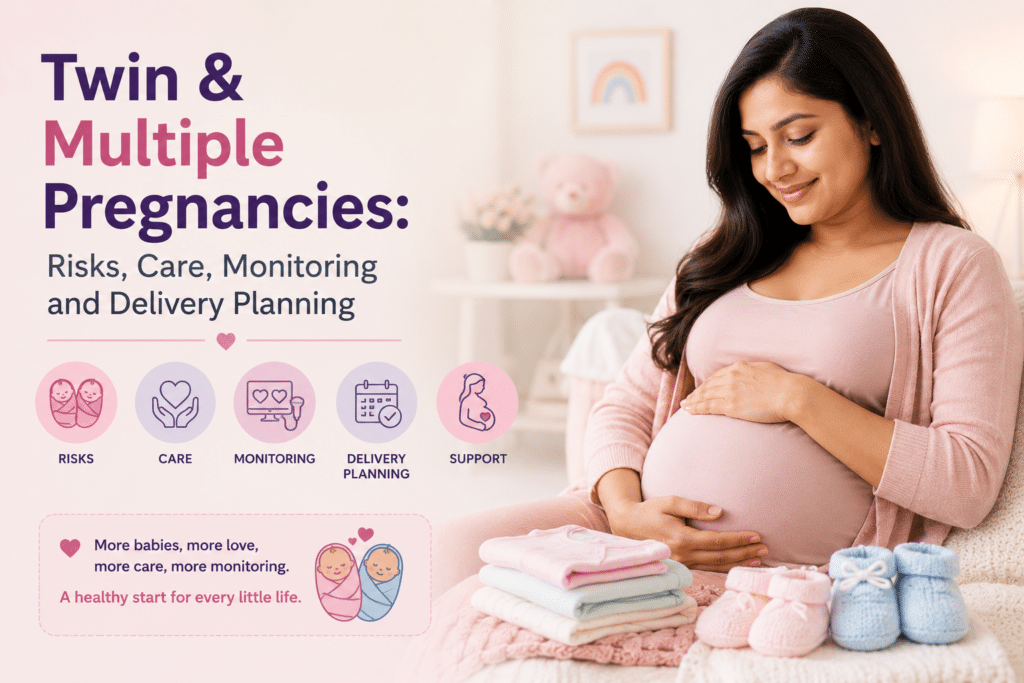
Finding out you’re expecting twins—or even more babies—can bring a mix of emotions.
Excitement. Surprise. Joy. And, naturally, a few worries.
A multiple pregnancy is a unique journey that comes with extra milestones, more frequent check-ups, and specialized care. While twin and higher-order pregnancies carry certain risks, the right medical support and careful monitoring can help ensure a healthy outcome for both mother and babies.
Let’s explore what you need to know.
What Is a Multiple Pregnancy?
A multiple pregnancy happens when a woman is carrying more than one baby at the same time.
This may include:
- Twins
- Triplets
- Quadruplets or more
Twins can be:
- Identical twins, formed when one fertilized egg splits into two embryos
- Fraternal twins, formed when two separate eggs are fertilized
The type of pregnancy influences how closely it needs to be monitored.
Why Multiple Pregnancies Need Extra Attention
When your body is supporting more than one baby, it naturally works harder.
This means multiple pregnancies often require additional prenatal care, more frequent scans, and closer observation.
The goal isn’t to create worry.
It’s to identify potential concerns early and manage them effectively.
Common Risks Associated With Twin and Multiple Pregnancies
Many women have healthy twin pregnancies. However, carrying more than one baby can increase the chances of certain complications.
These may include:
- Preterm labor and premature birth
- Low birth weight
- Gestational diabetes
- High blood pressure or preeclampsia
- Anemia
- Excess amniotic fluid
- Placental complications
Identical twins sharing the same placenta may also face rare complications, such as twin-to-twin transfusion syndrome (TTTS).
Regular monitoring helps detect these conditions early.
The Importance of Frequent Monitoring
Multiple pregnancies usually involve more prenatal visits than singleton pregnancies.
Your healthcare team may recommend:
- Regular ultrasound scans to track growth
- Monitoring amniotic fluid levels
- Checking placental health
- Measuring cervical length
- Routine blood pressure and blood tests
These appointments provide reassurance and help ensure each baby is developing as expected.
Don’t think of extra appointments as a burden.
Think of them as extra layers of protection.
Nutrition and Self-Care Matter More Than Ever
Growing two or more babies requires additional energy and nutrients.
Your doctor may advise you to increase your intake of:
- Protein
- Iron
- Calcium
- Folic acid
- Fluids
Healthy weight gain during a multiple pregnancy is important, but every mother’s needs are different.
Simple habits can make a big difference:
- Eat balanced meals throughout the day
- Stay hydrated
- Get enough rest
- Avoid smoking and alcohol
- Attend all prenatal appointments
And remember: asking for help is part of self-care, not a sign of weakness.
Recognizing Warning Signs
Contact your healthcare provider immediately if you experience:
- Regular contractions before 37 weeks
- Vaginal bleeding
- Sudden swelling of the face or hands
- Severe headaches
- Blurred vision
- Decreased fetal movements
- Fluid leakage
Early intervention can significantly improve outcomes.
Never ignore symptoms that feel unusual.
Planning for Delivery
One of the most common questions parents ask is:
“Will I need a cesarean section?”
The answer depends on several factors, including:
- The position of the babies
- The number of babies
- Placental location
- Gestational age
- Maternal and fetal health
Many women with twins can safely have a vaginal birth if both babies are in favorable positions.
However, cesarean delivery may be recommended if complications arise or if the babies are not positioned safely for vaginal birth.
Your doctor will discuss the safest delivery plan based on your unique pregnancy.
Flexibility is important because plans may change as the pregnancy progresses.
Preparing for Life After Birth
Multiple pregnancies often lead to earlier deliveries, so it’s helpful to prepare in advance.
Consider:
- Packing your hospital bag early
- Arranging support at home
- Learning about newborn feeding options
- Discussing neonatal care if preterm birth is possible
Preparation reduces stress and helps you focus on what matters most—welcoming your babies.
Final Thoughts
A twin or multiple pregnancy may come with additional challenges, but it also brings extraordinary moments.
With expert care, regular monitoring, and a personalized delivery plan, many families experience healthy pregnancies and successful births.
Take it one appointment, one milestone, and one day at a time.
At CLIO Mother and Child Institute, our experienced obstetric team provides specialized care for twin and multiple pregnancies, offering comprehensive monitoring, advanced diagnostics, and compassionate support throughout every stage of your journey.


Proudly powered by CLIO Mother and Child Institute