A C-section is more than a delivery—it’s major abdominal surgery.
While your focus may be on caring for your newborn, your body is also working hard behind the scenes to heal, recover, and regain strength.
The good news? Small choices can make a big difference.
And one of the most important choices is what you put on your plate.
Why Your Diet Matters After a C-Section
After a cesarean delivery, your body needs extra nutrients to:
- Heal the surgical incision
- Replace blood loss
- Support breastfeeding
- Boost energy levels
- Prevent constipation
- Strengthen immunity
A balanced diet won’t speed up recovery overnight, but it can help you feel stronger, more comfortable, and better equipped for the demands of new motherhood.
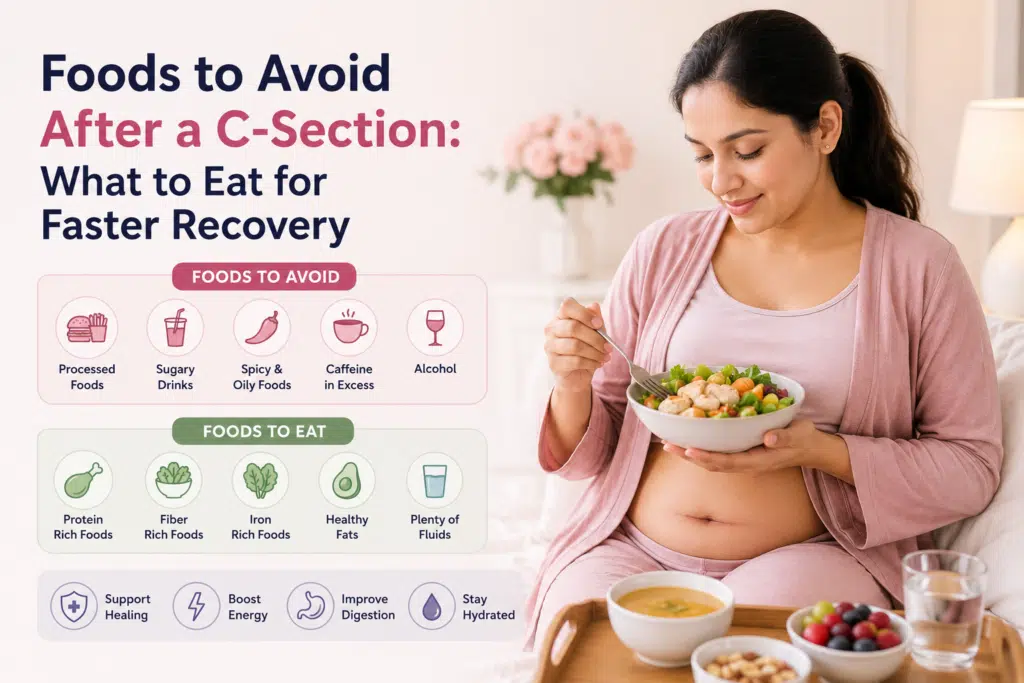
Foods to Avoid After a C-Section
There’s no strict “forbidden foods” list, but some foods may slow recovery or make common post-surgery symptoms worse.
1. Highly Processed Foods
Packaged snacks, instant noodles, sugary cereals, and fast food often contain excess salt, unhealthy fats, and preservatives.
These foods offer little nutritional value and may contribute to inflammation and fatigue.
2. Gas-Producing Foods
Many women experience bloating after a C-section due to surgery, medications, and reduced movement.
Foods that may increase gas include:
- Carbonated drinks
- Beans and lentils in large amounts
- Cabbage
- Cauliflower
- Broccoli
- Fried foods
Everyone reacts differently, so pay attention to how your body feels.
3. Excessively Sugary Foods and Drinks
Sugary beverages, desserts, and packaged juices can cause energy spikes followed by crashes.
Your body needs steady energy for healing and newborn care—not rollercoaster blood sugar levels.
4. Caffeinated Drinks in Excess
A cup of tea or coffee is usually fine, but too much caffeine may affect sleep quality and contribute to dehydration.
If you’re breastfeeding, excessive caffeine can sometimes make babies irritable.
5. Spicy and Oily Foods
Heavy, greasy meals may irritate the digestive system and worsen bloating or indigestion.
During the first few weeks after delivery, simpler meals are often easier to tolerate.
6. Alcohol and Smoking
Alcohol and tobacco can interfere with healing and affect breastfeeding.
Avoid both during your recovery period unless advised otherwise by your doctor.
What to Eat for Faster Recovery
Think of food as fuel for healing.
Focus on meals that provide protein, fiber, healthy fats, vitamins, and hydration.
Protein-Rich Foods
Protein helps repair tissues and support wound healing.
Include:
- Eggs
- Lean chicken
- Fish
- Paneer
- Greek yogurt
- Lentils
- Tofu
Fiber-Rich Foods
Constipation is common after a C-section.
Fiber can help keep digestion moving smoothly.
Choose:
- Oats
- Whole grains
- Fruits
- Vegetables
- Nuts and seeds
Increase fiber gradually and drink plenty of water.
Iron-Rich Foods
Blood loss during delivery can leave you feeling tired.
Iron-rich foods help restore energy levels.
Add:
- Spinach
- Beans
- Lean meats
- Dates
- Beetroot
Pair iron-rich foods with vitamin C sources like oranges or lemons to improve absorption.
Healthy Fats
Healthy fats support recovery and provide long-lasting energy.
Include:
- Avocados
- Nuts
- Seeds
- Olive oil
Plenty of Fluids
Hydration is essential for healing, digestion, and breast milk production.
Keep a water bottle nearby and sip throughout the day.
Soups, coconut water, and milk can also help maintain fluid intake.
Simple Recovery Tips Beyond Food
Recovery isn’t just about eating well.
Try to:
- Rest whenever possible
- Take short walks as advised by your doctor
- Accept help from family and friends
- Avoid lifting heavy objects
- Attend follow-up appointments
Healing takes time.
Be patient with yourself.
When to Speak to Your Doctor
Contact your healthcare provider if you experience:
- Persistent nausea or vomiting
- Severe constipation
- Loss of appetite
- Fever
- Increased pain or redness around the incision
These symptoms may need medical attention.
Final Thoughts
There’s no perfect postpartum diet.
Focus on nourishing your body with wholesome foods, staying hydrated, and listening to your hunger cues.
Recovery after a C-section is a gradual process, and every meal is an opportunity to support your healing.
At CLIO Mother and Child Institute, we believe postpartum care is just as important as pregnancy care. Our team is here to guide you through every stage of recovery, helping you regain strength and confidence as you embrace life with your newborn.


Proudly powered by CLIO Mother and Child Institute