Getting diagnosed with PCOS often comes with a long list of questions. One of the biggest is usually this: What should I actually eat?
The internet, unfortunately, doesn’t make it easier. One article tells you to cut carbs completely. Another says dairy is the problem. Somewhere in between, eating starts to feel unnecessarily complicated.
The reality is much simpler: there’s no perfect “PCOS diet.” But certain food choices can help support hormone balance, improve energy, and even support fertility.
At CLIO Mother and Child Institute, one of the most common things women learn is that managing PCOS often starts with everyday habits—especially food.
Why Diet Matters in PCOS
Polycystic Ovary Syndrome affects hormones, metabolism, and often insulin levels.
Many women with PCOS experience insulin resistance, where the body struggles to use insulin effectively. This can contribute to:
- Irregular periods
- Weight gain
- Hormonal imbalance
- Difficulty with ovulation
The good news? Food choices can play a surprisingly helpful role in supporting balance.
This isn’t about dieting in the extreme sense. It’s about eating in a way your body responds to better.
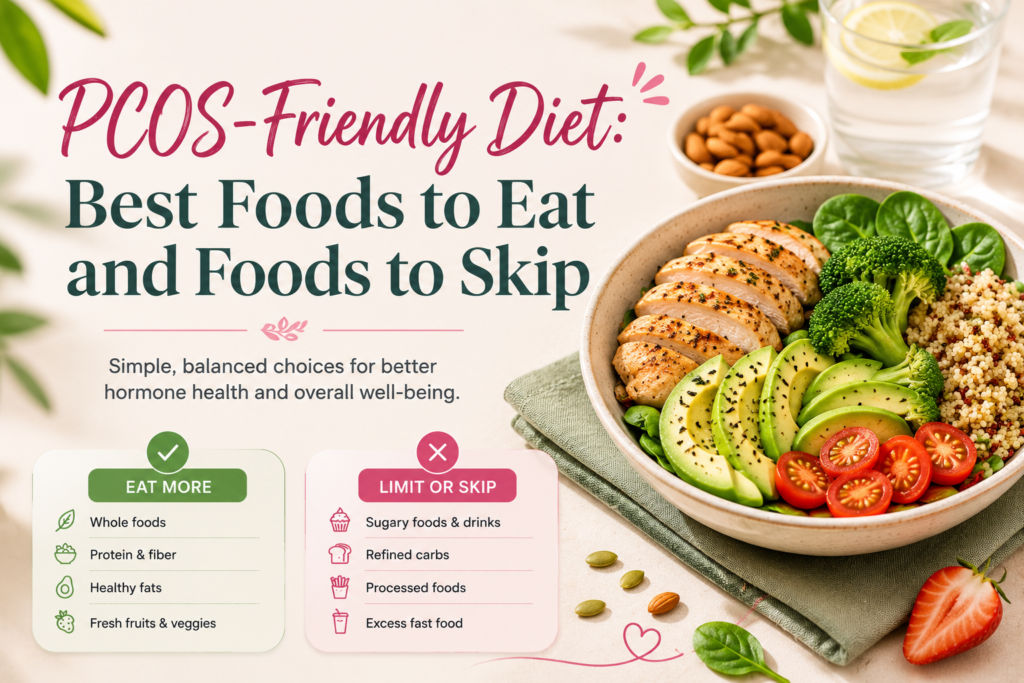
Best Foods to Eat for PCOS
Think balance, not restriction.
1. High-Fiber Foods
Fiber helps support stable blood sugar levels and may improve insulin sensitivity.
Good options include:
- Oats
- Whole grains
- Lentils and beans
- Vegetables like broccoli and spinach
- Fruits such as apples and berries
The goal isn’t to avoid carbs—it’s to choose smarter ones.
2. Lean Protein
Protein helps you stay fuller longer and supports balanced energy levels.
PCOS-friendly protein options include:
- Eggs
- Chicken
- Fish
- Paneer or Greek yogurt
- Lentils and chickpeas
Adding protein to meals often helps reduce cravings and sudden energy crashes.
3. Healthy Fats
Not all fats are the enemy.
Healthy fats may help support hormone function and reduce inflammation.
Try including:
- Nuts and seeds
- Avocados
- Olive oil
- Fatty fish
Small portions go a long way.
4. Low-Glycemic Foods
Foods that release sugar slowly tend to work better for PCOS.
Examples include:
- Brown rice
- Quinoa
- Sweet potatoes
- Whole wheat options
Stable blood sugar often means steadier hormones too.
5. Anti-Inflammatory Foods
Some women with PCOS experience low-grade inflammation.
Foods that may help include:
- Leafy greens
- Tomatoes
- Turmeric
- Nuts
- Fresh fruits
Simple, fresh foods often outperform complicated “superfoods.”
Foods to Skip (Or Limit)
Notice the word: limit, not eliminate.
The goal is realistic habits—not perfection.
1. Sugary Foods and Drinks
Too much sugar can worsen insulin resistance.
Try reducing:
- Sugary drinks
- Packaged desserts
- Excess sweets
- Processed breakfast cereals
You don’t have to give up everything you enjoy. Just avoid turning sugar into a daily habit.
2. Refined Carbs
Highly processed carbs may cause blood sugar spikes.
Examples include:
- White bread
- Pastries
- Instant noodles
- Processed snacks
Swapping rather than restricting usually works better long-term.
3. Highly Processed Foods
Foods loaded with preservatives, unhealthy fats, and added sugar tend to work against hormone balance.
The closer food looks to its natural form, the better.
4. Excess Fast Food
Occasional meals are fine. Consistency matters more than perfection.
But relying heavily on fried, processed meals can make symptoms harder to manage.
What About Dairy and Gluten?
This is where confusion usually begins.
Some women notice improvements after reducing dairy or gluten. Others notice no difference at all.
There’s no universal rule.
Unless you have an intolerance or medical reason, complete elimination usually isn’t necessary.
Your body’s response matters more than trends online.
Small Habits That Help
Diet isn’t just about what you eat.
Sometimes how you eat matters too.
Try:
- Eating meals at regular times
- Staying hydrated
- Avoiding long gaps without food
- Including protein with meals
- Sleeping well
Hormones respond surprisingly well to consistency.
At CLIO Mother and Child Institute, PCOS management is often approached practically—small, sustainable changes rather than overwhelming restrictions.
Don’t Aim for Perfect
One of the biggest mistakes women make with PCOS is trying to overhaul everything overnight.
Strict diets often fail because they’re impossible to maintain.
Instead, think long-term.
A better breakfast. More balanced meals. Fewer processed foods. More movement.
Small habits repeated consistently usually outperform extreme plans.
Final Thoughts
A PCOS-friendly diet doesn’t need to feel restrictive or stressful.
The best foods are often the simplest ones—whole, balanced, and consistent.
And the foods to skip? Mostly the ones that leave your body feeling worse, not better.
At CLIO Mother and Child Institute, the goal is helping women manage PCOS in a way that feels realistic, sustainable, and supportive of long-term health.
Because sometimes, healing starts with something as ordinary—and powerful—as what’s on your plate.


Proudly powered by CLIO Mother and Child Institute