6 Effective Tips to Help Prevent Stretch Marks During Pregnancy
Pregnancy affects almost every part of the body, and the breasts are often among the first areas to show noticeable changes. From tenderness and increased size to darker nipples and colostrum production, breast changes during pregnancy are usually a normal part of preparing the body for breastfeeding.
These changes can begin surprisingly early and continue throughout pregnancy. Understanding what to expect can help you distinguish normal pregnancy-related breast changes from symptoms that may require medical attention.
Why Do Breasts Change During Pregnancy?
Pregnancy hormones, particularly estrogen and progesterone, stimulate changes in the breast tissue and milk-producing glands. Increased blood flow and hormonal activity prepare the breasts for breastfeeding after delivery.
The timing and intensity of changes vary from woman to woman. Some women notice significant changes during the first trimester, while others experience more noticeable symptoms later in pregnancy.
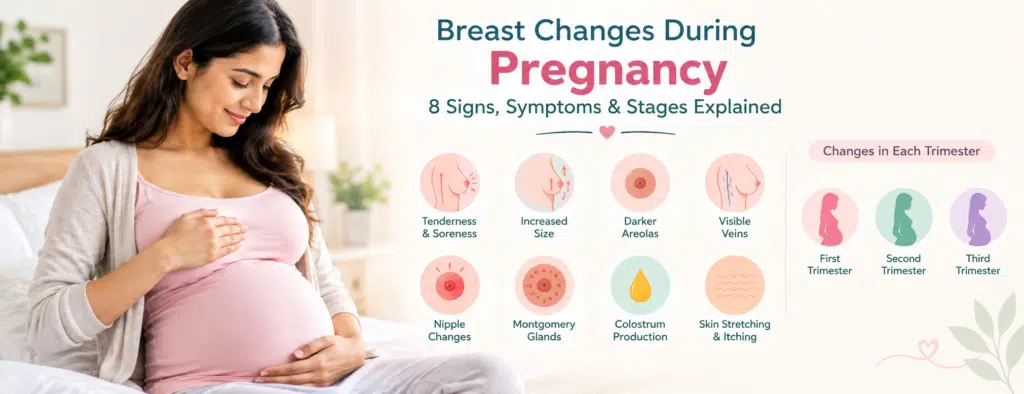
8 Common Breast Changes During Pregnancy
1. Breast Tenderness and Soreness
Breast tenderness is one of the earliest pregnancy-related breast symptoms. Hormonal changes can make the breasts feel sore, sensitive, heavy, or uncomfortable.
Tenderness may be particularly noticeable during the first trimester and may improve as the body adjusts to changing hormone levels.
2. Increased Breast Size
Breast growth is a common part of pregnancy. As milk-producing tissue and blood supply increase, the breasts may become fuller or heavier.
You may need a larger or more supportive bra as pregnancy progresses. A comfortable, well-fitting maternity bra can reduce pressure and discomfort.
3. Darkening of the Areolas
The areolas—the darker areas surrounding the nipples—often become larger or darker during pregnancy.
The changes are influenced by pregnancy hormones and may remain noticeable for some time after delivery.
4. More Visible Veins
Increased blood flow to the breasts can make veins appear more prominent beneath the skin. This is particularly noticeable in women with lighter skin tones.
Visible breast veins are generally a normal pregnancy change when they occur without other concerning symptoms.
5. Changes in the Nipples
The nipples may become more sensitive, prominent, or enlarged during pregnancy. Some women notice tingling or increased sensitivity, particularly in the early stages.
These changes help prepare the breasts for breastfeeding.
6. Montgomery Glands Become More Noticeable
Small bumps around the areola are called Montgomery glands. During pregnancy, these glands may become more prominent.
They produce natural oils that help protect and moisturize the nipple and areola area. Avoid squeezing or picking at these small bumps.
7. Colostrum Production
Some women notice small amounts of yellowish or clear fluid from the nipples during pregnancy. This may be colostrum, the nutrient-rich first milk produced by the breasts.
Colostrum can appear during pregnancy, but its presence or absence does not indicate whether you will successfully breastfeed after delivery.
Do not routinely express or collect colostrum during pregnancy unless your healthcare provider specifically recommends it.
8. Breast Skin Stretching and Itching
As the breasts grow, the skin may stretch and feel dry or itchy. Some women may also develop stretch marks on the breasts.
Keeping the skin moisturized may improve comfort, although creams and oils cannot guarantee that stretch marks will be prevented.
Breast Changes During Pregnancy: Trimester by Trimester
First Trimester
During early pregnancy, common changes may include:
- Breast tenderness
- Nipple sensitivity
- Fuller breasts
- Darkening areolas
- Increased blood flow
Second Trimester
As pregnancy progresses, breast growth may become more noticeable. The nipples and areolas may continue changing, and some women may begin noticing small amounts of colostrum.
Third Trimester
By the final months, the breasts are preparing increasingly for breastfeeding. They may feel heavier, larger, or more sensitive, and colostrum may be present.
Every pregnancy is different, so not experiencing one or more of these changes does not necessarily indicate a problem.
When Should You Talk to a Doctor?
Most breast changes during pregnancy are harmless. However, contact your healthcare provider if you notice:
- A new or persistent breast lump
- Significant or worsening breast pain
- Redness, warmth, or swelling
- Bloody nipple discharge
- A persistent rash or skin change
- Fever along with breast symptoms
- A change that concerns you or feels unusual
Your doctor can determine whether further examination is needed.
Frequently Asked Questions
1. When do breast changes start during pregnancy?
Breast changes can begin as early as the first few weeks of pregnancy. Tenderness, swelling, and nipple sensitivity are among the earliest symptoms.
2. Is breast pain normal during pregnancy?
Yes. Mild to moderate breast tenderness and sensitivity are common, particularly during early pregnancy. Persistent or severe pain should be discussed with your healthcare provider.
3. Is colostrum during pregnancy normal?
Yes. Some women may notice colostrum during pregnancy, especially later in pregnancy. Others may not notice any leakage, and both can be normal.
4. Will my breasts return to their previous size after pregnancy?
Breast size and shape can change after pregnancy and breastfeeding. The extent of these changes varies from person to person.
5. Should I be worried about a breast lump during pregnancy?
Not every breast lump is dangerous, and pregnancy itself can cause changes in breast tissue. However, any new or persistent lump should be evaluated by a qualified healthcare professional.
Understanding Your Breast Changes During Pregnancy
Breast changes during pregnancy are a natural part of the body’s preparation for motherhood. Tenderness, breast enlargement, darker areolas, visible veins, nipple changes, Montgomery glands, colostrum, and skin stretching can all occur at different stages.
Rather than comparing your experience with someone else’s pregnancy, pay attention to your own body and attend regular prenatal checkups. If you notice a new, persistent, painful, or unusual breast change, seek professional medical advice instead of self-diagnosing.
For expert pregnancy, maternity, women’s health, and mother-and-child care, consult the experienced healthcare team at CLIO Mother and Child Institute Hospital.


Proudly powered by CLIO Mother and Child Institute