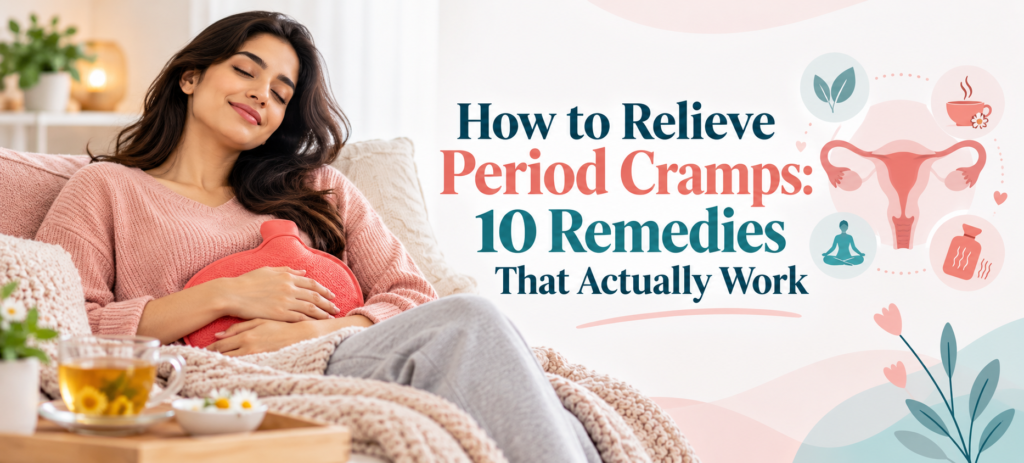
Period cramps can turn an ordinary day into an uncomfortable experience. Whether it’s a dull ache in your lower abdomen or intense pain affecting your daily routine, menstrual discomfort is something many women experience.
The good news? Several proven treatments and simple lifestyle changes can help relieve period cramps and make your monthly cycle more manageable.
Let’s explore 10 practical remedies for menstrual pain relief and understand when professional medical attention becomes necessary.
What Causes Period Cramps?
Period cramps, medically called dysmenorrhea, occur when the uterus contracts to shed its lining during menstruation.
These contractions are triggered by natural chemicals called prostaglandins. Higher prostaglandin levels can contribute to stronger uterine contractions and increased pain.
Common symptoms include:
- Lower abdominal pain or cramping
- Lower back discomfort
- Pain extending towards the thighs
- Nausea, headaches, or fatigue
- Diarrhea during menstruation
While mild cramps are common, severe or worsening menstrual pain may indicate an underlying gynecological condition.
10 Effective Ways to Relieve Period Cramps
1. Apply Heat to Your Lower Abdomen
Heat therapy is one of the simplest ways to ease menstrual discomfort.
Place a warm heating pad or wrapped hot water bottle on your lower abdomen for 15–20 minutes at a time. Gentle warmth can relax muscles and reduce pain.
2. Try Gentle Exercise
Physical activity may help reduce menstrual pain by encouraging the release of natural pain-relieving chemicals.
Consider:
- Walking
- Gentle stretching
- Swimming
- Low-impact cycling
Choose comfortable activities rather than pushing through severe pain.
3. Practice Relaxing Yoga Poses
Gentle yoga can help release muscular tension and encourage relaxation.
Child’s pose, cat-cow stretches, and supported reclining positions may provide comfort during painful periods. Avoid movements that worsen symptoms.
4. Use Appropriate Pain Relief Medication
Nonsteroidal anti-inflammatory drugs (NSAIDs), such as ibuprofen, can effectively relieve period cramps by reducing prostaglandin production.
These medicines generally work best when started at the beginning of menstrual discomfort.
However, NSAIDs are unsuitable for some people, including those with certain stomach, kidney, or bleeding conditions. Consult your doctor or pharmacist before use.
5. Take a Warm Bath
A warm bath or shower can relax tense muscles and provide temporary relief from lower abdominal and back discomfort.
This simple home remedy may also improve your overall sense of relaxation during menstruation.
6. Maintain a Balanced Diet
Good nutrition supports menstrual health and general well-being.
Include leafy vegetables, whole grains, fruits, nuts, and protein-rich foods in your daily meals.
Although a balanced diet cannot guarantee cramp relief, it supports overall health. Avoid relying on unproven supplements as replacements for established treatments.
7. Stay Properly Hydrated
Drinking enough water supports normal body function and may help you feel more comfortable during menstruation.
Water, soups, and other hydrating fluids are useful choices. However, hydration alone has not been established as a treatment for uterine cramps.
8. Gently Massage Your Lower Abdomen
Light circular massage around the lower abdomen or lower back may reduce muscle tension and provide temporary comfort.
Use gentle pressure and discontinue massage if it increases pain.
9. Prioritise Sleep and Stress Management
Poor sleep and emotional stress can make menstrual discomfort harder to manage.
Maintain a consistent sleep routine and try deep breathing, meditation, or other relaxing activities.
These strategies support pain management but may not eliminate cramps completely.
10. Discuss Hormonal Treatment with Your Gynecologist
For frequent or severe menstrual cramps, hormonal treatments may be helpful.
Depending on your medical history, your gynecologist may recommend hormonal contraceptive pills or other suitable options to reduce menstrual pain.
These treatments require individual medical assessment.
When Should You See a Gynecologist?
Occasional mild cramps are common, but persistent or unusually painful periods should not be ignored.
Consult a gynecologist if you experience:
- Severe pain disrupting work, school, or daily activities
- Menstrual cramps that progressively worsen
- Heavy or irregular menstrual bleeding
- Pain during intercourse
- Persistent pain despite appropriate treatment
Conditions such as endometriosis, adenomyosis, or uterine fibroids may cause secondary dysmenorrhea. Sudden severe pelvic pain, particularly with fainting or possible pregnancy, requires urgent medical assessment.
Frequently Asked Questions (FAQs)
1. What is the fastest way to relieve period cramps?
Heat therapy and appropriate anti-inflammatory medication are among the most effective options for short-term menstrual cramp relief.
2. Can drinking water reduce period pain?
Adequate hydration supports general well-being, although there is limited evidence that drinking water directly reduces menstrual cramps.
3. Is exercise safe during menstruation?
Yes. Gentle exercise is generally safe during menstruation and may help reduce discomfort.
4. Why are my period cramps extremely painful?
Severe cramps may be associated with high prostaglandin activity or conditions such as endometriosis and fibroids.
5. Can period cramps be permanently cured?
Treatment depends on the underlying cause. Many women experience significant improvement with suitable medical management.
Conclusion: Take Control of Your Menstrual Health
Period pain should not regularly prevent you from enjoying everyday activities. From heat therapy and gentle exercise to appropriate medication, several approaches can help relieve period cramps effectively.
If your menstrual pain is severe, recurring, or affecting your quality of life, professional evaluation can help identify the cause and guide appropriate treatment.
Don’t let painful periods control your life.
At CLIO Mother and Child Institute Hospital, your menstrual health matters. Consult our gynecology team for personalised guidance, evaluation of painful periods, and suitable treatment options.
Book your appointment at CLIO Mother and Child Institute Hospital and take a positive step towards better menstrual health.


Proudly powered by CLIO Mother and Child Institute