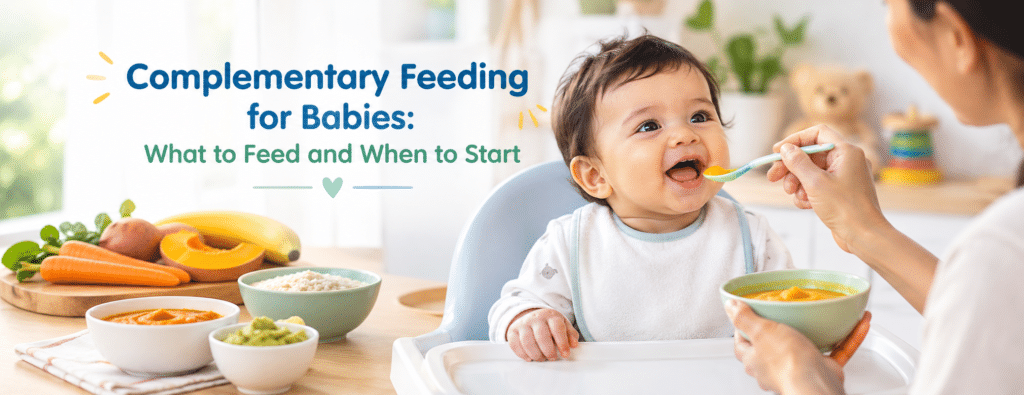
Starting solid foods is an exciting milestone for both babies and parents. Complementary feeding for babies is the stage when breast milk or infant formula continues to provide important nutrition while other foods are gradually introduced. Choosing the right foods, textures, portions, and feeding routine can help support healthy growth and development.
But when should you start? What foods are suitable for your baby? And how can you make the transition safe and enjoyable? Let’s explore the essentials every parent should know.
When Should You Start Complementary Feeding?
Most babies are ready to begin complementary foods at around 6 months of age, when breast milk alone no longer meets all their nutritional needs.
Look for signs that your baby is developmentally ready, such as:
- Sitting upright with good head and neck control
- Showing interest in food when others are eating
- Reaching for food or opening the mouth when food is offered
- Being able to swallow food rather than pushing it out with the tongue
- Bringing objects or food toward the mouth
Age alone is not the only consideration. If your baby was born prematurely or has specific health or developmental concerns, speak with a pediatrician before introducing complementary foods.
What to Feed Your Baby During Complementary Feeding?
The goal of complementary feeding for babies is to gradually introduce a variety of nutritious foods while continuing breast milk or formula.
Start With Nutrient-Rich Foods
Begin with small amounts of soft, easily swallowed foods. Good options include:
- Mashed or pureed vegetables such as carrot, pumpkin and sweet potato
- Soft fruits such as banana, pear and avocado
- Well-cooked and mashed grains, cereals or porridge
- Soft-cooked lentils and pulses
- Well-cooked egg
- Plain, unsweetened full-fat yogurt
- Finely mashed or minced meat, poultry or fish where appropriate
Iron-rich foods are particularly important because a baby’s iron requirements increase during this stage. Offering a variety of foods also helps introduce different flavours and nutrients.
Gradually Increase Texture
You do not need to keep your baby on smooth purees for a long time. As chewing and swallowing skills develop, gradually move from pureed foods to mashed, lumpy and soft finger foods.
Introducing different textures at an appropriate stage can support oral motor development and help babies become comfortable with a wider range of foods.
How Much Food Should a Baby Eat?
There is no single portion size that works for every baby. Initially, your baby may eat only a few spoonfuls. The amount can gradually increase as appetite and feeding skills develop.
Parents should focus on responsive feeding rather than forcing a baby to finish a particular amount.
Watch for hunger and fullness cues. A baby may turn away, close their mouth or lose interest when they are full. Allowing babies to respond to their appetite can help develop healthy eating habits.
Foods to Avoid or Use With Caution
Some foods are unsuitable or potentially dangerous for young babies.
Avoid or limit:
- Honey before 12 months because of the risk of infant botulism
- Whole nuts because of choking risk
- Foods with excessive salt or added sugar
- Unpasteurized milk or dairy products
- Raw or undercooked eggs, meat and seafood
- Whole grapes and other round, hard foods unless appropriately prepared
- Sugary drinks and highly processed foods
Always prepare food in a baby-safe texture and supervise your baby while eating.
Introducing Potential Allergens
Foods that commonly cause allergies, such as egg and peanut, can generally be introduced in age-appropriate forms when complementary feeding begins, provided the baby is developmentally ready.
For example, peanut should never be given as whole nuts or thick spoonfuls of peanut butter because of choking risk. Use an appropriate smooth or diluted form.
If your baby has eczema, an existing food allergy, or another risk factor for food allergy, discuss the introduction of allergenic foods with your pediatrician.
FAQs About Complementary Feeding for Babies
1. What is complementary feeding?
Complementary feeding is the gradual introduction of foods alongside continued breastfeeding or infant formula, usually beginning around 6 months.
2. Can I start complementary feeding before 6 months?
Most babies are recommended to begin complementary foods at around 6 months. Starting earlier should only be considered with appropriate medical guidance.
3. Should I stop breastfeeding when my baby starts solids?
No. Breast milk can continue to be an important source of nutrition while complementary foods are introduced. Infant formula should also continue as appropriate.
4. How should I introduce new foods?
Introduce foods in small, age-appropriate amounts and gradually offer a variety of tastes and textures. Pay attention to your baby’s response.
5. What should I do if my baby refuses food?
Food refusal is common when babies are learning to eat. Avoid forcing your baby. Continue offering suitable foods calmly and repeatedly while following their hunger and fullness cues.
Give Your Baby a Healthy Start
Complementary feeding for babies is not about replacing milk overnight. It is a gradual learning process that helps your baby discover new flavours, textures and nutritious foods while continuing breast milk or formula.
Every baby develops differently, so personalized guidance can be especially helpful if your baby was premature, has feeding difficulties, allergies, poor weight gain or other nutritional concerns. If you are unsure when or how to begin, consult a qualified pediatrician for advice based on your baby’s individual needs.
For expert guidance on your child’s nutrition, growth and development, consult the pediatric care team at CLIO Mother and Child Institute Hospital.


Proudly powered by CLIO Mother and Child Institute