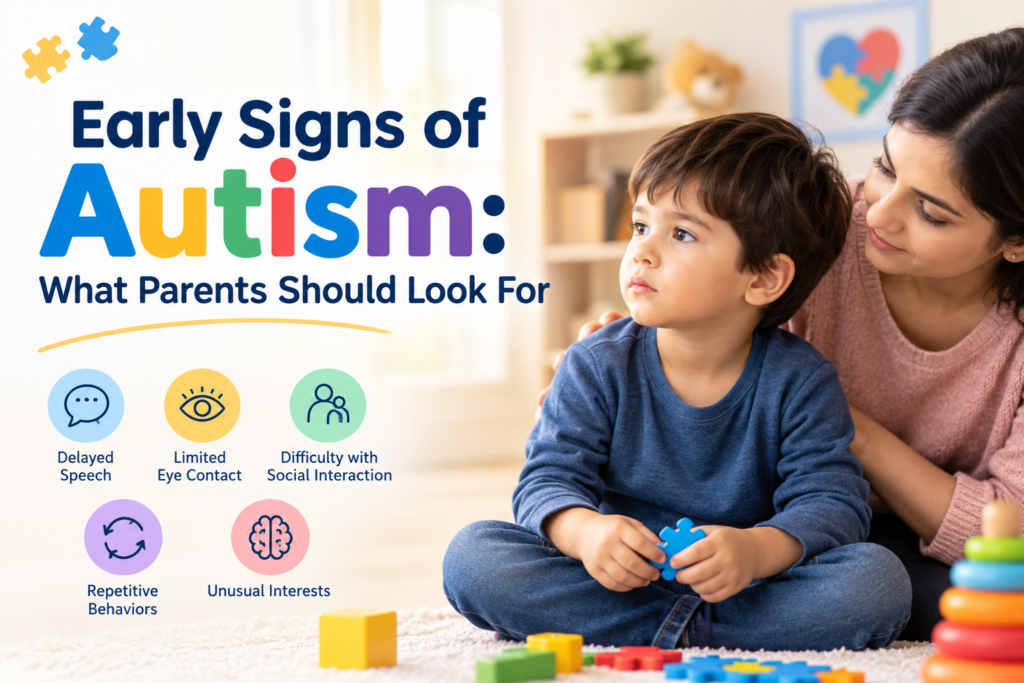
Every child develops at their own pace, but some developmental differences may indicate that a child needs additional support. Recognising the early signs of autism can help parents seek timely professional guidance and understand their child’s unique needs.
Autism spectrum disorder (ASD) is a neurodevelopmental condition that can affect social communication, interaction, behaviour and sensory processing. Some signs may become noticeable during infancy, while others emerge as a child grows and faces new developmental demands. Understanding these signs does not mean jumping to conclusions; it means knowing when to ask for help.
What Are the Early Signs of Autism?
Autism can present differently in every child. Some children show noticeable differences during the first year, while others display signs more clearly between 18 and 24 months.
Common early indicators may include differences in social interaction, communication, play and responses to sensory experiences.
1. Limited Eye Contact and Social Interaction
Some autistic children may interact differently with parents and caregivers. Possible signs include:
- Limited or inconsistent eye contact.
- Not consistently smiling back during social interaction.
- Showing less interest in sharing enjoyment with others.
- Responding inconsistently when their name is called.
- Rarely pointing to show something interesting or get another person’s attention.
These behaviours can have other explanations, so consider the child’s overall developmental pattern rather than one sign alone.
2. Delayed Speech and Communication Differences
Communication differences are among the early signs of autism parents may notice. A child might:
- Babble or use gestures less frequently than expected.
- Have delayed spoken language development.
- Use fewer gestures, such as waving goodbye or pointing.
- Find it difficult to communicate needs through words, sounds or gestures.
- Repeat words or phrases or use language in an unusual way.
Not every autistic child has delayed speech. Some develop fluent language but experience difficulty with conversation, social cues or understanding implied meaning.
3. Repetitive Behaviours and Strong Preferences for Routines
Repetitive movements and a preference for predictability can also be indicators of autism. Parents may observe:
- Repeated hand flapping, rocking or spinning objects.
- Repeatedly arranging toys in a particular order.
- Becoming very upset when familiar routines change.
- Strong interest in particular objects, activities or topics.
- Repeating the same play actions many times.
Repetitive behaviour alone does not establish an autism diagnosis. Its frequency, context and impact on everyday life matter.
4. Unusual Sensory Responses
Some autistic children experience sights, sounds, textures, tastes or smells differently. For example, a child may:
- Cover their ears in response to ordinary sounds.
- Strongly dislike certain clothing textures or food consistencies.
- Seek movement, pressure or repeated sensory experiences.
- Show an unusually strong interest in lights, reflections or moving objects.
Sensory preferences vary widely among children, including those who are not autistic.
When Should Parents Seek Professional Advice?
Consider discussing your concerns with a paediatrician if your child shows several developmental differences, misses expected milestones or has difficulty with communication and social interaction.
Seek prompt evaluation if your child loses previously acquired skills, such as words, gestures or social abilities. Developmental regression should not be ignored.
A healthcare professional may recommend developmental screening, hearing assessment and a comprehensive evaluation by appropriately qualified specialists. Screening identifies children who may need further assessment; it does not confirm autism by itself.
How Can Parents Support a Child Showing Early Signs of Autism?
Parents can take practical steps while arranging professional guidance:
- Track developmental changes: Record communication, play, social responses and any lost skills.
- Encourage interaction: Follow your child’s interests through play, songs, books and everyday routines.
- Use clear communication: Speak in simple phrases, allow time for responses and support communication with gestures or pictures when helpful.
- Discuss concerns early: You do not need to wait for a child to reach a particular age before asking for an assessment.
- Follow professional recommendations: Depending on your child’s needs, support may include speech and language therapy, developmental interventions or occupational therapy.
Early support can help children develop communication, daily living and social skills. The right approach should be individualised to the child’s strengths, needs and family circumstances.
Frequently Asked Questions
1. What are the earliest signs of autism in babies?
Possible signs include limited social smiling, differences in eye contact, reduced response to their name and fewer gestures. These signs are not diagnostic on their own.
2. At what age can autism be identified?
Signs may emerge in the first year of life. A reliable diagnosis can sometimes be made around 18–24 months by experienced professionals, although some children are identified later.
3. Does delayed speech always mean autism?
No. Delayed speech can have many causes, including hearing difficulties and language-development differences. A professional assessment can help identify the reason.
4. Can autism be diagnosed through a screening test?
No. Screening tools help identify children who may need further evaluation. Diagnosis requires a comprehensive assessment of development, behaviour and communication.
5. Can early intervention help autistic children?
Yes. Individualised early support can help children build communication, social interaction and everyday skills. Support should be based on each child’s developmental profile.
Conclusion: Recognise the Signs and Seek Guidance Early
Recognising the early signs of autism can help parents take informed, supportive steps towards understanding their child’s development. Differences in eye contact, communication, play, routines or sensory responses may warrant a professional discussion, particularly when several signs occur together or skills are lost.
Every child deserves understanding, patience and support tailored to their needs. If you have concerns about your child’s development, consult a qualified healthcare professional rather than waiting for the signs to become more pronounced.
For developmental guidance, paediatric assessment and support for your child’s health and well-being, connect with CLIO Mother and Child Institute Hospital.


Proudly powered by CLIO Mother and Child Institute