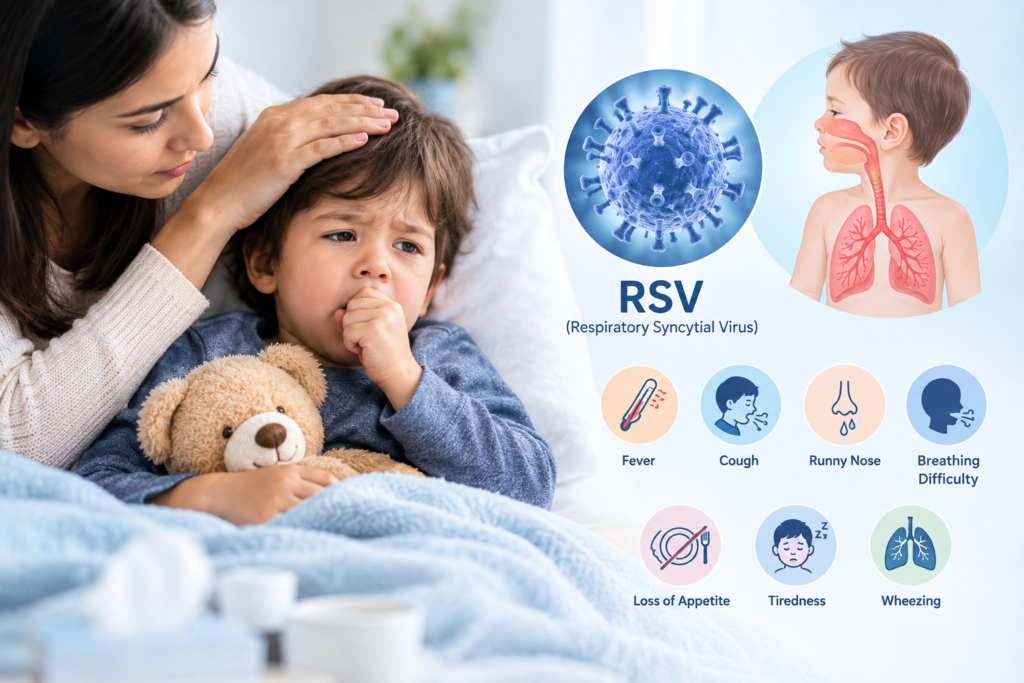
Respiratory illnesses are common during childhood, but some infections can become serious, particularly in babies and young children. RSV in children is one such concern. Respiratory syncytial virus (RSV) is a contagious virus that affects the respiratory system and can cause symptoms ranging from a mild cold to serious breathing difficulties.
Although most children recover with supportive care, infants and children with certain health conditions may be at greater risk of complications. Recognising the early symptoms, understanding how RSV spreads, and knowing when to seek medical attention can help parents protect their children’s health.
What Is RSV in Children?
Respiratory syncytial virus is a common respiratory virus that infects the nose, throat and lungs. Almost all children experience an RSV infection by the age of two, although reinfections can occur throughout life.
In some children, RSV may cause bronchiolitis, an inflammation of the small airways in the lungs, or pneumonia. These conditions can make breathing difficult and may require hospital care.
What Are the Common Symptoms of RSV in Children?
RSV symptoms often appear around four to six days after infection. They may develop gradually and initially resemble an ordinary cold.
Early Signs of RSV
Common symptoms include:
- Runny or blocked nose.
- Coughing and sneezing.
- Fever, although some children may not develop one.
- Reduced appetite or difficulty feeding.
- Irritability and unusual tiredness.
- Wheezing or faster-than-normal breathing.
In very young infants, symptoms may be less obvious. A baby may become unusually sleepy, feed poorly, or experience pauses in breathing without having a noticeable fever.
When Should Parents Seek Medical Help?
Seek urgent medical attention if your child experiences:
- Difficulty breathing, chest muscles pulling inward, or pronounced grunting.
- Blue or grey lips or skin.
- Pauses in breathing.
- Severe dehydration, such as significantly fewer wet nappies.
- Unusual drowsiness or difficulty waking.
Blue or grey skin, severe breathing difficulty, or pauses in breathing require emergency care.
What Causes RSV in Children?
RSV spreads easily through respiratory droplets and contact with contaminated hands or surfaces. An infected person can transmit the virus through coughing, sneezing, or close contact.
Children may catch RSV when they:
- Spend time around infected family members or other children.
- Touch contaminated toys, door handles, or frequently handled objects.
- Touch their eyes, nose, or mouth after contact with the virus.
Premature babies, infants under six months, and children with certain heart, lung, or immune system conditions have a higher risk of severe illness.
How Is RSV Diagnosed?
A paediatrician usually diagnoses RSV by assessing your child’s symptoms, breathing, hydration, and medical history.
Medical Examination and Testing
The doctor may check oxygen levels and listen to the lungs. A nasal swab test can identify RSV when confirmation is necessary, particularly in hospital settings. However, testing is not always required for children with mild symptoms.
What Are the Treatment Options for RSV in Children?
There is no specific routine cure for RSV, and most children recover within one to two weeks. Treatment focuses on relieving symptoms, maintaining hydration, and monitoring breathing.
Home Care for Mild RSV
Parents can support recovery by:
- Offering breast milk, formula, or age-appropriate fluids frequently.
- Using saline nose drops and gentle nasal suction when needed, especially before feeds.
- Allowing the child to rest.
- Keeping the child away from cigarette smoke and other respiratory irritants.
- Monitoring feeding, urination, temperature, and breathing.
Never give honey to babies under 12 months. Avoid over-the-counter cough and cold medicines in young children unless specifically advised by a qualified healthcare professional.
Hospital Treatment for Severe RSV
Children with severe symptoms may require hospitalisation. Treatment can include oxygen therapy, fluids through a vein or feeding tube, and respiratory support when necessary. Antibiotics do not treat RSV itself, although they may be prescribed if a separate bacterial infection is diagnosed.
How Can RSV in Children Be Prevented?
Although RSV cannot always be avoided, practical precautions can reduce the risk of infection:
- Wash hands regularly with soap and water.
- Clean frequently touched surfaces and toys.
- Avoid close contact with people who are unwell.
- Keep infants away from cigarette smoke.
- Ask your paediatrician about RSV preventive options for eligible infants, including long-acting antibodies or maternal vaccination where available and recommended.
Frequently Asked Questions About RSV in Children
1. How long does RSV last in children?
Most children improve within one to two weeks, although coughing may persist longer.
2. Is RSV contagious?
Yes. RSV spreads through respiratory droplets, direct contact, and contaminated surfaces.
3. Can RSV be dangerous for babies?
Yes. Young infants, particularly premature babies, may develop severe breathing difficulties or require hospital treatment.
4. Do children need antibiotics for RSV?
No. RSV is caused by a virus, so antibiotics do not treat the infection itself.
5. When should I take my child to a doctor for RSV?
Seek medical advice if symptoms worsen, feeding decreases, your child urinates less frequently, or breathing becomes faster or more difficult. Emergency symptoms require immediate care.
Protect Your Child’s Health with Timely Paediatric Care
RSV in children often causes mild respiratory symptoms, but recognising warning signs is essential to prevent serious complications. Early assessment, appropriate home care, and timely medical support can make a meaningful difference to your child’s recovery.
If your child develops a persistent cough, breathing difficulties, poor feeding, or unusual tiredness, consult a qualified paediatrician promptly. Never delay emergency care when your child is struggling to breathe.
CLIO Mother and Child Institute Hospital encourages parents to seek timely paediatric guidance and take preventive steps to protect their children’s respiratory health. Your child’s symptoms deserve careful attention, and professional medical advice can help you choose the safest next steps.


Proudly powered by CLIO Mother and Child Institute