Getting diagnosed with PCOS can feel confusing at first. One appointment leaves you with new medical terms, irregular periods suddenly make more sense, and somewhere in the middle of it all comes a question many women quietly ask: Will this affect my chances of getting pregnant?
The short answer? PCOS can make fertility more challenging—but not impossible.
Many women with PCOS go on to conceive naturally or with medical support. The key often lies in understanding your body and making small, sustainable changes rather than chasing quick fixes.
At CLIO Mother and Child Institute, one of the most reassuring things women hear is this: PCOS is manageable, and fertility can often improve with the right approach.
What Is PCOS?
Polycystic Ovary Syndrome is a hormonal condition that affects how the ovaries work.
It can lead to:
- Irregular periods
- Weight fluctuations
- Acne or excess hair growth
- Difficulty with ovulation
And since ovulation plays a major role in pregnancy, fertility can sometimes be affected.
But PCOS doesn’t mean infertility. It often means your body may need better hormonal balance and support.
Why PCOS Affects Fertility
Pregnancy depends on regular ovulation—the release of an egg each month.
With PCOS, ovulation may become irregular or stop altogether. This can make timing conception more difficult.
The good news is that lifestyle changes can often improve hormone balance and encourage ovulation naturally.
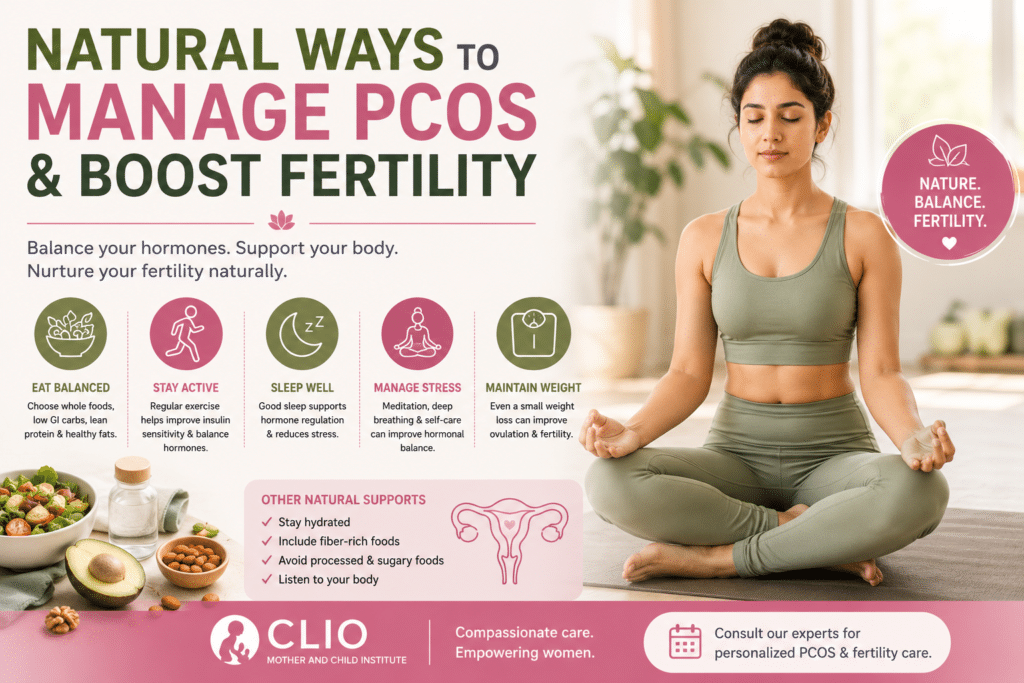
Natural Ways to Manage PCOS
The word “natural” doesn’t mean overnight results. It means working with your body consistently.
1. Focus on Balanced Nutrition
Food plays a bigger role in PCOS than many realize.
Many women with PCOS experience insulin resistance, where the body struggles to use insulin properly. This can affect hormones and ovulation.
Instead of extreme diets, aim for balance:
- Include protein in meals
- Choose whole grains over processed foods
- Add healthy fats like nuts and seeds
- Reduce excess sugar and refined snacks
The goal isn’t restriction—it’s stability.
Small dietary changes often matter more than dramatic ones.
2. Maintain a Healthy Weight
Even a modest weight reduction can sometimes improve hormone levels and menstrual regularity.
That doesn’t mean chasing unrealistic goals.
For many women, consistency matters more than speed. A few healthy habits repeated daily often work better than intense routines that don’t last.
3. Stay Physically Active
Exercise supports hormone balance, metabolism, and stress reduction.
You don’t need punishing workouts.
Walking, yoga, strength training, or simple daily movement can make a meaningful difference over time.
The best exercise is the one you’ll actually continue.
4. Prioritize Sleep
This part gets overlooked.
Poor sleep can affect hormones that influence appetite, insulin, and reproductive health.
Try to maintain a regular sleep routine and reduce screen time before bed where possible.
Sometimes better hormonal health starts with better rest.
5. Manage Stress Levels
Stress and hormones tend to influence each other.
Living with fertility concerns can already feel emotionally heavy. Constant stress may further affect cycle regularity.
Simple things help:
- Deep breathing exercises
- Meditation
- Light physical activity
- Taking breaks without guilt
Not everything has to be optimized all the time.
Can Supplements Help?
Some women explore supplements for PCOS support. But this is where caution matters.
Not every supplement works for everyone, and “natural” doesn’t always mean safe.
Before trying anything new, it’s worth discussing with a doctor—especially if you’re actively trying to conceive.
At CLIO Mother and Child Institute, fertility planning is often personalized because no two PCOS journeys look exactly alike.
When to Seek Medical Help
Lifestyle changes can improve symptoms, but sometimes extra support is needed.
Consider medical guidance if:
- Periods remain very irregular
- You’ve been trying to conceive without success
- Symptoms worsen over time
- Ovulation remains unpredictable
Treatment doesn’t always mean complicated procedures. Sometimes small medical support makes a big difference.
Patience Matters More Than Perfection
One of the hardest parts of PCOS is how unpredictable it can feel.
Progress isn’t always linear. Some months feel better than others. That’s normal.
The mistake many people make is expecting instant results. Hormonal health tends to improve gradually.
The goal isn’t perfection—it’s consistency.
Final Thoughts
PCOS may change the fertility journey, but it doesn’t close the door on motherhood.
Natural management starts with understanding your body, improving daily habits, and giving yourself time.
At CLIO Mother and Child Institute, the focus is on helping women feel informed rather than overwhelmed—because fertility support works best when it feels practical, realistic, and personal.
Sometimes the smallest changes, repeated consistently, quietly create the biggest difference.


Proudly powered by CLIO Mother and Child Institute