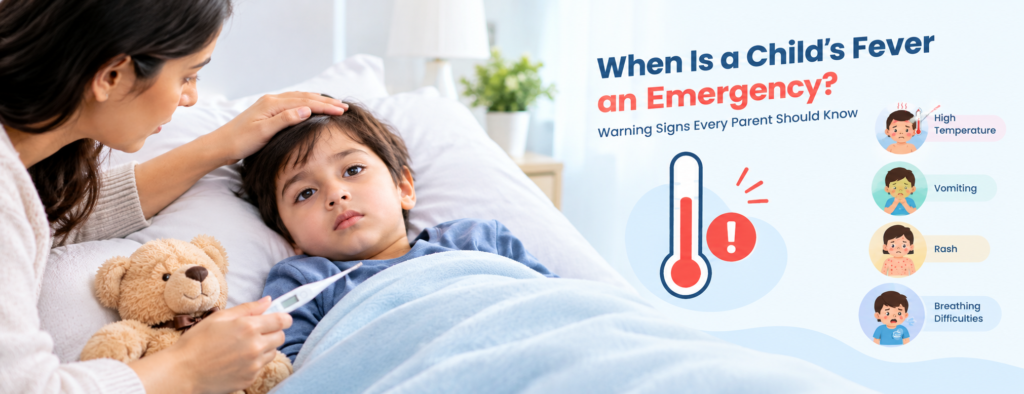
A fever in a child can be worrying for any parent, especially when the temperature rises suddenly or the child becomes unusually tired. While fever is often the body’s natural response to an infection, some symptoms may indicate a more serious condition that needs immediate medical attention. Understanding when a child’s fever is an emergency helps parents make informed decisions and seek timely medical care.
In this guide, we explain the warning signs of serious fever, when to contact a pediatrician, and how to care for your child safely at home.
What Temperature Is Considered a Fever in Children?
A fever is generally defined as a body temperature of 38°C (100.4°F) or higher. It can occur because of viral infections, bacterial infections, or other illnesses.
The seriousness of a fever depends not only on the temperature but also on the child’s age, behavior, hydration, breathing, and other symptoms.
For example, a child with a mild fever who is alert and drinking fluids may need monitoring, while a baby with a temperature of 38°C or higher requires prompt medical assessment.
When Is a Child’s Fever an Emergency?
Knowing when a child’s fever is an emergency can help parents recognize situations that require immediate attention. Certain warning signs should never be ignored, even if the temperature is not extremely high.
1. Fever in a Baby Under Three Months
A temperature of 38°C (100.4°F) or higher in a baby younger than three months requires immediate medical assessment. Young infants can develop serious infections without showing obvious symptoms.
Do not wait for the fever to rise further or attempt to manage it at home without medical advice.
2. Difficulty Breathing
Seek emergency medical care if your child experiences:
- Rapid or labored breathing
- Grunting or unusual breathing sounds
- Skin pulling inward around the ribs while breathing
- Blue or grey lips or skin
Breathing difficulties alongside fever may indicate a serious infection or another urgent medical condition.
3. Unusual Drowsiness or Confusion
Children often feel tired when they have a fever. However, being difficult to wake, confused, unresponsive, or unusually weak is a serious warning sign.
If your child is not responding normally, seek emergency care immediately.
4. Seizures or a Stiff Neck
A seizure during a fever can be frightening. A first seizure, a seizure lasting five minutes or longer, repeated seizures, or difficulty breathing during a seizure requires emergency assistance.
A stiff neck, severe headache, or sensitivity to light combined with fever may also indicate a serious condition, including meningitis. These symptoms need urgent medical evaluation.
5. Signs of Dehydration or a Serious Rash
Fever can increase fluid loss, particularly when accompanied by vomiting or diarrhea.
Watch for dehydration symptoms such as:
- Very little urine or fewer wet diapers than usual
- Dry mouth and lips
- No tears when crying
- Inability to keep fluids down
- Unusual weakness or dizziness
A rash that does not fade when pressed firmly with a clear glass can be a sign of a serious infection. Seek emergency care immediately, especially if your child also appears unwell.
When Should You Contact a Pediatrician?
Not every fever requires an emergency department visit, but some situations need prompt medical advice.
Contact your child’s pediatrician if:
- A child aged three to six months has a temperature of 39°C (102.2°F) or higher.
- Fever lasts five days or longer.
- Your child has persistent vomiting, worsening pain, or reduced fluid intake.
- Your child has an underlying medical condition or a weakened immune system.
- Your child is getting worse or you are concerned about their behavior.
Important: If your child has emergency warning signs, do not delay care while waiting for a pediatrician’s appointment.
How to Care for a Child With Fever at Home
If your child is alert, breathing comfortably, drinking fluids, and showing no emergency warning signs, these steps may help them feel more comfortable:
- Offer frequent fluids: Encourage water, breast milk, or other age-appropriate fluids.
- Allow adequate rest: Let your child sleep and rest as needed.
- Dress comfortably: Avoid excessive clothing or heavy blankets.
- Monitor symptoms: Check temperature and watch for changes in behavior, breathing, and urination.
- Use medication carefully: Give age-appropriate fever medicine only according to medical advice and the product’s instructions. Never give aspirin to children unless specifically directed by a specialist.
Avoid ice baths, cold-water sponging, and alcohol rubs. Remember that fever medicine may improve comfort, but it does not treat the underlying cause of the fever.
Frequently Asked Questions (FAQs)
1. When should I take my child to the hospital for a fever?
Seek immediate medical care for a baby under three months with a temperature of 38°C or higher, breathing difficulties, seizures, severe drowsiness, a stiff neck, or a concerning rash.
2. Is a fever of 40°C dangerous in children?
A temperature of 40°C (104°F) warrants prompt medical advice, particularly if your child looks unwell. Seek emergency care if any serious warning signs are present.
3. How long can a child have a fever before seeing a doctor?
Consult a pediatrician if the fever lasts five days or longer, worsens, or is accompanied by concerning symptoms. Younger infants and children with emergency warning signs need assessment sooner.
4. Should I wake my child to give fever medicine?
Generally, a comfortably sleeping child does not need to be awakened solely to give fever medicine. However, a child who is unusually difficult to wake needs emergency medical assessment.
5. Can a child have a serious illness without a high fever?
Yes. The temperature alone cannot determine how serious an illness is. Changes in breathing, alertness, hydration, and overall behavior are important indicators.
Conclusion: Recognize the Signs and Act Early
Knowing when a child’s fever is an emergency can help parents respond confidently and protect their child’s health. While many childhood fevers improve with rest and fluids, symptoms such as breathing difficulties, unusual drowsiness, seizures, dehydration, and a non-fading rash require urgent attention. Fever in babies younger than three months also needs immediate medical assessment.
Trust your instincts if your child seems seriously unwell, and never delay emergency care when warning signs appear.
For professional pediatric guidance and compassionate mother-and-child healthcare, consult CLIO Mother and Child Institute Hospital. The hospital is committed to supporting parents with informed care and timely medical attention when children need it most.


Proudly powered by CLIO Mother and Child Institute