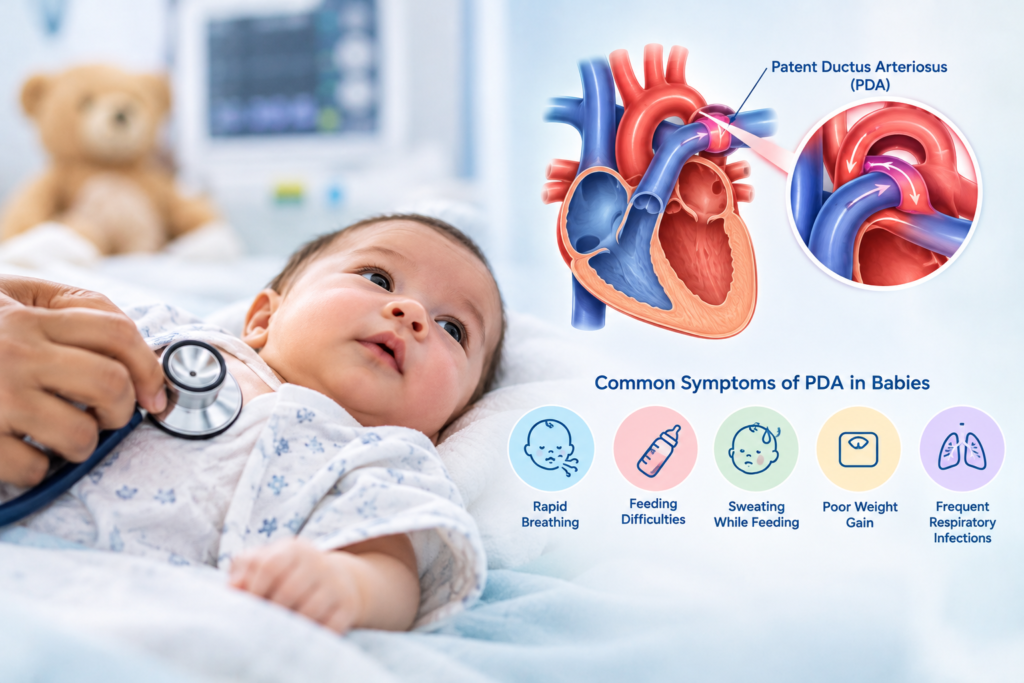
A baby’s heart begins working long before birth, and certain blood vessels play an essential role in circulation during pregnancy. One of these vessels usually closes naturally after birth. When it remains open, the condition is known as patent ductus arteriosus (PDA). Understanding PDA in babies can help parents recognise potential symptoms and seek timely medical attention.
While some babies with PDA have no noticeable symptoms, others may experience breathing difficulties, feeding problems, or poor weight gain. Early diagnosis allows doctors to determine whether the condition needs monitoring or treatment.
What Is PDA in Babies?
Patent ductus arteriosus is a congenital heart condition in which a temporary blood vessel called the ductus arteriosus remains open after birth.
During pregnancy, this vessel connects the pulmonary artery to the aorta, allowing blood to bypass the lungs because the baby receives oxygen through the placenta. After birth, the lungs begin supplying oxygen, and the vessel usually closes within the first few days.
When it stays open, extra blood can flow towards the lungs. The impact depends on the size of the opening and the baby’s overall health.
What Are the Symptoms of PDA in Babies?
PDA symptoms vary from baby to baby. Small openings may cause no symptoms, while a larger PDA can place additional strain on the heart and lungs.
Common Signs and Symptoms
Parents may notice:
- Rapid or difficult breathing.
- Tiring easily during feeding.
- Sweating while feeding.
- Poor feeding or taking longer than usual to finish feeds.
- Slow weight gain or poor growth.
- Frequent respiratory infections.
- A rapid heartbeat.
A paediatrician may also detect a characteristic heart murmur during a routine examination.
Important: Seek urgent medical care if your baby has severe breathing difficulty, blue or grey lips, pauses in breathing, or is unusually difficult to wake. Poor feeding accompanied by significant lethargy or breathing problems also requires prompt assessment.
What Causes PDA in Babies?
The exact reason why the ductus arteriosus remains open is not always known. However, certain factors increase the likelihood of PDA.
Risk Factors for Patent Ductus Arteriosus
- Premature birth: PDA is considerably more common in babies born prematurely because the ductus arteriosus may be less mature.
- Low birth weight: Babies with low birth weight, particularly those born very early, have an increased risk.
- Genetic factors: Some congenital conditions are associated with heart defects, including PDA.
- Pregnancy-related factors: Certain maternal infections and pregnancy circumstances may be associated with an increased risk of congenital heart conditions.
PDA is not caused by something a parent deliberately did or failed to do. In many cases, its precise cause cannot be identified.
How Is PDA Diagnosed in Babies?
Early diagnosis helps doctors assess how significantly the condition affects the heart and lungs.
Echocardiography and Other Tests
A paediatrician may initially suspect PDA after hearing a heart murmur or noticing symptoms. The following investigations may be recommended:
- Echocardiogram: An ultrasound scan of the heart that identifies the open ductus and assesses blood flow.
- Pulse oximetry: Measures oxygen saturation in the blood.
- Chest X-ray: May help evaluate heart enlargement or changes in the lungs when clinically indicated.
- Clinical examination: Assesses breathing, heart rate, feeding, and growth.
An echocardiogram is the main test used to confirm PDA and guide treatment decisions.
What Are the Treatment Options for PDA in Babies?
Treatment depends on the baby’s age, gestational age at birth, PDA size, symptoms, and the effect on heart and lung function.
1. Observation and Monitoring
Small PDAs may close naturally or cause no significant health problems. In these cases, doctors may recommend regular check-ups and echocardiograms rather than immediate treatment.
2. Medication
In selected premature infants, medicines such as ibuprofen or indomethacin may help the ductus close. Acetaminophen is another option in certain circumstances. These medicines are not suitable for every baby, and treatment requires specialist supervision.
3. Catheter-Based Closure
A cardiac specialist may close the PDA using a small device inserted through a blood vessel, usually in the groin. This procedure is suitable for many babies, depending on their size, anatomy, and clinical condition.
4. Surgical Closure
Surgery may be recommended when the PDA causes significant problems and medication or catheter-based treatment is unsuitable or unsuccessful. The cardiology team will explain the most appropriate option for your baby.
Frequently Asked Questions About PDA in Babies
1. Is PDA in babies a serious condition?
It can range from mild to serious. Small PDAs may have little effect, while larger openings can strain the heart and lungs.
2. Can PDA close naturally after birth?
Yes. Some PDAs close naturally, particularly during the early period after birth. Others remain open and require monitoring or treatment.
3. Can PDA affect a baby’s growth?
A significant PDA can increase the workload on the heart and lungs, contributing to feeding difficulties and poor weight gain.
4. Does every baby with PDA need surgery?
No. Some babies need only observation, while others may benefit from medication or catheter-based closure. Surgery is reserved for selected cases.
5. Can a baby live a healthy life after PDA treatment?
Many babies do very well after appropriate treatment. Their outlook depends on the size of the PDA, any associated conditions, and the success of treatment and follow-up care.
Give Your Baby the Right Start with Timely Heart Care
PDA in babies is a treatable congenital heart condition, but its effects can vary considerably. Recognising symptoms, attending recommended check-ups, and obtaining an accurate diagnosis can help ensure that your baby receives appropriate care.
If your baby has feeding difficulties, rapid breathing, poor weight gain, or a suspected heart murmur, consult a qualified paediatrician promptly. Your doctor can assess whether a paediatric cardiology consultation or further investigations are needed.
CLIO Mother and Child Institute Hospital encourages parents to prioritise newborn health through timely medical assessment, appropriate screening, and specialist guidance whenever a heart condition is suspected.


Proudly powered by CLIO Mother and Child Institute