A child suddenly develops a rash after eating something new. Another wakes up sneezing every morning. Someone else keeps coughing whenever the weather changes. As a parent, it’s easy to wonder: Is this just normal—or could it be an allergy?
Pediatric allergies are more common than many people realize. The tricky part is that they don’t always look dramatic. Sometimes, the signs are subtle and easy to miss.
At CLIO Mother and Child Institute, one of the most common concerns parents bring up is recurring symptoms that don’t seem to go away. Often, allergies are part of the picture.
What Are Pediatric Allergies?
An allergy happens when the immune system overreacts to something that is normally harmless. This “something” is called an allergen.
For children, triggers often fall into two broad categories:
- Food allergies
- Environmental allergies
Some children outgrow allergies over time. Others may need long-term management. Either way, understanding the trigger is the first step.
Common Food Allergies in Children
Food allergies can appear early in life and sometimes after foods that seemed perfectly fine before.
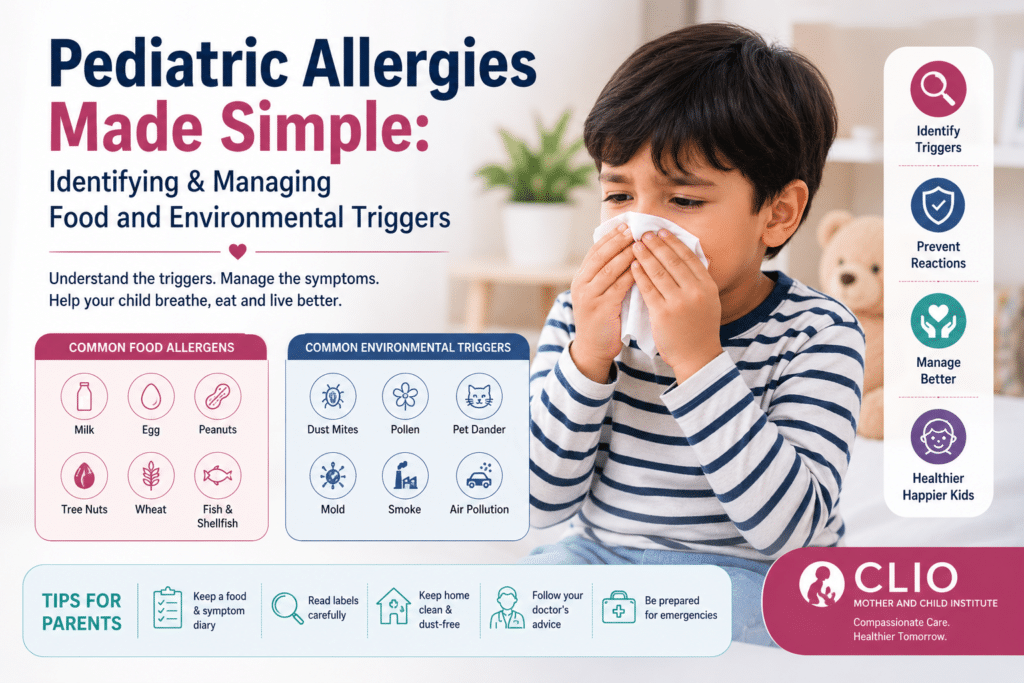
Common triggers include:
- Milk and dairy products
- Eggs
- Peanuts and tree nuts
- Wheat
- Soy
- Fish and shellfish
Symptoms can range from mild to serious.
Signs of Food Allergies
Keep an eye out for:
- Skin rashes or hives
- Swelling around the lips or face
- Vomiting or stomach pain
- Diarrhea
- Difficulty breathing in severe cases
Sometimes symptoms happen within minutes. Other times, they take longer to appear.
A pattern often tells the story. If the same reaction follows the same food, it deserves attention.
Environmental Allergies: The Invisible Triggers
Not all allergies come from food. Some children react to things around them every day.
Common environmental triggers include:
- Dust mites
- Pollen
- Pet dander
- Mold
- Smoke or air pollution
Unlike food allergies, these often affect breathing or the skin more than digestion.
Signs of Environmental Allergies
You may notice:
- Frequent sneezing
- Runny or blocked nose
- Itchy or watery eyes
- Skin irritation or eczema flare-ups
- Persistent cough, especially at night
Sometimes parents mistake allergies for repeated colds because the symptoms overlap.
The difference? Allergies tend to repeat in patterns—certain seasons, places, or situations.
Why Identifying Triggers Matters
Managing allergies starts with understanding what causes them.
Guesswork can be frustrating. You remove one thing, then another, hoping symptoms improve.
Instead, keeping track helps.
Ask simple questions:
- What did my child eat before symptoms appeared?
- Did symptoms happen indoors or outdoors?
- Does it worsen during weather changes?
- Is there exposure to dust, pets, or smoke?
Patterns matter more than isolated incidents.
At CLIO Mother and Child Institute, doctors often guide parents through symptom history because small details can reveal important clues.
Managing Food Allergies
Once a trigger is identified, management becomes more practical.
Read Labels Carefully
Packaged foods can contain hidden allergens. Always double-check ingredients.
Avoid Sudden Food Experiments
Introducing too many new foods at once can make it harder to identify the trigger.
Keep Emergency Medication Ready
For children with serious allergies, doctors may recommend medications to handle unexpected reactions.
Inform Caregivers and Schools
Anyone caring for your child should know what foods to avoid and what signs to watch for.
Managing Environmental Allergies
The goal here is reducing exposure, not creating a perfectly allergen-free world.
Simple habits can help:
- Wash bedding regularly
- Keep rooms dust-free
- Use clean air circulation where possible
- Avoid smoke exposure
- Bathe pets regularly if pet allergies are involved
Small adjustments often make a bigger difference than expected.
When Should You See a Doctor?
Occasional sneezing or mild stomach upset isn’t always an allergy. But repeated symptoms deserve attention.
Seek medical advice if:
- Symptoms keep returning
- Reactions become stronger over time
- Breathing issues appear
- Skin rashes persist
- Your child avoids eating due to discomfort
Early diagnosis helps prevent complications and unnecessary worry.
Don’t Panic—Most Allergies Are Manageable
Hearing that your child has allergies can feel overwhelming at first. But most pediatric allergies can be managed well with awareness and planning.
Children still play, grow, eat, and live normal lives. The difference is simply knowing what to avoid and how to respond when symptoms appear.
At CLIO Mother and Child Institute, the approach is straightforward—understand the trigger, reduce exposure, and help families feel confident instead of anxious.
Final Thoughts
Allergies can seem confusing because symptoms often mimic everyday illnesses. But recurring patterns usually tell you something important.
The goal isn’t to become overly cautious. It’s to become observant.
When parents know what to look for, managing pediatric allergies becomes far less stressful—and much more manageable for the whole family.


Proudly powered by CLIO Mother and Child Institute