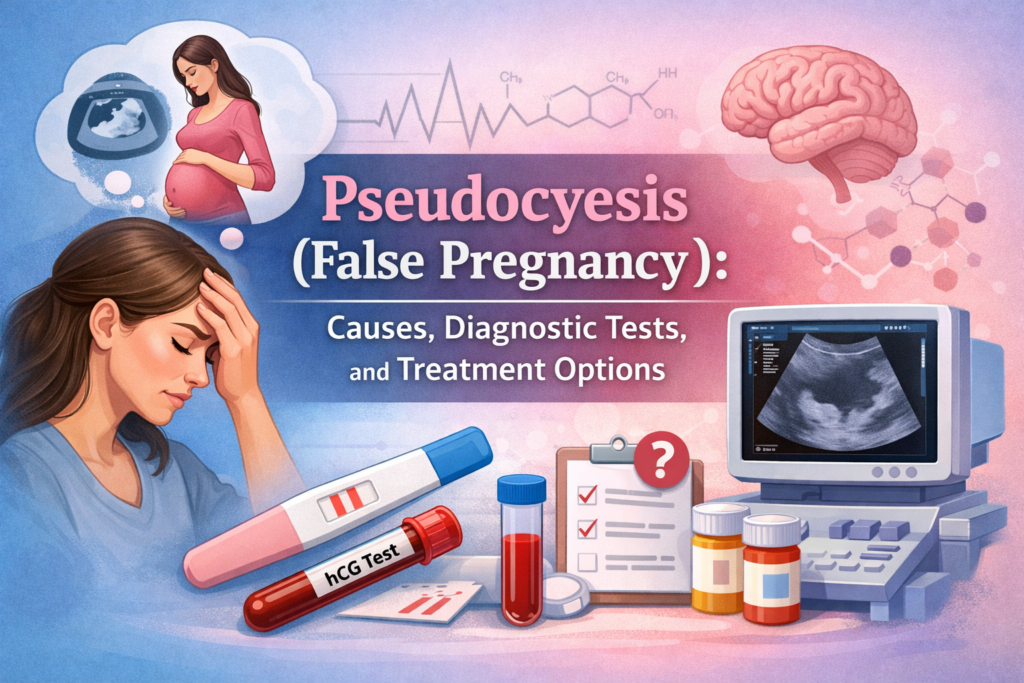
For many women, the hope of pregnancy is deeply emotional. When the body begins to show signs of pregnancy, the experience can feel incredibly real and convincing. But in rare cases, a woman may experience pregnancy-like symptoms without an actual pregnancy. This condition is known as Pseudocyesis, or false pregnancy.
Pseudocyesis is not “imagined” or “made up.” The physical and emotional changes are genuine, and the distress can be profound. Understanding this condition with sensitivity is the first step toward healing.
What Is Pseudocyesis?
Pseudocyesis is a medical condition in which a woman strongly believes she is pregnant and develops many of the physical signs of pregnancy, even though no fetus is present.
Women with pseudocyesis may experience:
- Missed or irregular periods
- Abdominal enlargement
- Breast tenderness or enlargement
- Nausea and vomiting
- Weight gain
- Sensation of fetal movements
- Fatigue and mood changes
Because these symptoms closely mimic real pregnancy, the condition can be emotionally overwhelming when the truth is revealed.
Why Does False Pregnancy Occur?
Pseudocyesis develops from a complex interaction between the mind, hormones, and body. It is not a sign of weakness or attention-seeking. Several factors may contribute:
1. Psychological Factors
- Intense desire to conceive
- Fear of infertility
- History of miscarriage or infertility
- Emotional trauma or loss
- Strong fear of becoming pregnant
The brain can influence hormone release, leading to real physical changes in the body.
2. Hormonal Imbalance
Hormonal shifts involving estrogen, progesterone, and prolactin can result in pregnancy-like symptoms such as breast changes and absence of menstruation.
3. Social and Cultural Pressure
In some cases, societal expectations around marriage and motherhood can intensify emotional stress, which may trigger physical symptoms.
How Is Pseudocyesis Diagnosed?
Diagnosis requires medical confirmation, handled with care and empathy. At CLIO Mother & Child Institute, doctors prioritize emotional well-being alongside medical accuracy.
Diagnostic Tests Include:
Pregnancy Test:
Urine or blood tests show negative results.
Ultrasound Scan:
An ultrasound confirms the absence of a fetus and pregnancy structures.
Pelvic Examination:
Helps assess uterine size and rule out other conditions.
Hormonal Evaluation:
Blood tests may be done to check hormone levels if needed.
Once pregnancy is medically ruled out, the diagnosis is gently explained to the patient, often over more than one consultation.
Treatment Options for Pseudocyesis
Treatment focuses on both physical symptoms and emotional healing. There is no one-size-fits-all approach.
1. Emotional Support and Counseling
Psychological counseling plays a key role. Speaking openly with a trained mental health professional helps patients process emotions such as grief, disappointment, or anxiety.
2. Medical Management
If hormonal imbalances are identified, doctors may prescribe medications to help restore normal cycles and relieve physical symptoms.
3. Psychiatric Care (If Needed)
In cases where anxiety, depression, or emotional distress is severe, psychiatric evaluation and therapy may be recommended.
4. Family Involvement
Support from family members is essential. Understanding and compassion from loved ones can significantly speed recovery.
Healing Takes Time
Coming to terms with a false pregnancy can feel like losing a dream. Feelings of sadness, embarrassment, or confusion are completely normal. Healing does not happen overnight, and reassurance from trusted doctors makes a meaningful difference.
With proper care, most women recover fully, both physically and emotionally, and can return to normal menstrual cycles and daily routines.
When Should You Seek Help?
You should consult a healthcare professional if:
- Pregnancy symptoms persist despite negative test results
- Emotional distress feels overwhelming
- Menstrual cycles do not return to normal
- Anxiety or depression affects daily life
Early support prevents prolonged emotional strain.
A Compassionate Note from CLIO Mother & Child Institute
At Clio Mother and Child Institute, we understand that women’s health is deeply personal and emotional. Our gynecologists, counselors, and support staff work together to provide respectful, confidential, and compassionate care.
If you or someone you love is experiencing unexplained pregnancy symptoms, know that you are not alone. Help, clarity, and healing are always within reach.


Proudly powered by CLIO Mother and Child Institute