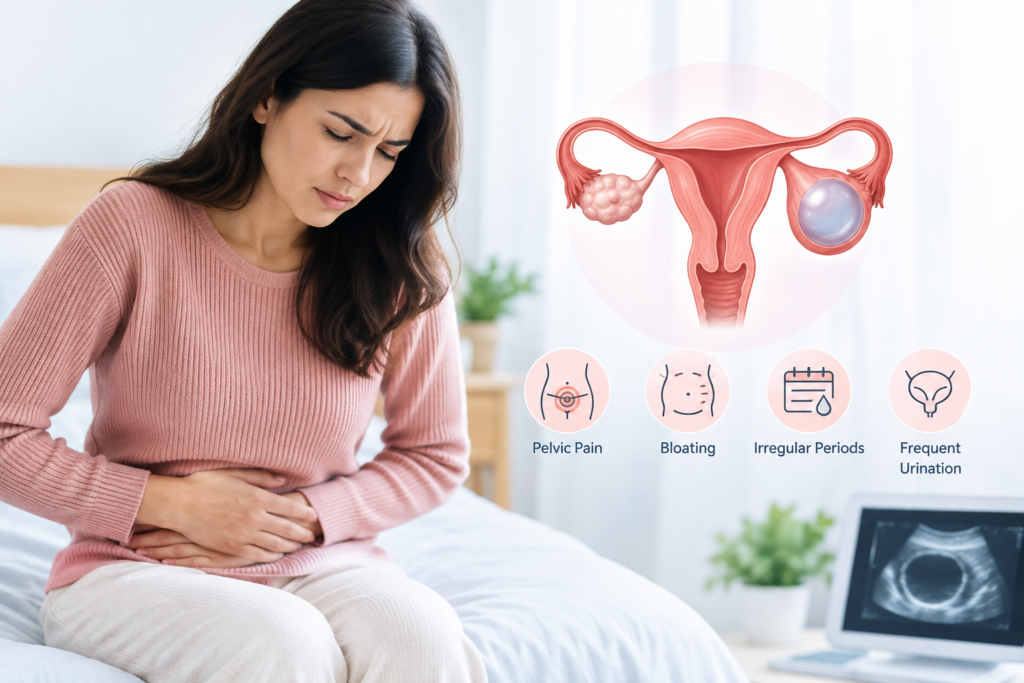
Ovarian cyst pain can be worrying, especially when you experience unexpected lower abdominal discomfort, bloating, or pain during your menstrual cycle. While many ovarian cysts are harmless and disappear naturally, some may require medical evaluation and treatment.
Understanding the causes of ovarian cyst pain, how doctors diagnose it, and when surgery becomes necessary can help you make informed decisions about your reproductive health. Recognising warning signs early is equally important for preventing complications.
What Is Ovarian Cyst Pain?
An ovarian cyst is a fluid-filled sac or, in some cases, a sac containing other tissue that develops in or on an ovary. Many cysts form naturally during the menstrual cycle and do not cause noticeable symptoms.
However, ovarian cyst pain may occur when a cyst grows larger, ruptures, bleeds, or causes the ovary to twist. The severity of pain varies depending on the cyst’s size, type, and associated complications.
Common Symptoms of Ovarian Cysts
Symptoms may include:
- Dull or sharp pain in the lower abdomen or pelvis, often on one side.
- Abdominal bloating or a feeling of pressure.
- Pain during sexual intercourse.
- Irregular, heavier, or lighter menstrual periods.
- Frequent urination or difficulty emptying the bladder.
- A feeling of fullness after eating small amounts.
Not every woman experiences these symptoms. Persistent or unexplained pelvic pain should be evaluated by a healthcare professional.
How Is Ovarian Cyst Pain Diagnosed?
Accurate diagnosis helps determine whether a cyst requires monitoring, medication for symptom relief, or surgical treatment.
1. Medical History and Pelvic Examination
Your gynaecologist may ask about your symptoms, menstrual cycle, medical history, and pregnancy possibility. A pelvic examination may help identify tenderness or an abnormal mass.
2. Pelvic Ultrasound
An ultrasound scan is one of the main tests used to diagnose ovarian cysts. It helps assess the cyst’s size, location, shape, and appearance. Depending on your circumstances, your doctor may recommend an abdominal or transvaginal ultrasound.
3. Blood Tests
Blood tests may be advised when the ultrasound findings or other risk factors require further investigation. A CA-125 test may be considered in selected cases, particularly after menopause. An elevated result does not automatically mean cancer.
Your doctor may also recommend a pregnancy test or additional investigations to rule out other causes of pelvic pain.
When Is Ovarian Cyst Surgery Needed?
Ovarian cyst surgery is not necessary for every cyst. Many functional cysts disappear naturally within a few menstrual cycles. Your treatment plan depends on your symptoms, age, menopausal status, and ultrasound findings.
Surgery may be recommended when:
- The cyst is large, persistent, or continues to grow.
- Pelvic pain is ongoing, severe, or affects daily activities.
- The cyst has an unusual or complex appearance.
- There is concern about a potentially cancerous growth.
- Complications such as ovarian torsion or significant internal bleeding occur.
Types of Ovarian Cyst Surgery
Laparoscopic surgery: This minimally invasive procedure uses small abdominal incisions and a camera. When appropriate, it can remove the cyst while preserving healthy ovarian tissue.
Open surgery (laparotomy): This involves a larger abdominal incision and may be recommended for particularly large cysts or when there is concern about cancer.
Whenever possible, surgeons aim to preserve the ovaries and fertility. However, the appropriate procedure depends on the individual case.
When Should You Seek Emergency Medical Care?
Do not ignore sudden or severe ovarian cyst pain. Seek emergency medical attention if you experience:
- Sudden, intense pelvic or lower abdominal pain.
- Severe pain accompanied by nausea or vomiting.
- Pain with dizziness, fainting, or marked weakness.
- Severe abdominal pain with fever or rapidly worsening symptoms.
These signs may indicate ovarian torsion, a ruptured cyst, or internal bleeding. Prompt assessment is essential.
Frequently Asked Questions
1. Can ovarian cyst pain go away on its own?
Yes. Pain associated with some functional cysts may improve as the cyst resolves naturally. Persistent or worsening pain needs medical evaluation.
2. Where is ovarian cyst pain usually felt?
It is commonly felt in the lower abdomen or pelvic region, often on one side. The location and intensity can vary.
3. Does every ovarian cyst require surgery?
No. Many cysts need only observation and follow-up ultrasound scans. Surgery is considered when symptoms, size, persistence, or suspicious findings warrant it.
4. Can ovarian cysts affect fertility?
Some cysts and underlying conditions may affect fertility, but many ovarian cysts do not. When surgery is needed, doctors often aim to preserve healthy ovarian tissue.
5. How long does recovery from ovarian cyst surgery take?
Recovery depends on the procedure and individual health. Recovery after laparoscopic surgery is generally quicker than after open surgery, but your surgeon will provide personalised instructions.
Take the Next Step Towards Better Women’s Health
Ovarian cyst pain should never be dismissed when it is persistent, recurring, or affecting your daily life. Early diagnosis can help identify the cause, guide appropriate treatment, and reduce the risk of complications.
If you are experiencing pelvic discomfort, menstrual changes, or symptoms that concern you, arrange an assessment with a qualified gynaecologist. For sudden, severe pain, seek emergency care rather than waiting for a routine appointment.
CLIO Mother and Child Institute Hospital encourages women to prioritise their reproductive health through timely medical assessment, informed treatment decisions, and appropriate follow-up care. Consult a qualified healthcare professional to discuss your symptoms and determine the most suitable care for your needs.


Proudly powered by CLIO Mother and Child Institute