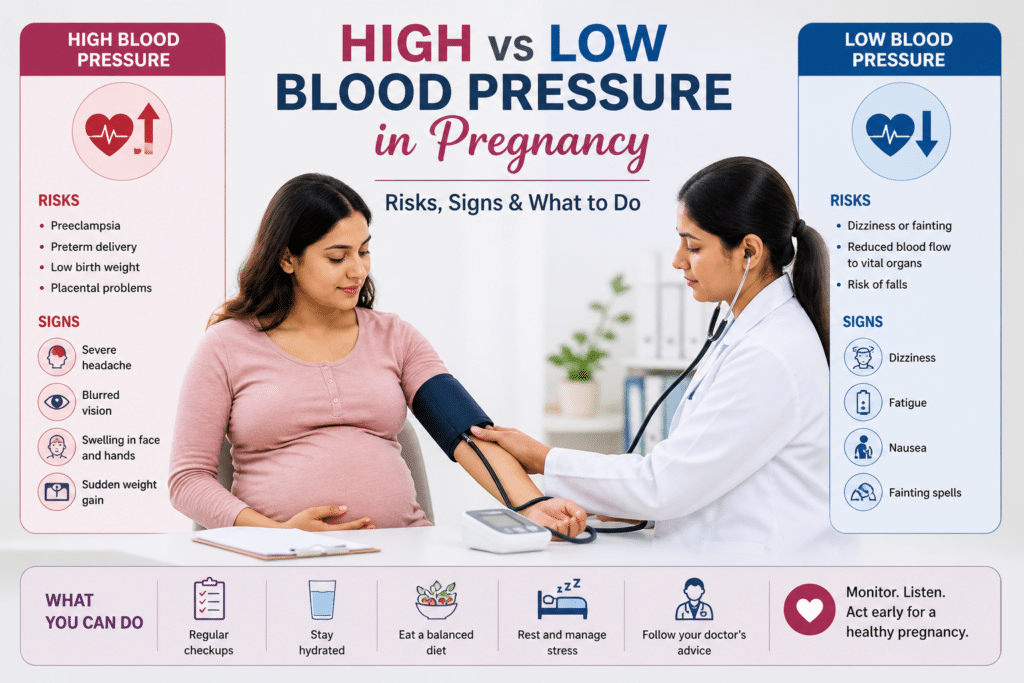
Pregnancy teaches you to notice things you once ignored. A slight swelling, a change in appetite, a different kind of fatigue. Blood pressure is one of those quiet markers—easy to overlook, but important to track.
Most of the time, it behaves. But when it doesn’t, it can affect both mother and baby in ways that aren’t always obvious at first.
At CLIO Mother and Child Institute, monitoring blood pressure is a routine part of antenatal care. Not because problems are expected—but because they’re easier to manage when caught early.
Why Blood Pressure Matters in Pregnancy
Blood pressure tells you how hard your blood is pushing against the walls of your arteries. During pregnancy, your body goes through major changes—more blood volume, hormonal shifts, and increased demand on the heart.
When blood pressure is too high or too low, it can disrupt this balance.
High Blood Pressure (Hypertension) in Pregnancy
High blood pressure during pregnancy is more common than many expect. Sometimes it develops on its own. Other times, it’s linked to a condition called preeclampsia.
What Are the Risks?
Uncontrolled high blood pressure can lead to:
- Reduced blood flow to the placenta
- Slower growth of the baby
- Premature delivery
- Complications during labour
In more serious cases, it can affect the mother’s organs, including the liver and kidneys.
Signs to Watch For
High blood pressure doesn’t always come with clear symptoms, which is why regular checkups matter. But when signs do appear, they may include:
- Persistent headaches
- Blurred vision
- Swelling in the hands and face
- Sudden weight gain
These symptoms don’t confirm a problem—but they shouldn’t be ignored either.
Low Blood Pressure (Hypotension) in Pregnancy
Low blood pressure is less talked about, but it’s fairly common—especially in early pregnancy.
What Causes It?
Hormonal changes cause blood vessels to relax, which can lower blood pressure. In many cases, it’s temporary and not dangerous.
When It Becomes a Concern
Low blood pressure can become problematic if it leads to:
- Dizziness or fainting
- Reduced blood flow to vital organs
- Risk of falls or injury
Severe or persistent hypotension may need medical attention.
Signs to Notice
- Lightheadedness
- Nausea
- Fatigue
- Fainting spells
Again, these symptoms can overlap with normal pregnancy changes. The difference lies in how frequent or intense they are.
High vs Low: Understanding the Difference
High and low blood pressure may seem like opposite problems—but both require attention.
- High BP tends to build quietly and can become serious if untreated
- Low BP is often mild but can affect daily comfort and safety
Neither should be self-diagnosed. Proper measurement is the only way to know what’s actually happening.
What You Can Do
You don’t need to manage this alone. But there are simple ways to support healthy blood pressure during pregnancy.
1. Don’t Skip Checkups
Routine antenatal visits help detect changes early. Even if you feel fine, these visits matter.
2. Stay Hydrated
Dehydration can lower blood pressure and make symptoms worse.
3. Eat Balanced Meals
A well-rounded diet supports overall circulation and energy levels.
4. Rest When Needed
Fatigue can amplify symptoms. Listening to your body isn’t optional—it’s necessary.
5. Follow Medical Advice
If your doctor prescribes medication or specific guidelines, stick to them. Consistency makes a difference.
At CLIO Mother and Child Institute, care plans are adjusted based on individual needs. There’s no one-size-fits-all approach.
When to Seek Immediate Help
Some signs shouldn’t wait for your next appointment:
- Severe headache that doesn’t go away
- Vision changes
- Chest pain or shortness of breath
- Fainting or repeated dizziness
These may not always indicate a serious issue—but they need to be checked without delay.
The Role of Regular Monitoring
One reading doesn’t tell the whole story. Blood pressure can fluctuate throughout the day. What matters is the pattern over time.
That’s why regular monitoring—both at the clinic and sometimes at home—is important. It provides a clearer picture and helps guide the next steps.
Final Thoughts
Blood pressure isn’t something you can feel most of the time. It doesn’t always announce itself. But it plays a quiet, critical role in your pregnancy.
High or low, both ends of the spectrum deserve attention—not panic, just awareness.
At CLIO Mother and Child Institute, the goal is to keep things simple: monitor regularly, respond early, and support you through every stage.
Because in pregnancy, small checks often prevent bigger problems.


Proudly powered by CLIO Mother and Child Institute