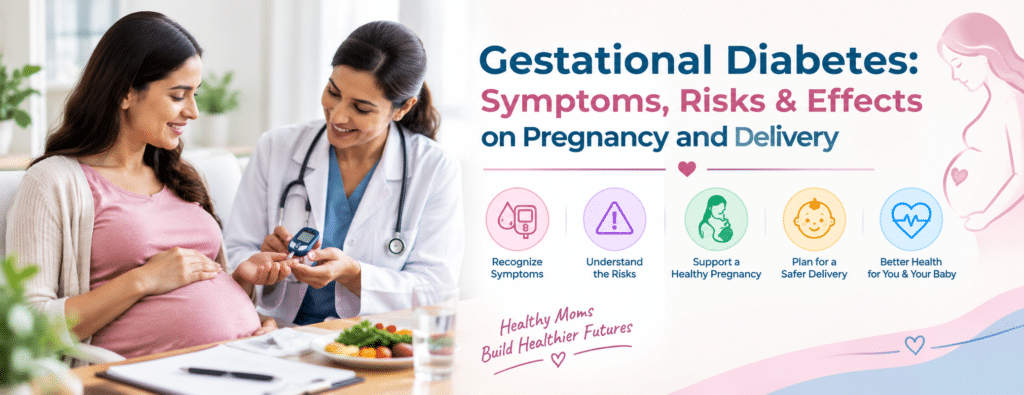
Pregnancy brings many physical changes, but some conditions can develop without obvious warning. Gestational Diabetes is one of them. It occurs when blood sugar levels become higher than normal during pregnancy in someone who did not already have diabetes.
The important thing to remember is that gestational diabetes can often be managed effectively with proper monitoring and medical care. Understanding its symptoms, risks, testing, and effects on delivery can help you take timely steps to protect both your health and your baby.
What Is Gestational Diabetes?
Gestational Diabetes is a form of high blood sugar that develops during pregnancy. Pregnancy-related hormonal changes can make it harder for the body to use insulin effectively, causing glucose to build up in the bloodstream.
It commonly develops during the second or third trimester. Because many women have no noticeable symptoms, routine gestational diabetes screening is an important part of antenatal care.
Who May Be at Higher Risk?
Certain factors can increase the likelihood of developing gestational diabetes, including:
- Previous gestational diabetes
- Being overweight or having obesity
- A family history of type 2 diabetes
- Previous delivery of a large baby
- Having certain medical or pregnancy-related risk factors
- A history of blood sugar problems
Having a risk factor does not mean you will develop the condition. Similarly, women without obvious risk factors can also develop gestational diabetes.
Gestational Diabetes Symptoms to Know
One of the biggest challenges is that Gestational Diabetes often causes no clear symptoms.
Some women may experience:
- Increased thirst
- More frequent urination
- Increased tiredness
- Blurred vision in some cases
However, these symptoms can also occur during a normal pregnancy. Therefore, symptoms alone cannot confirm gestational diabetes. Blood glucose testing is needed for diagnosis.
How Is Gestational Diabetes Diagnosed?
Screening is commonly performed during the 24th to 28th week of pregnancy, although women with certain risk factors may be tested earlier.
Your healthcare provider may recommend a glucose-based blood test or oral glucose tolerance test (OGTT), depending on the screening approach being used.
Early diagnosis allows the medical team to create an individualised plan for nutrition, activity, blood glucose monitoring, and medication when necessary.
Risks of Gestational Diabetes During Pregnancy
When blood sugar remains above the recommended range, gestational diabetes can increase the risk of complications for both mother and baby.
Potential pregnancy risks include:
For the Mother
- High blood pressure and pre-eclampsia
- Increased likelihood of assisted or caesarean delivery
- Excessive fetal growth that can complicate birth
- A higher future risk of developing type 2 diabetes
For the Baby
Uncontrolled high blood sugar can increase the risk of:
- Being larger than expected at birth
- Low blood sugar after birth
- Birth injuries
- Breathing difficulties
- Preterm birth in some circumstances
These risks do not mean complications are inevitable. Good blood sugar control and appropriate antenatal monitoring can help reduce them.
How Does Gestational Diabetes Affect Delivery?
Gestational diabetes does not automatically mean that a caesarean delivery will be necessary.
The timing and method of delivery depend on several factors, including:
- Blood glucose control
- Baby’s growth and wellbeing
- Maternal health
- Blood pressure
- Pregnancy complications
- Gestational age
- Baby’s position and other obstetric factors
Your obstetrician may monitor fetal growth and discuss a delivery plan based on your individual circumstances.
Managing Gestational Diabetes During Pregnancy
Management usually combines lifestyle measures, blood glucose monitoring, and medication when required.
Helpful Steps May Include:
- Following a balanced pregnancy diet recommended by your healthcare team
- Monitoring blood glucose as advised
- Staying physically active when medically appropriate
- Attending regular antenatal appointments
- Taking prescribed medication or insulin when necessary
- Monitoring your baby’s growth and wellbeing
Do not make major dietary changes, skip meals, or start an exercise programme without discussing it with your pregnancy care provider.
What Happens After Delivery?
For many women, blood sugar levels return to normal after childbirth. However, having gestational diabetes increases the mother’s future risk of type 2 diabetes.
Postpartum follow-up is therefore important. Your doctor may recommend diabetes testing after delivery and continued blood sugar monitoring at appropriate intervals.
FAQs About Gestational Diabetes
1. Does Gestational Diabetes always cause symptoms?
No. Most women do not experience noticeable symptoms, which is why recommended pregnancy screening is so important.
2. Can Gestational Diabetes harm my baby?
Poorly controlled blood sugar can increase certain pregnancy and newborn risks. Proper treatment and monitoring can help reduce these risks.
3. Can I have a normal delivery with Gestational Diabetes?
Yes. Gestational diabetes does not automatically require a caesarean birth. Delivery decisions depend on your health, baby’s wellbeing, growth, gestational age, and other factors.
4. Can Gestational Diabetes be controlled without insulin?
Some women can manage their blood sugar through nutrition, physical activity, and monitoring. If these measures are not sufficient, medication or insulin may be recommended by the doctor.
5. Will Gestational Diabetes go away after pregnancy?
Blood sugar often returns to normal after delivery, but women who have had gestational diabetes have a higher future risk of type 2 diabetes. Follow-up testing is important.
Take Gestational Diabetes Seriously, Not Fearfully
A diagnosis of Gestational Diabetes can feel worrying, but it does not mean that you cannot have a healthy pregnancy and baby. With timely screening, personalised treatment, regular antenatal care, and appropriate monitoring, blood sugar can often be managed effectively.
If you are pregnant and concerned about blood sugar, have risk factors for gestational diabetes, or have received an abnormal screening result, speak with your obstetrician rather than trying to manage the condition on your own.
For comprehensive pregnancy monitoring, maternal care, and expert guidance, consult CLIO Mother and Child Institute Hospital.


Proudly powered by CLIO Mother and Child Institute