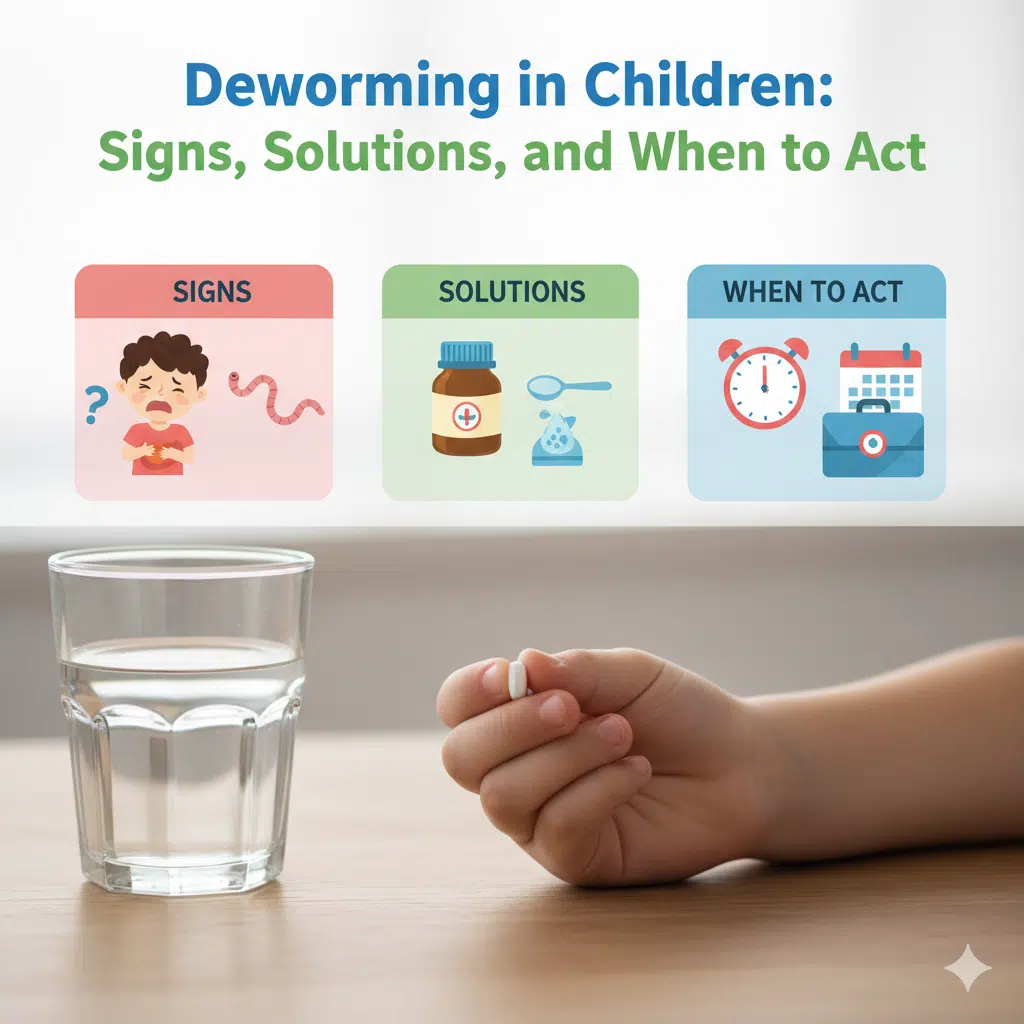
Every parent wants their child to grow healthy, active, and strong. However, one common yet often overlooked issue that can affect a child’s growth and well-being is intestinal worm infection. Worms can quietly live in a child’s intestines, feeding on nutrients and causing a range of health problems. Understanding the signs, solutions, and the right time to act is crucial for every parent.
What is Deworming?
Deworming is the medical process of removing intestinal worms such as roundworms, tapeworms, hookworms, and whipworms from the body. These parasites typically enter the body through contaminated food, water, or soil, especially in children who often play outdoors and may forget to wash their hands properly.
The World Health Organization (WHO) recommends routine deworming for children, especially in areas where worm infections are common. Regular deworming helps improve a child’s appetite, digestion, nutrient absorption, and overall immunity.
Common Signs Your Child May Need Deworming
Worm infections may not always be visible, but there are several warning signs that parents should look for:
- Frequent Stomach Pain or Discomfort – Persistent abdominal pain, bloating, or cramps can indicate the presence of intestinal worms.
- Loss of Appetite – Worms can cause poor digestion and reduce a child’s interest in eating.
- Unexplained Weight Loss – Since worms consume nutrients from food, your child may lose weight even if their diet hasn’t changed.
- Itching Around the Anal Area – Especially at night, this could be a sign of pinworm infection.
- Paleness or Anemia – Hookworms can cause blood loss, leading to fatigue and pale skin.
- Disturbed Sleep or Restlessness – Worms can cause discomfort, making it hard for children to sleep peacefully.
- Grinding Teeth During Sleep – Though not exclusive to worms, it can sometimes be a symptom.
If your child shows multiple signs from this list, it’s a good idea to consult a pediatrician for evaluation.
How is Deworming Done?
The process of deworming is simple, safe, and effective. Doctors typically prescribe anti-parasitic medications such as Albendazole or Mebendazole. These medications kill the worms and expel them from the body through stool.
For children above one year of age, a single dose is often enough, though the doctor might recommend repeating it every 6 to 12 months, depending on the risk factors. The medicine can be given as a chewable tablet or syrup, depending on the child’s age and comfort.
In India and many other countries, National Deworming Day is observed twice a year, ensuring that children in schools and communities receive free deworming medication.
Natural Ways to Support Deworming
While medication is essential, some natural practices can help maintain intestinal health:
- Good Hygiene: Encourage regular handwashing before meals and after playing outdoors.
- Proper Cooking and Washing: Ensure fruits and vegetables are thoroughly cleaned and cooked.
- Safe Drinking Water: Always provide clean, filtered, or boiled water.
- Balanced Diet: Foods rich in fiber, probiotics, and natural anti-parasitic agents like garlic and pumpkin seeds may help prevent infections.
However, natural remedies should never replace medical treatment—especially for children.
When to See a Doctor
Parents should consult a pediatrician if the child experiences:
- Persistent stomach pain
- Blood in stool
- Continuous weight loss
- Severe itching around the anus
- Vomiting or signs of dehydration
The doctor may recommend stool tests to confirm the presence and type of worms before prescribing treatment.


Proudly powered by CLIO Mother and Child Institute