6 Effective Tips to Help Prevent Stretch Marks During Pregnancy
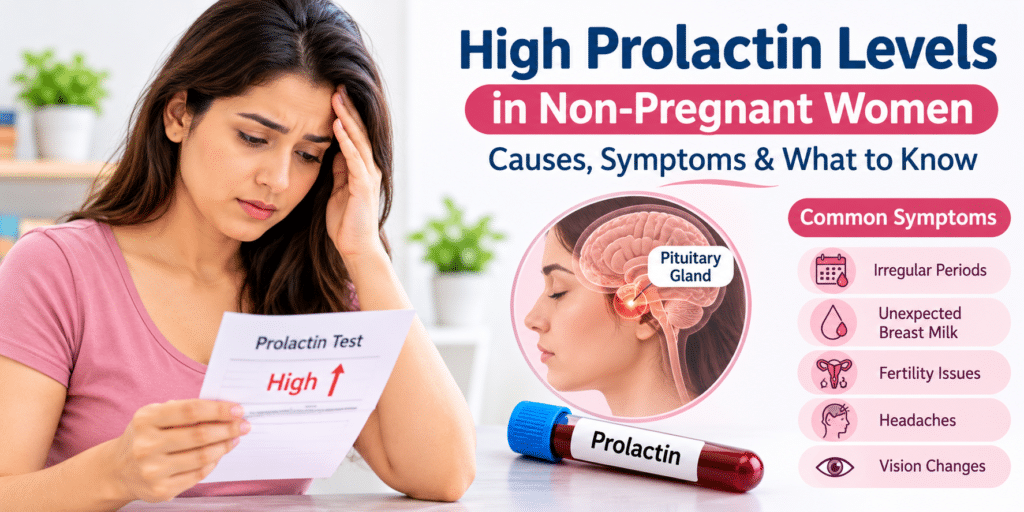
Prolactin is a hormone produced mainly by the pituitary gland, a small gland located at the base of the brain. It plays an important role in breast development and milk production after childbirth. However, high prolactin levels in non-pregnant women can sometimes occur even when a woman is not breastfeeding.
Elevated prolactin, also called hyperprolactinemia, may affect menstrual cycles, fertility, breast health, and other aspects of reproductive health. Understanding the possible causes and symptoms can help women know when medical evaluation may be appropriate.
What Is Prolactin?
Prolactin is best known for stimulating breast milk production. Normally, prolactin levels are relatively low in women who are not pregnant or breastfeeding.
When prolactin becomes elevated outside pregnancy or breastfeeding, it may interfere with the normal hormonal signals involved in ovulation and menstruation. However, a single abnormal test does not always mean there is an underlying disease.
Prolactin levels can temporarily rise because of stress, exercise, breast stimulation, certain medications, or even the timing of the blood test.
Common Causes of High Prolactin Levels in Non-Pregnant Women
Several factors can contribute to elevated prolactin.
1. Certain Medications
Some medicines can increase prolactin levels by affecting dopamine, a hormone that normally helps keep prolactin production under control.
These may include certain:
- Antipsychotic medicines
- Antidepressants
- Blood pressure medicines
- Medicines used for nausea or vomiting
Never stop a prescribed medicine without discussing it with your doctor.
2. Pituitary Conditions
A prolactinoma is a usually benign pituitary tumor that produces excess prolactin. It is one possible cause of persistent hyperprolactinemia.
Depending on its size and hormone effects, it may cause reproductive symptoms or, less commonly, headaches and changes in vision.
3. Thyroid Problems
An underactive thyroid, or hypothyroidism, can sometimes be associated with increased prolactin levels. Treating the underlying thyroid problem may help normalize prolactin.
4. Other Health and Lifestyle Factors
Temporary prolactin elevation can occur due to physical or emotional stress, intense exercise, breast or nipple stimulation, and some medical conditions.
This is why doctors may repeat a prolactin test before determining the cause.
Symptoms of High Prolactin
Some women with elevated prolactin have no noticeable symptoms. Others may experience changes related to reproductive hormones.
Possible symptoms include:
- Irregular or absent menstrual periods
- Difficulty becoming pregnant
- Unexpected breast milk or nipple discharge
- Reduced sexual desire
- Vaginal dryness
- Breast tenderness
- Headaches
- Vision changes, particularly with larger pituitary tumors
Unexpected milk production is called galactorrhea. It can occur for several reasons and does not necessarily mean that a woman has a prolactinoma.
How Is High Prolactin Diagnosed?
If symptoms suggest elevated prolactin, a healthcare professional may recommend a blood test.
Because prolactin can fluctuate, the doctor may consider factors such as:
- Time of testing
- Recent stress or exercise
- Breast stimulation
- Medications
- Pregnancy status
- Thyroid function
If prolactin remains elevated, additional blood tests or imaging, such as an MRI of the pituitary gland, may sometimes be recommended depending on the suspected cause.
How Is High Prolactin Treated?
Treatment depends on why the prolactin level is high. Some mild elevations may simply require monitoring or repeat testing.
Depending on the cause, treatment may involve:
- Managing an underlying thyroid disorder
- Reviewing medications with a healthcare professional
- Medicines that lower prolactin, when appropriate
- Monitoring a prolactinoma
- Specialist evaluation when symptoms or hormone abnormalities persist
The appropriate treatment should always be determined after identifying the underlying cause.
Frequently Asked Questions
1. Can high prolactin occur in a woman who is not pregnant?
Yes. High prolactin levels in non-pregnant women can result from medications, thyroid problems, pituitary disorders, stress, and other factors.
2. Can high prolactin affect fertility?
Yes. Elevated prolactin can interfere with ovulation and menstrual cycles, which may make conception more difficult for some women.
3. Does high prolactin always cause breast discharge?
No. Some women with elevated prolactin experience nipple discharge or galactorrhea, while others have no breast-related symptoms.
4. Can stress increase prolactin levels?
Yes. Physical and emotional stress can temporarily increase prolactin. This is one reason a healthcare provider may repeat an abnormal test.
5. When should I see a doctor for high prolactin?
Seek medical advice if you have persistent menstrual irregularities, unexplained breast milk production, fertility concerns, headaches, vision changes, or a blood test showing elevated prolactin.
Understanding Elevated Prolactin
High prolactin levels in non-pregnant women can have many possible explanations, ranging from temporary changes and medications to thyroid disorders and pituitary conditions. An elevated test result should therefore be interpreted in the context of symptoms, medical history, medications, and other hormone levels.
If you experience unexplained menstrual changes, nipple discharge, fertility difficulties, headaches, or vision problems, don’t ignore the symptoms or self-treat. A qualified healthcare professional can identify the underlying cause and recommend appropriate treatment.
For expert women’s health, gynecology, reproductive health, pregnancy, and maternity care, consult the experienced healthcare team at CLIO Mother and Child Institute Hospital.


Proudly powered by CLIO Mother and Child Institute