Menopause is a natural stage of life, but that does not mean every woman experiences it in the same way. For some, changes are mild and manageable. For others, symptoms can affect sleep, mood, work, relationships, and everyday comfort.
Understanding Menopause Symptoms can help you recognize what is happening in your body and seek appropriate support. Menopause usually occurs between ages 45 and 55, although it can happen earlier. The transition leading up to menopause is called perimenopause, when hormone levels fluctuate and periods may become irregular.
What Are the Common Menopause Symptoms?
The decline in ovarian hormone production can cause a wide range of physical and emotional changes. Symptoms differ from woman to woman and may last for several years.
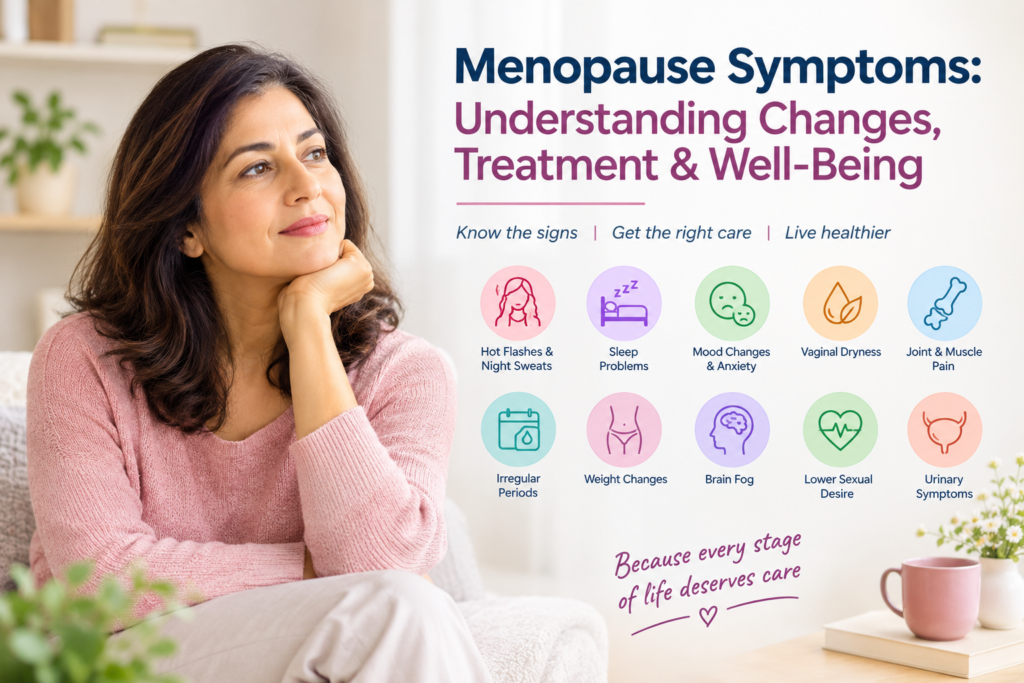
Common Menopause Symptoms include:
- Hot flashes or hot flushes
- Night sweats
- Irregular or changing periods
- Sleep difficulties or insomnia
- Mood changes, anxiety, or low mood
- Vaginal dryness or discomfort during sex
- Reduced sexual desire
- Urinary symptoms
- Difficulty concentrating or “brain fog”
- Changes in body composition or weight
- Joint and muscle discomfort
Not everyone experiences all of these symptoms. Some women have very few symptoms, while others may find them significantly disruptive.
Perimenopause vs Menopause: What’s the Difference?
Perimenopause
Perimenopause is the transition before menopause. Periods may become shorter, longer, heavier, lighter, or less predictable. Symptoms such as hot flashes, sleep problems, mood changes, and vaginal dryness can also begin during this stage.
Menopause
Menopause is reached after 12 consecutive months without a menstrual period, when there is no other obvious cause. After this point, a woman enters the postmenopausal stage.
How Are Menopause Symptoms Treated?
Treatment depends on the symptoms, medical history, age, personal preferences, and whether hormone therapy is appropriate.
Hormone Replacement Therapy
Hormone replacement therapy (HRT) replaces hormones such as oestrogen that decline around menopause. It can help relieve symptoms including hot flashes, night sweats, sleep problems, mood changes, and vaginal dryness.
For women with a uterus, progestogen is generally prescribed alongside systemic oestrogen to help protect the lining of the uterus. The right treatment should always be discussed with a qualified healthcare professional.
Non-Hormonal Options
HRT is not suitable or preferred for everyone. Depending on the symptoms, options may include menopause-specific cognitive behavioural therapy (CBT) and certain non-hormonal medicines. NICE guidance also includes newer treatment options for moderate-to-severe vasomotor symptoms when HRT is unsuitable.
Lifestyle Changes for Better Menopause Well-Being
Small daily habits can make a meaningful difference to overall health during menopause.
Consider:
- Eating a balanced, nutrient-rich diet
- Staying physically active, including weight-bearing and strength exercises
- Maintaining a regular sleep routine
- Keeping the bedroom cool if night sweats are troublesome
- Limiting individual triggers such as excess caffeine, alcohol, spicy foods, or hot drinks
- Avoiding smoking
- Practising relaxation techniques such as yoga, meditation, or breathing exercises
- Talking openly with family, friends, or a healthcare professional about emotional changes
Regular exercise can support bone health, sleep, mood, and overall well-being.
When Should You See a Doctor?
You do not have to simply “put up with” troublesome menopause symptoms. Speak with a gynecologist if symptoms are affecting your sleep, work, relationships, emotional health, or quality of life.
Medical evaluation is especially important for unusual or unexpected vaginal bleeding after menopause, very heavy bleeding, severe symptoms, or menopause occurring unusually early.
A healthcare professional can review your symptoms, medical history, medications, and risk factors and discuss appropriate treatment choices.
FAQs About Menopause Symptoms
1. What is the most common symptom of menopause?
Hot flashes or hot flushes are among the commonly recognized menopause symptoms, although women can experience many different physical, emotional, and sexual symptoms.
2. Can menopause cause sleep problems?
Yes. Hormonal changes, night sweats, hot flashes, and mood changes can contribute to difficulty falling asleep or staying asleep.
3. Can menopause affect mental health?
Yes. Mood changes, anxiety, irritability, low mood, and difficulty concentrating can occur during the menopausal transition. Persistent or severe symptoms should be discussed with a healthcare professional.
4. Is HRT suitable for every woman?
No. HRT may be appropriate for many women but is not suitable for everyone. A doctor should assess your individual health history and discuss potential benefits and risks before treatment.
5. Can lifestyle changes help with menopause symptoms?
Yes. Regular exercise, healthy eating, good sleep habits, stress management, and avoiding personal symptom triggers can support menopause well-being and general health.
Take Control of Your Menopause Health
Menopause is a natural transition—not something you have to navigate alone. Understanding Menopause Symptoms and recognizing how they affect your body and daily life is the first step toward getting the right support.
If symptoms are interfering with your quality of life, speak with a qualified gynecologist rather than relying on self-treatment or ignoring persistent changes. Personalized care can help you make informed decisions about lifestyle changes, hormone therapy, and other treatment options.
For compassionate guidance, women’s health support, and gynecological care, consult the specialists at CLIO Mother and Child Institute Hospital.


Proudly powered by CLIO Mother and Child Institute