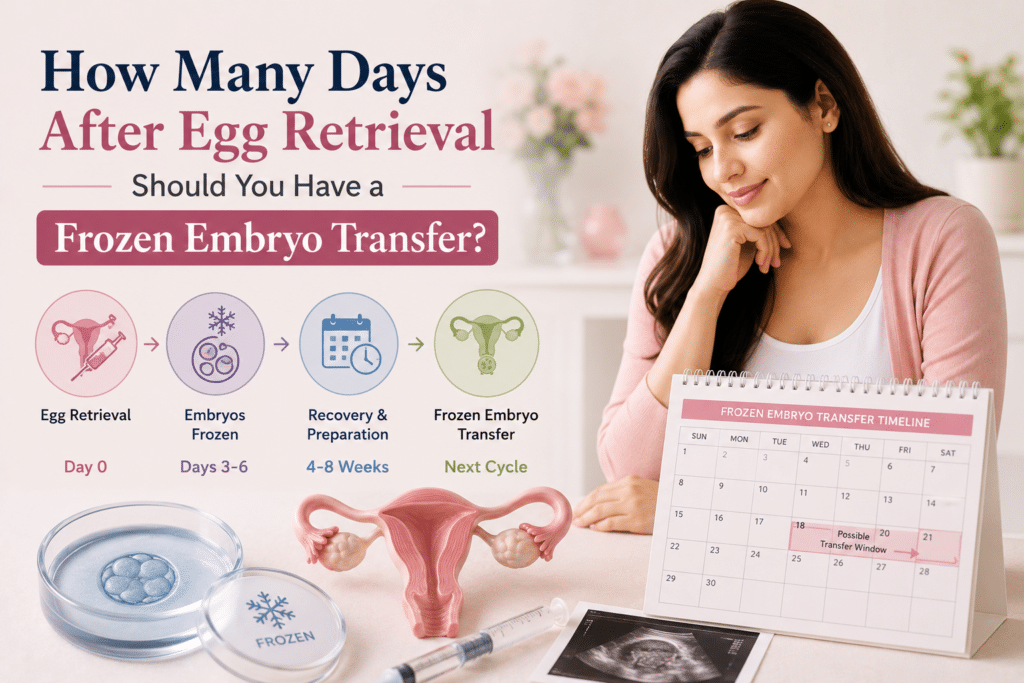
The journey through IVF is filled with hope, patience, and many important milestones. One of the most common questions couples ask after egg retrieval is, “When will my frozen embryo transfer happen?” While it’s natural to want the process to move quickly, your body needs time to recover and prepare for the best possible chance of a successful pregnancy.
Let’s understand the timing and why it matters.
What Is a Frozen Embryo Transfer (FET)?
A Frozen Embryo Transfer (FET) is a procedure in which a previously frozen embryo is thawed and transferred into the uterus.
Unlike a fresh embryo transfer, FET is performed in a separate menstrual cycle after the eggs have been retrieved and the embryos have been frozen. This approach allows the body to recover from ovarian stimulation and creates a more favorable environment for implantation.
How Many Days After Egg Retrieval Is a Frozen Embryo Transfer Done?
The answer depends on your recovery and treatment plan.
In most cases, a frozen embryo transfer is not performed just a few days after egg retrieval. Instead, it is usually scheduled during the next menstrual cycle or several weeks later, once the uterus is ready to receive the embryo.
For many women, the transfer takes place approximately 4 to 8 weeks after egg retrieval, although the exact timing may vary depending on individual medical circumstances.
Your fertility specialist will determine the ideal time based on your health, hormone levels, and the condition of your uterine lining.
Why Isn’t the Embryo Transferred Immediately?
There are several reasons doctors may recommend waiting before performing a frozen embryo transfer.
1. Your Body Needs Time to Recover
During IVF stimulation, the ovaries produce multiple eggs, causing hormone levels to rise significantly.
Allowing the body to return to its normal hormonal balance can improve the chances of successful implantation.
2. The Uterine Lining Needs to Be Ready
For an embryo to implant successfully, the lining of the uterus (endometrium) must reach the right thickness and quality.
Waiting allows doctors to prepare the uterus under carefully controlled conditions.
3. It Reduces Certain Risks
Women who are at risk of ovarian hyperstimulation syndrome (OHSS) are often advised to postpone embryo transfer until they have fully recovered.
Freezing the embryos helps protect the mother’s health without affecting embryo quality.
What Happens Before a Frozen Embryo Transfer?
Before scheduling the transfer, your fertility team will carefully monitor your cycle.
This usually includes:
- Ultrasound scans to check the uterine lining
- Blood tests to monitor hormone levels
- Medications such as estrogen and progesterone, if required
- Determining the best day for embryo transfer
Every step is designed to create the most supportive environment for implantation.
Does Waiting Affect Success Rates?
Many couples worry that delaying the transfer may reduce their chances of pregnancy.
In reality, research has shown that frozen embryo transfers often have success rates that are comparable to—and in many cases even better than—fresh embryo transfers for selected patients.
A well-prepared uterus is often more important than transferring the embryo as quickly as possible.
Quality always matters more than speed.
How Can You Prepare for a Frozen Embryo Transfer?
While much of the process is guided by your fertility specialist, there are several things you can do to support your overall health:
- Eat a balanced and nutritious diet.
- Stay physically active with gentle exercise.
- Get enough sleep each night.
- Take prescribed medications exactly as directed.
- Avoid smoking and alcohol.
- Manage stress through relaxation techniques or mindfulness.
Small healthy habits can make a positive difference throughout your fertility journey.
Questions to Ask Your Fertility Specialist
Before your transfer, consider asking:
- When is the ideal time for my frozen embryo transfer?
- Is my uterine lining developing normally?
- Will I need hormone medications before the transfer?
- How should I prepare in the days leading up to the procedure?
- What activities should I avoid afterward?
Understanding your treatment plan can help you feel more confident and prepared.
Final Thoughts
Waiting for a frozen embryo transfer can test your patience, but every step has a purpose. Giving your body time to recover after egg retrieval allows your fertility specialist to prepare the ideal environment for implantation, improving the chances of a healthy pregnancy.
Remember, every IVF journey is unique. The exact timing of your frozen embryo transfer depends on your individual health, hormone levels, and treatment plan.
At CLIO Mother and Child Institute, our fertility specialists provide personalized IVF care, advanced fertility treatments, and compassionate guidance at every stage of your journey. Whether you’re preparing for egg retrieval, embryo freezing, or a frozen embryo transfer, we’re committed to helping you move forward with confidence and hope.


Proudly powered by CLIO Mother and Child Institute