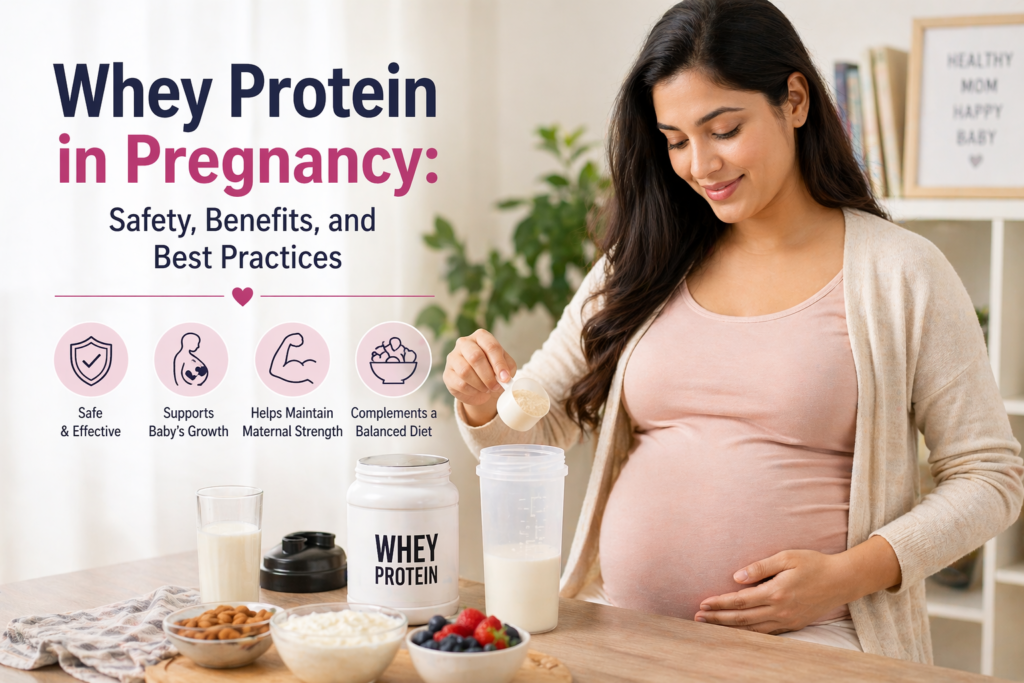
Pregnancy changes the way you think about food. Suddenly, every bite feels important. You’re not just eating for yourself anymore—you’re nourishing a growing life. And somewhere along the way, you might hear about whey protein. It sounds simple enough, but the question lingers: is it actually safe during pregnancy?
At CLIO Mother and Child Institute, this is a common conversation. The answer isn’t a straight yes or no—it depends on how, why, and how much.
What Is Whey Protein?
Whey protein is a high-quality protein derived from milk. It contains essential amino acids that help build and repair tissues. In simpler terms, it’s a convenient way to increase your daily protein intake—often used by athletes, but not limited to them.
During pregnancy, your body needs more protein than usual. It supports your baby’s growth, your own tissue expansion, and even hormone production.
Is Whey Protein Safe During Pregnancy?
Generally, whey protein can be safe during pregnancy—but only when used correctly.
The key is moderation and quality. Not all protein powders are created equal. Some contain added sugars, artificial flavors, or even contaminants that aren’t ideal during pregnancy.
If your regular diet already provides enough protein, adding a supplement might not be necessary. But if you struggle to meet your protein needs through food alone, a clean, well-sourced whey protein can help.
At CLIO Mother and Child Institute, doctors usually recommend consulting before adding any supplement. It’s not about avoiding whey protein—it’s about using it wisely.
Benefits of Whey Protein in Pregnancy
When used appropriately, whey protein can offer real benefits.
1. Supports Baby’s Growth
Protein is essential for fetal development. It helps in building tissues, muscles, and organs.
2. Helps Maintain Maternal Strength
Pregnancy can be physically demanding. Adequate protein helps maintain muscle strength and energy levels.
3. Convenient Nutrition
Not every day goes as planned. Some days, meals are missed or appetite dips. A simple protein shake can help fill the gap.
4. Aids Recovery
Protein supports tissue repair, which becomes especially important in the later stages of pregnancy and after delivery.
Things to Watch Out For
This is where most people go wrong. The risks usually don’t come from whey protein itself—but from how it’s used.
1. Avoid Low-Quality Products
Cheap or unverified protein powders may contain harmful additives or heavy metals. Always choose trusted, high-quality brands.
2. Watch the Sugar Content
Some protein powders are loaded with sugar. That’s not ideal, especially if you’re managing weight or blood sugar levels.
3. Don’t Overdo It
More isn’t better. Excess protein can strain your kidneys and doesn’t provide extra benefits.
4. Check for Allergies
If you’re lactose intolerant or sensitive to dairy, whey protein might not suit you. In such cases, alternatives can be considered.
Best Practices for Using Whey Protein
If you’re considering whey protein during pregnancy, a few simple guidelines can make it safe and effective.
- Consult your doctor first
Every pregnancy is different. What works for one person may not work for another. - Use it as a supplement, not a replacement
Whole foods should always come first. Whey protein is just an addition, not a substitute. - Stick to recommended amounts
Your daily protein requirement can usually be met with a balanced diet plus minimal supplementation. - Choose clean formulations
Look for products with minimal ingredients—no unnecessary additives or artificial sweeteners.
Natural Food Alternatives
It’s worth remembering that protein doesn’t only come from powders. Many everyday foods provide excellent nutrition:
- Milk, curd, and paneer
- Lentils and legumes
- Eggs
- Nuts and seeds
In many cases, a well-planned diet can meet your needs without supplements.
When Whey Protein Makes Sense
There are situations where whey protein can be particularly helpful:
- If you have low appetite or nausea
- If you’re underweight or need extra nutrition
- If dietary restrictions limit your protein intake
In these cases, it acts as a practical support—not a necessity.
A Balanced Approach
Pregnancy isn’t about perfection. It’s about balance. You don’t need to overcomplicate things or chase every trend you come across.
Whey protein isn’t harmful when used correctly—but it’s not magic either. It’s just one small piece of a much bigger picture that includes proper diet, regular checkups, and overall well-being.
At CLIO Mother and Child Institute, the focus is always on guiding expecting mothers with clarity rather than confusion. Because when you understand what your body needs, the choices become simpler.
Final Thoughts
If you’re thinking about adding whey protein to your pregnancy diet, don’t rush the decision. Take a step back, look at your current nutrition, and talk to a professional.
Sometimes, the best approach is the simplest one—eat well, stay consistent, and listen to your body.
And when in doubt, ask. It’s always better to be informed than to guess—especially when it comes to something as important as your pregnancy.


Proudly powered by CLIO Mother and Child Institute