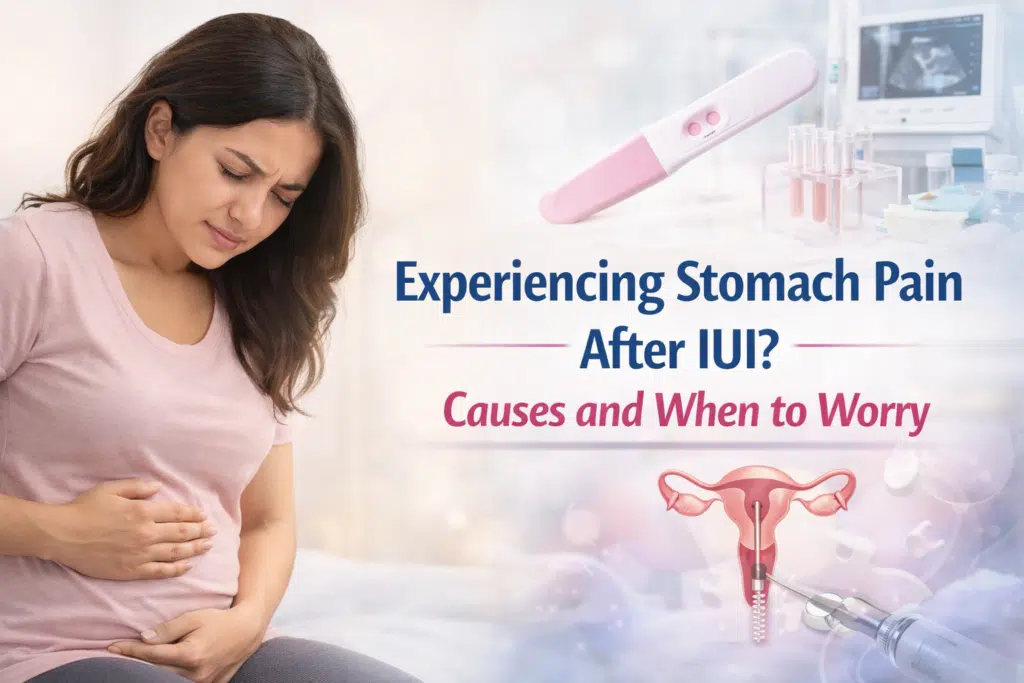
There’s a particular kind of waiting that comes after an IUI procedure. It’s quiet, a little tense, and full of “what ifs.” Every small change in your body suddenly feels important. So when stomach pain shows up, it’s natural to wonder—is this normal, or something to worry about?
At CLIO Mother and Child Institute, this is one of the most common concerns patients bring up after IUI. The short answer? Some level of discomfort is quite common. The long answer is where things get clearer—and more reassuring.
Is Stomach Pain After IUI Normal?
In many cases, yes. Mild stomach or pelvic pain after IUI is usually part of how your body responds to the procedure and the medications involved. It can feel like light cramping, a dull ache, or a sense of heaviness in the lower abdomen.
The key is understanding the type and timing of the pain.
Common Causes of Stomach Pain After IUI
1. Ovulation Pain
IUI is timed around ovulation, often triggered with medication. When the ovary releases an egg, it can cause a sharp or cramp-like pain on one side of the abdomen. This is completely normal and usually short-lived.
2. Ovarian Stimulation
If fertility medications were used, your ovaries may be slightly enlarged. This can lead to bloating, discomfort, or a feeling of pressure. It’s not unusual—it’s your body responding to treatment.
3. Uterine Response
The IUI procedure involves placing sperm directly into the uterus using a thin catheter. This can sometimes cause mild uterine cramping, similar to period pain. It typically fades within a day or two.
4. Gas and Bloating
Hormonal changes can slow digestion, leading to gas or bloating. It’s not the most glamorous explanation, but it’s often the most harmless one.
5. Implantation (Maybe)
Some women report mild cramping a few days after IUI, which could be linked to implantation. It’s subtle and not always noticeable, but it can feel similar to light menstrual cramps.
When Should You Be Concerned?
Most post-IUI discomfort is mild and temporary. But there are situations where pain deserves attention.
Watch out for:
- Severe or worsening abdominal pain
- Persistent pain that doesn’t improve after a few days
- Fever or chills
- Heavy vaginal bleeding
- Significant bloating with nausea or difficulty breathing
These symptoms could point to complications like infection or ovarian hyperstimulation syndrome (OHSS), especially if fertility drugs were involved.
At CLIO Mother and Child Institute, patients are always encouraged to report anything that feels “off.” It’s better to check early than to sit with uncertainty.
How to Manage Mild Pain at Home
If your discomfort is mild, a few simple steps can help:
- Rest when your body asks for it
- Stay hydrated
- Use a warm compress on the lower abdomen
- Avoid strenuous activity for a few days
Over-the-counter pain relief may be allowed, but always confirm with your doctor before taking anything.
The Emotional Side of It
Physical symptoms after IUI don’t exist in isolation—they’re tied to hope, anticipation, and sometimes anxiety. It’s easy to overanalyze every sensation, especially during the two-week wait.
Try to remember: not every pain is a sign of success or failure. Sometimes, it’s just your body doing its thing.
That said, your concerns are valid. You’re not overthinking—you’re paying attention. There’s a difference.
When to Reach Out
If you’re unsure whether your symptoms are normal, don’t guess. A quick check-in with your doctor can save a lot of unnecessary stress.
At CLIO Mother and Child Institute, the approach is simple—clear communication, no judgment, and support at every step. Whether it’s a minor question or a major concern, you’re not expected to figure it out alone.
Final Thoughts
Stomach pain after IUI can feel alarming, especially when you’re already navigating a sensitive and emotional process. But in most cases, it’s a normal response to treatment and timing.
What matters is knowing the difference between what’s expected and what needs attention.
Listen to your body—but don’t let every signal turn into a worry. You’re in a process that takes patience, care, and a bit of trust.
And sometimes, the hardest part isn’t the procedure—it’s the waiting that comes after.


Proudly powered by CLIO Mother and Child Institute