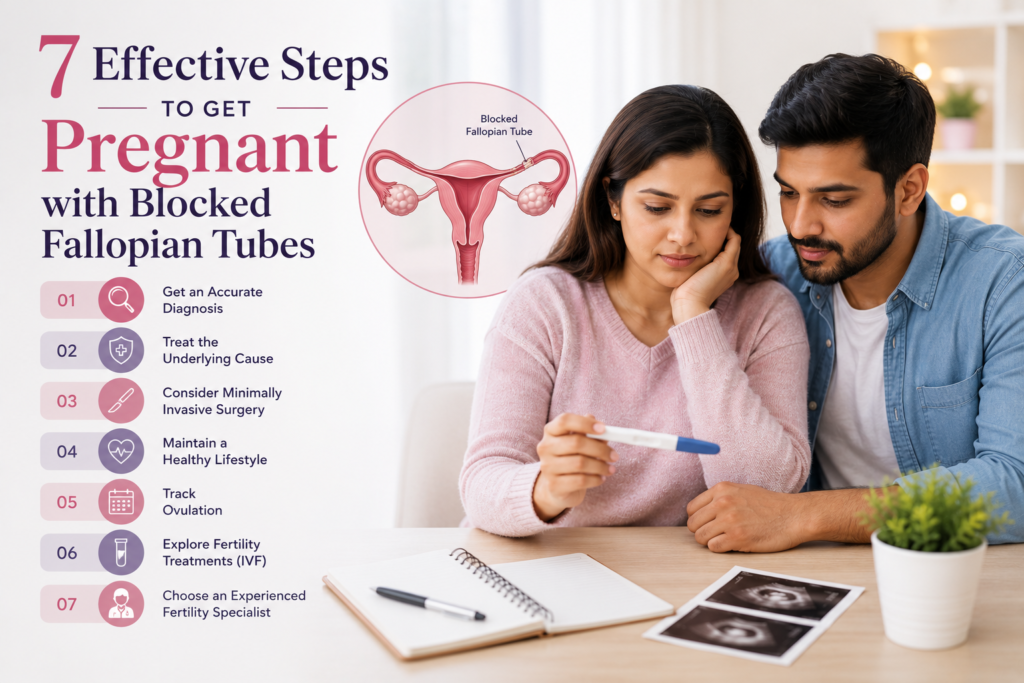
Here’s a unique, plagiarism-free blog post for CLIO Mother and Child Institute, written in a warm, compassionate Pamela Bryant-inspired style. It has a short introductory paragraph, a natural flow, and stays under 900 words.
Being told you have blocked fallopian tubes can feel heartbreaking, especially if you’re dreaming of becoming a parent. It’s natural to wonder whether pregnancy is still possible. The encouraging news is that many women with blocked fallopian tubes go on to conceive with the right diagnosis, treatment, and expert fertility care. Understanding your options is the first step toward turning hope into reality.
What Are Blocked Fallopian Tubes?
The fallopian tubes play an important role in natural conception. They carry the egg from the ovary to the uterus, and this is where fertilization usually takes place.
When one or both tubes become blocked, the egg and sperm may not be able to meet, making pregnancy more difficult.
Blockages can occur due to:
- Pelvic inflammatory disease (PID)
- Endometriosis
- Previous abdominal or pelvic surgery
- Sexually transmitted infections
- Scar tissue or adhesions
- Hydrosalpinx (fluid-filled fallopian tube)
Fortunately, treatment options are available depending on the location and severity of the blockage.
1. Get an Accurate Diagnosis
The first step is understanding the cause of the blockage.
Your fertility specialist may recommend tests such as:
- Hysterosalpingography (HSG)
- Sonosalpingography (SSG)
- Laparoscopy
- Pelvic ultrasound
These tests help determine whether one or both tubes are blocked and guide the most appropriate treatment plan.
2. Treat the Underlying Cause
Not all blocked tubes require the same treatment.
If the blockage is caused by an infection, your doctor may prescribe medication. If endometriosis or scar tissue is responsible, additional treatment may be recommended before trying to conceive.
Addressing the underlying condition can improve your chances of pregnancy.
3. Consider Minimally Invasive Surgery
In selected cases, laparoscopic surgery can help remove scar tissue or open blocked fallopian tubes.
Surgery may be beneficial when:
- The blockage is mild
- The tube has minimal damage
- The woman is otherwise healthy
- Natural conception is still considered possible
Your fertility specialist will discuss whether surgery is suitable based on your individual condition.
4. Maintain a Healthy Lifestyle
While lifestyle changes cannot remove a blockage, they can improve overall reproductive health.
Simple habits include:
- Eating a balanced, nutrient-rich diet
- Maintaining a healthy weight
- Exercising regularly
- Getting enough sleep
- Avoiding smoking and alcohol
- Managing stress effectively
A healthy body provides a stronger foundation for fertility treatment and pregnancy.
5. Track Ovulation
If one fallopian tube remains open, natural pregnancy may still be possible.
Knowing when you ovulate can help maximize your chances of conception.
Your doctor may recommend:
- Ovulation tracking
- Ultrasound follicle monitoring
- Ovulation predictor kits
Timing intercourse during your fertile window can improve the likelihood of pregnancy.
6. Explore Fertility Treatments
When both tubes are blocked or significantly damaged, assisted reproductive techniques may offer the best chance of pregnancy.
In Vitro Fertilization (IVF) is often recommended because it bypasses the fallopian tubes altogether.
During IVF:
- Eggs are collected from the ovaries.
- Fertilization takes place in the laboratory.
- A healthy embryo is transferred directly into the uterus.
For many couples, IVF provides hope when natural conception is not possible.
7. Choose an Experienced Fertility Specialist
Every fertility journey is unique.
The right specialist will not only recommend the most appropriate treatment but also provide emotional support throughout the process.
Personalized care, advanced fertility technology, and regular monitoring can make a significant difference in treatment outcomes.
Never hesitate to ask questions and understand every step of your treatment plan.
Can You Get Pregnant Naturally with One Blocked Tube?
Yes.
If one fallopian tube is healthy and ovulation occurs on that side, natural conception may still be possible.
However, the chances depend on several factors, including:
- Your age
- Overall reproductive health
- Ovulation pattern
- Partner’s sperm quality
A fertility evaluation can help determine the most suitable approach.
When Should You See a Fertility Specialist?
You should seek medical advice if:
- You’ve been trying to conceive for one year without success (or six months if you’re over 35)
- You’ve had pelvic infections or endometriosis
- You have irregular menstrual cycles
- You’ve experienced an ectopic pregnancy
- Imaging has shown blocked fallopian tubes
Early evaluation often leads to more treatment options and better outcomes.
Final Thoughts
Blocked fallopian tubes can make conception more challenging, but they don’t have to end your dream of parenthood. With early diagnosis, appropriate treatment, healthy lifestyle choices, and advanced fertility options like IVF, many women successfully achieve pregnancy.
At CLIO Mother and Child Institute, our experienced fertility specialists provide comprehensive evaluation, personalized treatment plans, and advanced reproductive care to help couples overcome fertility challenges. We’re committed to supporting you with expert guidance, compassionate care, and hope at every step of your journey toward parenthood.


Proudly powered by CLIO Mother and Child Institute